


 Melissa Anderson
In his audacious directorial debut, comedian and actor John Early stars as an LA ingenue who relapses into bulimia after becoming a
reluctant food influencer.
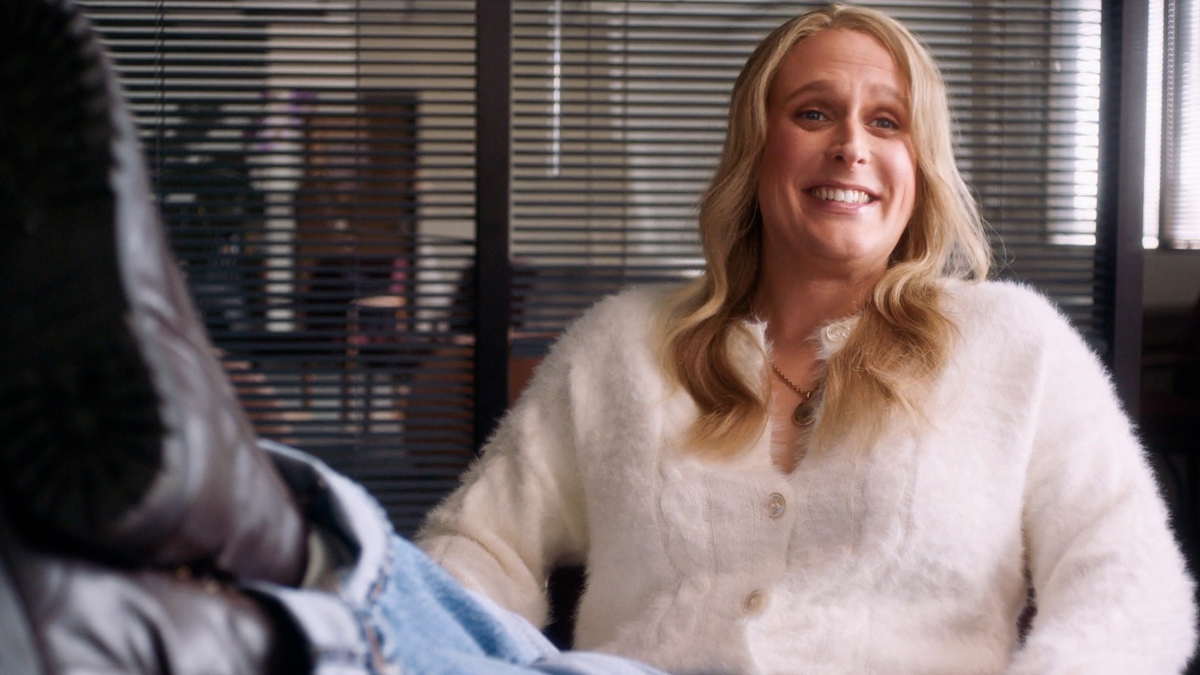
John Early as Maddie Ralph in Maddie’s Secret. Courtesy Magnolia Pictures.
Maddie’s Secret, written and directed by John Early, opens June 19, 2026 at the IFC Center, 323 Sixth Avenue, New York City
• • •
Born in 1988, the comedian and actor John Early stands as one of the shrewdest diagnosticians of millennial fatuities. In his pinpoint-precise 2023 HBO Max special, Now More Than Ever, the gay performer hilariously sends up the vapidity of the self-righteous, out-and-proud hashtag-speak popularized by his generation. He taps the mic. “Check, check. You guys can hear me, right?” He pauses. “I just want to make sure this is amplifying queer voices.” Elsewhere in the show, he grieves the soul annihilation inherent in rote Insta-affirmation: “We have to break free from this fire-emoji death pact.”
Early’s cutting, dyspeptic takes on our algorithmic-wrecked culture of the past two decades are counterbalanced by his deep love for the entertainments from the latter half of the twentieth century through the pre–social media years of the twenty-first. He reveres Bob Fosse, for example, that ardor evident in the choreography in the video for his band’s cover of Aaliyah’s sexed-up mid-tempo 2001 jam “Rock the Boat.” Showgirls (1995) is a sacred text for Early: in drag as the excitable heroine Nomi Malone in a clip from 2013, he brilliantly re-creates an audition scene from Paul Verhoeven’s triumph of vulgar brio with his frequent comedy collaborator Kate Berlant and others.
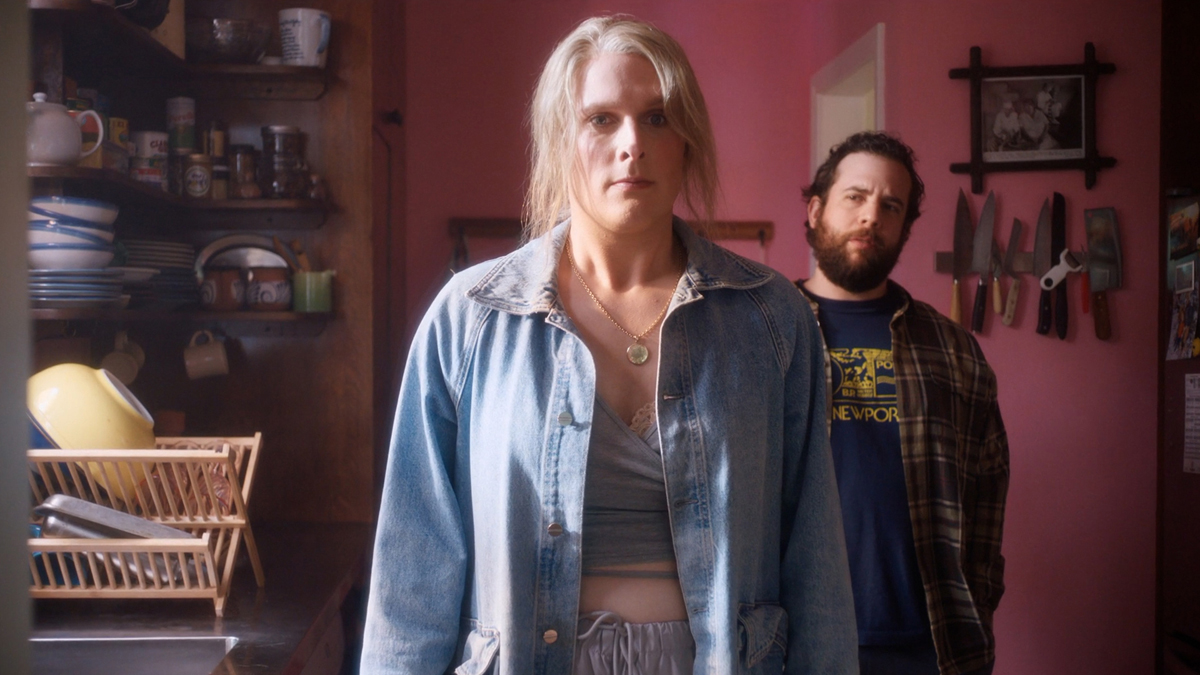
John Early as Maddie Ralph and Eric Rahill as Jake in Maddie’s Secret. Courtesy Magnolia Pictures.
These competing urges—to sharply point out the diminishments wrought by online life and to celebrate a pop culture untainted by likes and shares—animate Maddie’s Secret, Early’s zippy, audacious directorial debut. Again in female attire, he plays the ingenue of the title, a reluctant LA food influencer suffering from bulimia. A riot of references and influences—not least big-studio melodramas of the 1950s and their tawdry descendants, made-for-TV movies about women with eating disorders, like Kate’s Secret from 1986—Maddie’s Secret remains ever buoyant, even under the weight of its numerous allusions. Rapidly shifting tones, from puckish satire to unalloyed sincerity and back again, the film never spins out of control.
Blonde, guileless, and passionate about vegetarian cooking, Maddie is a dishwasher at the test kitchen of Gourmaybe magazine, a thankless job she shares with her bestie, Deena (Berlant), a lez lothario who’s a little too devoted to her happily heterosexually married pal. Maddie and her worshipful husband, Jake (Eric Rahill), share a cozy Silver Lake cottage (Early’s actual home), where one night she makes him tortang talong, a Filipino eggplant omelet. To her chagrin, Jake, a content editor, films her on his phone as she makes the dish, posting a video that racks up 600,000 views by the next morning.
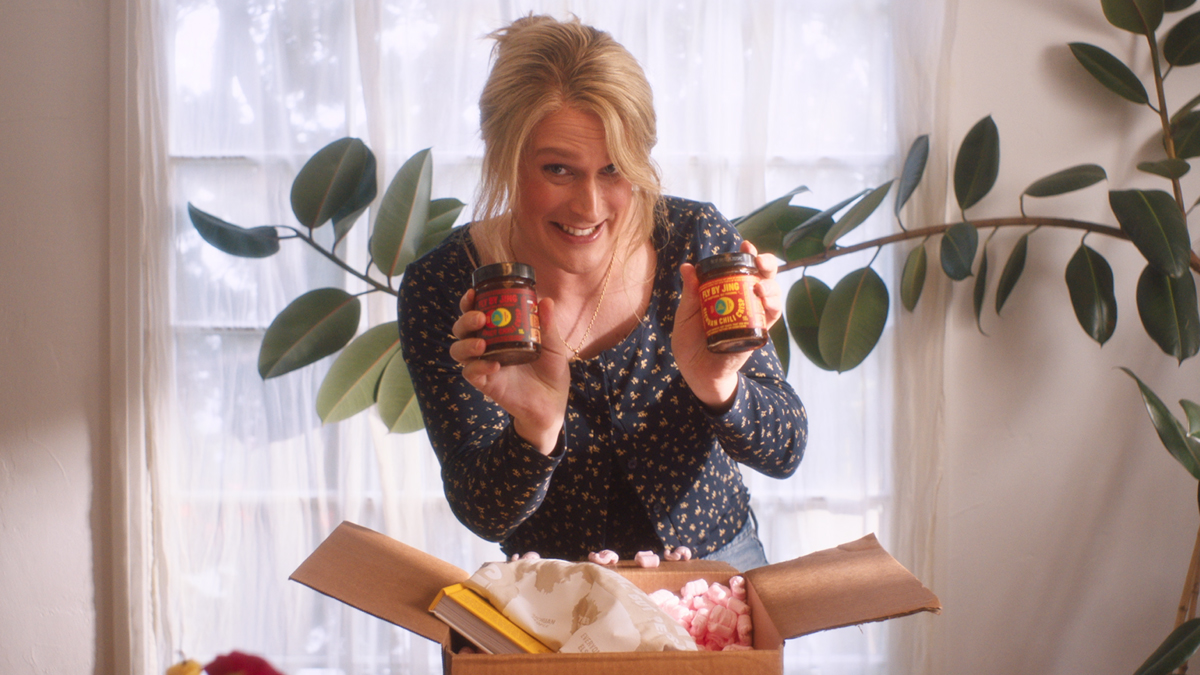
John Early as Maddie Ralph in Maddie’s Secret. Courtesy Magnolia Pictures.
Thanks to this viral success, Maddie is promoted at Gourmaybe to recipe developer and on-camera talent; soon she is competing with viperish Gourmaybe star Emily (Claudia O’Doherty) to be the culinary adviser to a hit Hulu show called The Boar (“It’s about a restaurant. But really it’s about so much more,” Deena explains to TV-ignorant Maddie, Berlant perfectly aping the enraptured—and, to the streamer-averse, ridiculous—locution people have used to extol The Bear and a thousand other series). The stress of this face-off, compounded by Maddie’s disgust with how she looks in the innumerable digital originals she must now create, leads to a relapse of her bingeing and purging. Soon she admits herself to an eating-disorder clinic—where a breakthrough therapy session with her ghastly mother, Beverlee (Kristen Johnston), reveals the etiology of her illness.
Early’s talent for blending ostensibly clashing moods and styles—in one moment, the film zings the internet-enabled abuse of words like “storytelling” and the quackery of mental-health apps; in the next, we see the startling image of Maddie, her eyes bloodshot, lifting her head from the toilet bowl she has just puked into—is exemplified by the appealing incongruity of the main character herself. We are never not aware that a (cis) woman is being played by a (cis) man, a disjunction clearly intended to evoke some laughs; the roles Divine played in John Waters’s movies are an unmistakable precedent. But whereas Edna Turnblad, Francine Fishpaw, Dawn Davenport, and other Divine interventions are outrageously, grotesquely accoutered, Maddie’s high-femme mien (long golden tresses; full, but not Kabuki-like, makeup) is much softer, gentler. And beneath the superficial absurdity, there is a great deal of tenderness and compassion in Early’s portrayal of this struggling woman. (That fellow feeling also abounds in another of his female personae, Vicky with a V—a Southern, Christian, Bernie-loving stand-up comic, wife, and mother who’s deeply attached to her denim jacket. Early, the son of two Protestant ministers who was raised in Nashville, surely drew on sources much closer to home to create the comedienne with the spiky, layered pixie bob.)
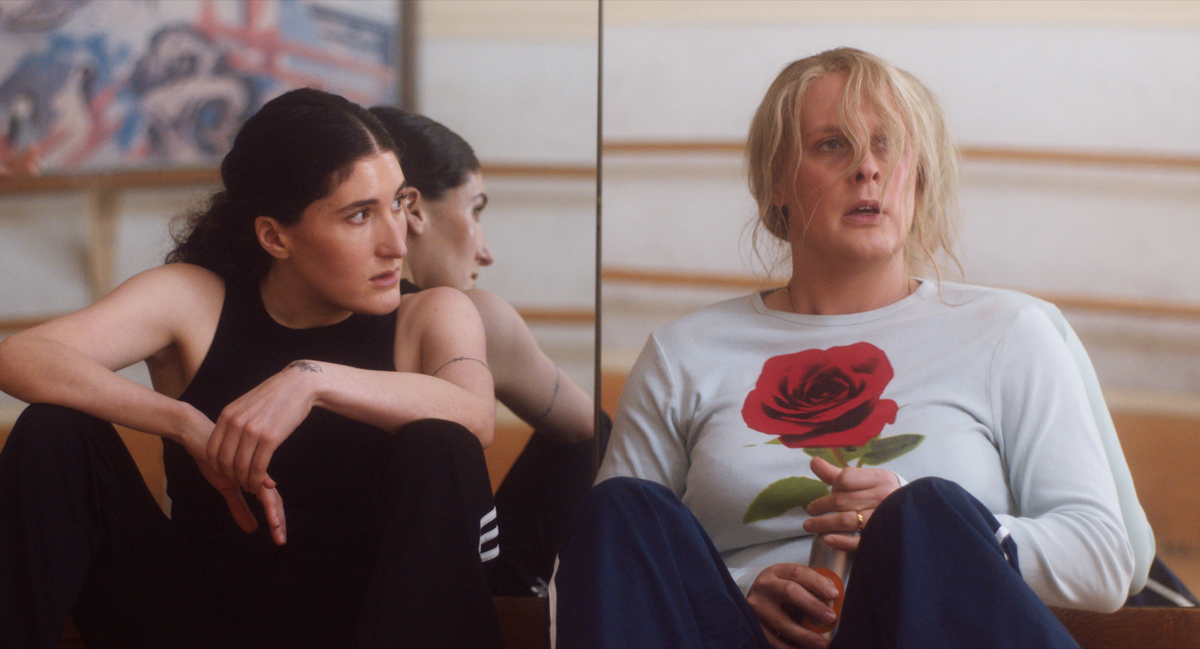
Kate Berlant as Deena and John Early as Maddie Ralph in Maddie’s Secret. Courtesy Magnolia Pictures.
Maddie-love is inextricably bound up in Early’s movie-love. As in Douglas Sirk’s Technicolor weepies, like All That Heaven Allows (1955), mirrors and reflective surfaces proliferate in Maddie’s Secret; our first image of sinister Beverlee comes via her reflection in a flat-screen television. The pivotal talking-cure scene between Mom and daughter is a terrific homage to a similar segment in Marnie (1964), Hitchcock’s perverse opus about female pathology. The film’s lighting is indebted to the gauzy, hazy, sun-shaft aesthetic of Adrian Lyne at his ’80s peak. And simply because he could—and who would ever wish to deny him?—Early includes three dance-class sequences that allow him to riff once more on his beloved Showgirls. (The first of these scenes also occasions more serrated spoofing of bombastic LGBTQIA-ese: the classes are held at Deena’s “radically inclusive” queer gym; worried that her presence there would be impolitic, incurably straight Maddie wonders, “And I would be allowed? Just . . . some ally?”)
While Early’s cinephilia, as an extension of his fervor for the pop culture from his childhood or from the years preceding his birth, may mark him as a nostalgist, he is a not a sentimentalist or a crank. Acerbically detailing the ludicrousness of a life tethered to phone or laptop, he also reminds his audiences—for some it may be an introduction—of the jolting thrills of mass art from a pre-Meta era. The genius of Maddie’s Secret (and of Early’s comedy in general) stems from its generosity. Early’s enthusiasms cannot be contained; he does not wish to hoard or gatekeep what he loves but to share it. He is both gimlet-eyed and starry-eyed. In other words: he has perfect vision.
Melissa Anderson is the film editor of 4Columns and the author of a monograph on David Lynch’s Inland Empire from Fireflies Press. A collection of her film criticism, The Hunger, is now available from Film Desk Books.