


 Thomas Beller
Denial, delusion, dissociation: a new book collects Rachel Aviv’s New Yorker essays about mothers and daughters.
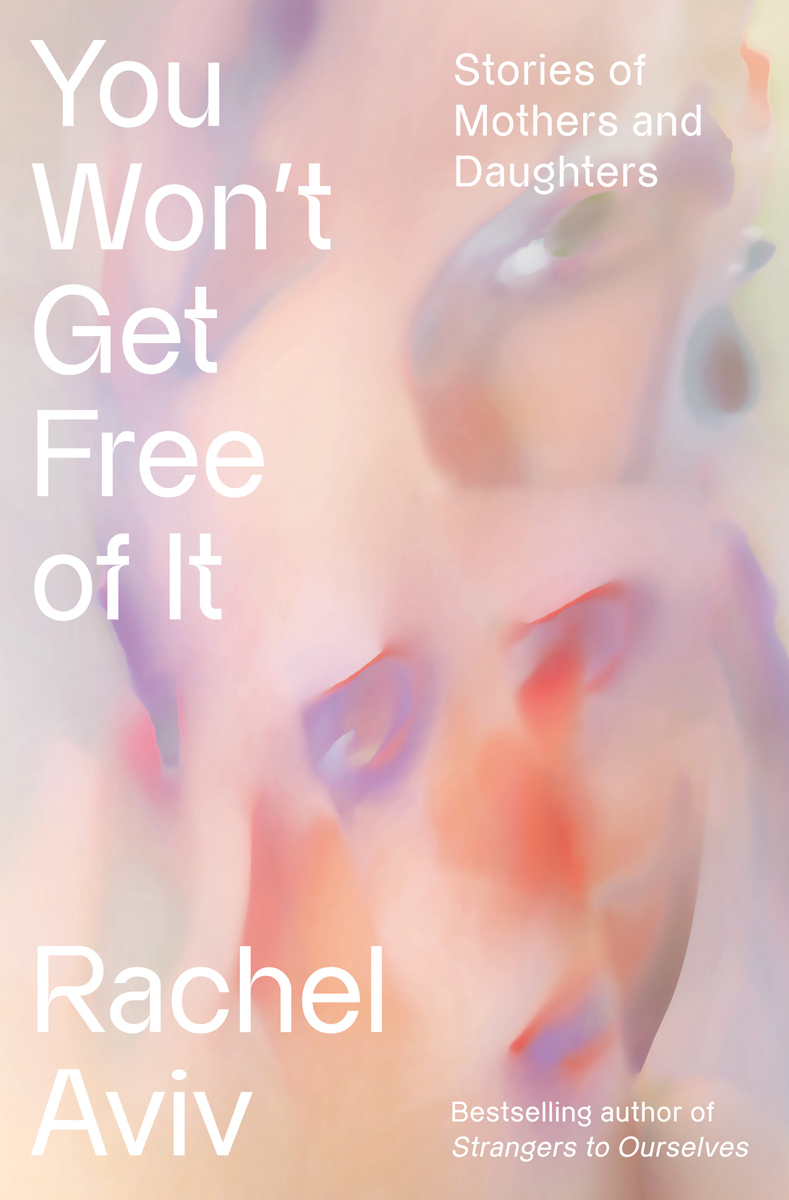
You Won’t Get Free of It: Stories of Mothers and Daughters, by Rachel Aviv, Alfred A. Knopf, 223 pages, $30
• • •
Rachel Aviv occupies a kind of unofficial Janet Malcolm Chair at the New Yorker, where her beat is labeled “psychology, medical ethics, mental illness, criminal justice, and education.” Her latest book, You Won’t Get Free of It: Stories of Mothers and Daughters—all of which appeared in the New Yorker, often in different form and with different titles—never mentions Malcolm. But her presence is felt throughout the work in Aviv’s method and tone: the close, deliberative read; the weighing of competing versions, and maybe most of all, the sense of trust gained and betrayed.
“I’ve always been drawn to stories in which the perspective feels unstable,” Aviv writes in her introduction. “The mother-daughter relationship, perhaps more than any other, seems to defy a fixed point of view.” Aviv’s writing also defies a fixed point of view. She moves effortlessly between reporting on events in one moment and entering the inner lives of her subjects the next, as though you were reading a short story told in the third person.
In addition to the mother-daughter dynamic, the pieces in You Won't Get Free of It share a preoccupation with states of dissociation, in which their protagonists are in a state of denial or delusion. The first essay, “I Wish I Were Her for You,” examines the case of Hannah, a lively and outgoing public-school teacher in New York City who, one morning at the start of the school year, goes missing for three weeks. She finally turns up, alive, when “the captain [of a Staten Island ferry] grabbed his binoculars and confirmed that someone was in the water.”
When her mother arrived at the hospital an hour later, “the first thing [Hannah] said was ‘Why am I wet?’ ”
Hannah is diagnosed with “dissociative fugue, a rare condition in which people lose access to their identity . . . and may abruptly embark on long journeys.”
In “God Knows Where I Am,” we are introduced to Linda Bishop, “an athletic fifty-one-year-old single mother with a bachelor’s degree in art history,” who has just been released from a psychiatric ward. She proceeds to discard all her belongings, “except for mascara, tweezers, and a pen,” and begins a nomadic odyssey that has strong parallels to Into Thin Air, if that book had been revised and edited to more resemble Kafka’s The Hunger Artist. Food and self-deprivation are the touchstones of Aviv’s own experience with mental illness, which she described in her first book, Strangers to Ourselves, as involving a childhood eating disorder. Bishop more or less starves herself to death in a vacant house.
The least psychological piece in the book, or maybe the least pathological, “As If They Were My Daughters,” focuses on the life story of Emma, a Filipino woman who, like many in her country, decides to go abroad and work in order to support her family, an act which the president of the Philippines actively encourages for the good of the country’s financial health.
Emma is embroiled in the lives of her daughters via phone and screen and letters. As they grow up, they understand the reason for their mother’s absence but are no less troubled by having a virtual mom. The children with whom Emma does spend her days, the ones she touches and sees in person, are other people’s children.
“Removable Truths” looks at Elizabeth Loftus, a psychologist whose specialty is the unreliability of memory and who is therefore the go-to witness for the legal defense of unsavory characters, most famously Harvey Weinstein. Juxtaposed against the grown-up, professional Loftus are quotations from her childhood journals, which feature a young girl who keeps exclaiming “I’m so happy!” and “Everything’s GREAT!” while her mother, who is psychologically deteriorating, is ultimately committed to an institution. “ ‘Life’s wonderful!!’ she wrote after [her mother] had been away for four months. ‘When I’m old and lonely at least I’ll know once I wasn’t!’ ”
As these quotations from her subject’s childhood diary suggest, a hallmark of Aviv’s work is both her ability to penetrate to the sources of her subjects’ distress, and to gain their trust. They reveal themselves both in conversation and by turning over letters and journals, which Aviv then scrutinizes, searching for clues. But this is the language of detective work, and one of the interesting things about Aviv’s work is its willingness to deal with the possibility that the mystery will not be resolved tidily, or at all.
This is most true of the book’s title piece, “You Won’t Get Free of It,” about the author Alice Munro, a novella-length work that in some ways echoes the mood and structure of Munro’s fiction. It is about what happened when, after her death, it came out—if that is not too passive a way of putting it—that Munro’s daughter Andrea had told her about being sexually abused by Munro’s second husband, Gerald Fremlin, and this news had been downplayed, ignored, and suppressed—by Alice Munro, to begin with, and then Andrea’s two sisters, the whole family, and finally by widening circles of the literary, publishing, and journalism worlds of Canada and later the United States. Munro was famous for excavating the suppressed lives of women; her fictional universe is largely situated in obscure, rural places in Canada, a realm mostly uncontaminated by the celebrity industrial complex. The chattering class in these stories is of the small-town variety. A dark irony of the whole situation is the dawning realization, as Aviv weaves the magic carpet of “You Won’t Get Free Of It,” that Munro’s fame was itself suppressing or compromising the ability of everyone involved to acknowledge and respond to a most painful and personal fact. Andrea, “a buoyant, adventurous child,” becomes increasingly exasperated by this lack of acknowledgment. In adulthood, she cuts off all contact with not just her mother and stepfather but her sisters, too.
The one person who probably cannot be accused of downplaying what happened is the culprit, Munro’s second husband, who, in letters he later wrote to various family members, defends his behavior of exposing himself to his nine-year-old stepdaughter and asking her to touch him by describing her, the nine-year-old, as a “nymphette” and a seductress. Lolita is invoked. Fremlin would later become more contrite after Andrea, as an adult, goes on what is essentially an emotional hunger strike. After his earlier letters come to light, he would go so far as to plead guilty in court decades after the fact. Munro arranged to move away from him and live in another town once the scandal broke in the press. But it never broke, and she canceled those plans and stayed with him.
The sources for “You Won’t Get Free of It” are interviews, articles, and letters, as well as memoirs by Munro’s other daughters. Collectively, they sketch out a family drama that played out over decades. And the close reading extends to reexamining Munro’s stories which, Aviv seems to acknowledge, are impacted by this news in ways that are more complicated than the familiar cancellation of an art monster. In an early story, “one girl longs to be someone’s object (‘pounded, pleasured, reduced’) and is willing to ‘risk almost anything, just to see what will happen. To see what will happen.’ ”)
After reading You Won’t Get Free of It, I went to the library, pulled out a stack of Munro’s work, and chose one at random, Love of a Good Woman, which begins with a lengthy description of an old optometrist instrument sitting in a small-town museum. Oh, I thought, a mechanism for seeing, which suggests the unseen. One part of this old instrument is described as “a dark sort of mirror,” and that also sounded relevant to what was by then a submerged secret in the author’s life. I am tempted to go on, citing every instance where a line jumped out as its own “dark mirror” reflecting the light cast by Aviv’s piece.
No one who reads Aviv’s book will ever read Alice Munro in the same way again, but they may read her, as I did, with a strange new curiosity.
Thomas Beller is the author of six books, most recently Degas at the Gas Station: Essays. He is a professor and director of creative writing at Tulane University and a recipient of the Robert Silvers work-in-progress award, a New York City Book Award for J.D. Salinger: The Escape Artist, and a Guggenheim fellowship.