


 Geeta Dayal
The musician’s latest album, The Patterns Lost to Air, is an introspective reflection on sickness and convalescence.
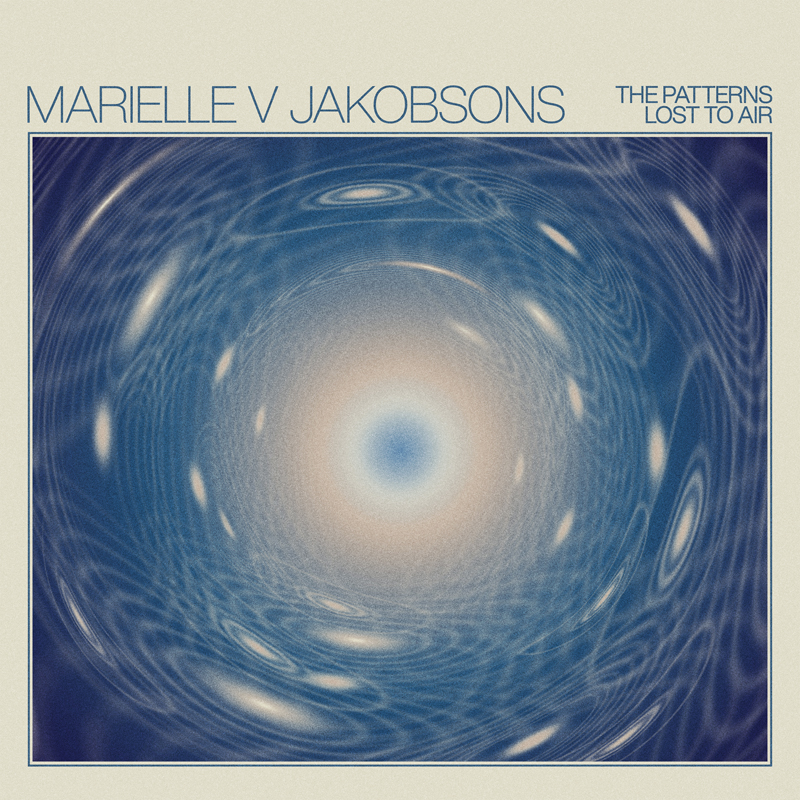
The Patterns Lost to Air, by Marielle V Jakobsons,
Thrill Jockey Records
• • •
In 2023, the prolific Bay Area composer and multi-instrumentalist Marielle Jakobsons started feeling unwell. She had been traveling internationally for work and tested positive for Covid when she returned. It was a particularly virulent strain that did not resolve after a few weeks of rest. Over the following year, the illness took over her life as its lingering effects became worse and worse. She went from being an intrepid hiker, who exulted in trekking through misty Northern California trails and mountains, to someone who struggled to walk up a flight of stairs. She constantly felt fatigued and out of breath, straining to do basic tasks. Her brain fog was so heavy that she had difficulty reading music; despite decades of classical violin and piano training, the notes were suddenly a blur. After several doctors’ appointments, she was handed a frustrating diagnosis—“long Covid”—a constellation of confusing symptoms with no clear cure. Eventually she sought treatment at Stanford University’s long-Covid research clinic, which studies several experimental medicines and therapies, and started on a path toward recovery.
Her contemplative new solo album of ambient music, The Patterns Lost to Air, is an introspective reflection on affliction and convalescence, recorded from 2023 to 2024 when her symptoms were at their most intense. The record emerged out of many limitations and constraints. She embraced a more minimal sound out of necessity, a departure from the multifaceted layers and sun-drenched psychedelic drones of her previous work, whether solo or in bands like Saariselka and Date Palms. For this project, she drew inspiration from the spare, gentle quietude of Japanese ambient music, especially the oeuvre of the late composer Hiroshi Yoshimura, who created several beloved ambient albums in the 1980s, and pieces by the architect and sound designer H. Takahashi. The atmospheric string music of Max Richter was another touchstone, along with the soft celestial melodies of the late ambient composer Harold Budd.
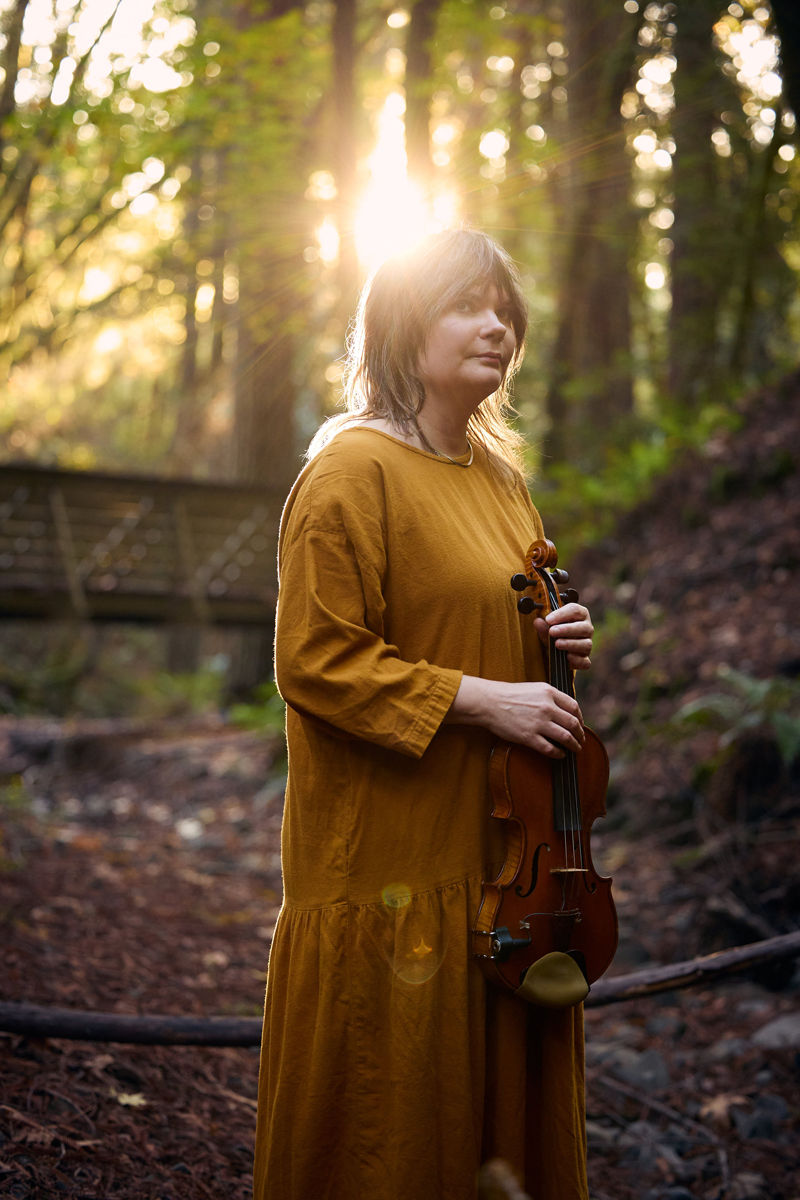
Marielle V Jakobsons. Photo: Ian Albert.
Jakobsons created Patterns in a studio that was built in her Oakland backyard after her diagnosis. The instrumentation was pared down to fit the small space, centering on violin, a vintage Fender Rhodes keyboard, a Moog synthesizer, a Yamaha organ, and a few electronic effects boxes. She recorded bit by bit, when she had the strength to do so, while gazing at birds and trees through the windows. “Eventually I got more motor control back and I was able to have a few minutes a day where I could play something,” she told me in a recent interview. “I’d record it and write it down so I could come back the next day and work on it for a few minutes. It was a really slow and piecemeal process. It was driven by this idea, this sound world, that I wanted to create.”
The patterns and processes that were formerly so central to Jakobsons’s identity as a musician faded and had to be rebuilt. While listening, you can hear how she learned to play in a completely different style. She had to be more deliberate and more intentional, but also less perfect. Compared to her previous work, her music now had increased space between the notes, so there were new considerations in how the sounds related to each other. Electronics also had to be used differently to lessen cognitive load.
The Patterns Lost to Air is on the shorter side, as albums go, encompassing seven tracks over thirty-seven minutes, but it makes a strong impact. It opens with “Warm Spring,” a title that seems to signify happy times, but the glacial music feels wintry and melancholy. The keyboard motif has a delicate, fragile clarity that is echoed by a haunting violin.
The next track, “Everything Lost Remains,” signifies the optimism that is woven throughout the record: that what was taken away by the illness still exists somewhere, even if it seems gone forever. The song is placid and soothing, with a luminous synth pattern set against a bed of lush strings.
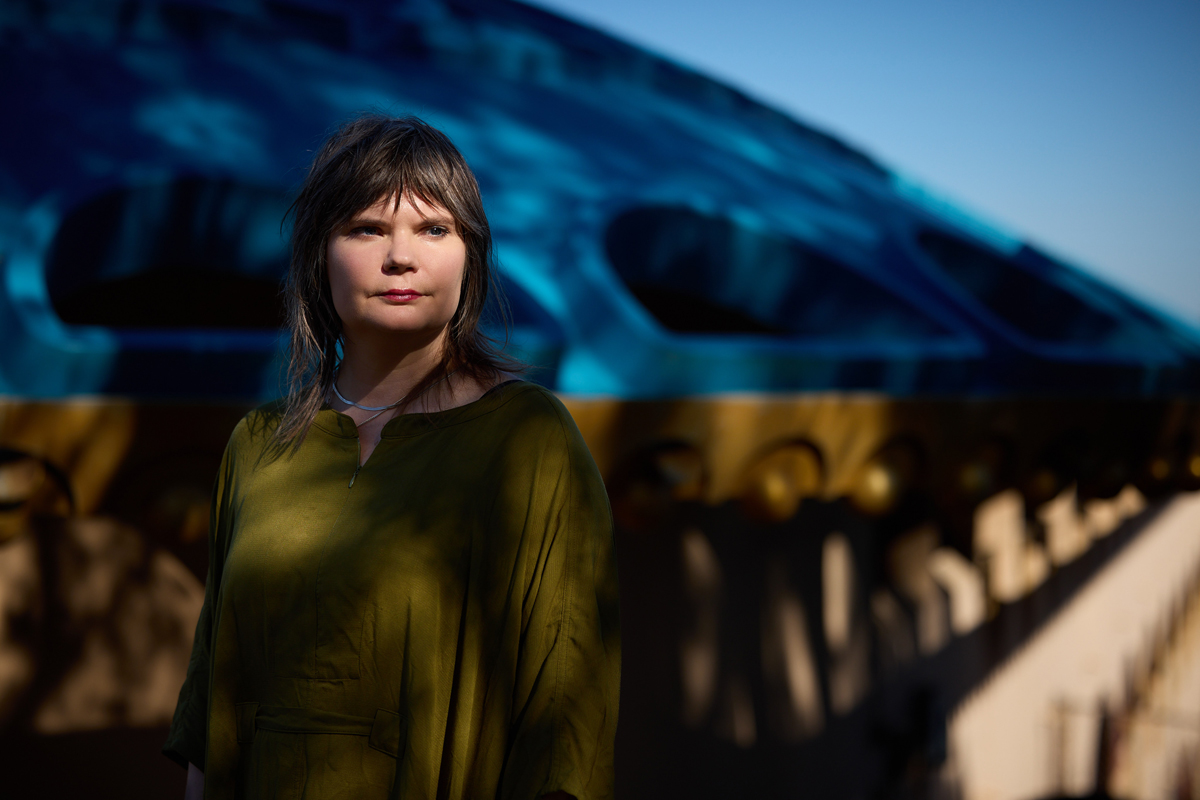
Marielle V Jakobsons. Photo: Ian Albert.
“The Salt Rounds” was motivated by Jakobsons’s newfound interest in science fiction. As she gained the energy to read more, she became fascinated by vintage sci-fi, including the Dune series. For this track, she envisioned wandering around ancient salt lakes, perhaps on a distant planet. It is the only song with her vocals, which are added subtly to the mix, like another texture. The trancelike repetition of the keyboard instruments is reminiscent of Terry Riley’s cosmic 1970s explorations.
“Insistence” is moody and despairing, with downcast violin parts and ominous keyboards. There is a momentary ray of light at its center, as a sunny melody seems to briefly emerge, but it dissolves almost as quickly as it arrives. “Before the Air Remembers” is similarly pensive, anchored by sorrowful violin.
Though there are gloomy sections, the album carries an overall message of hope—that the happiness of the past will eventually return. “Silently Spinning Around You,” the last track, closes the record on an uplifting note, with a dulcet melody and cosmic electronic sounds. It is richly layered, pointing to growth and fresh beginnings.
The Patterns Lost to Air is a courageous work shaped by loss and difficult personal transformation. Each song comes from a deep investigation of restrictions, and figuring out how these constraints can be a gateway to further avenues of sound and meaning. They create spaces where desolation and renewal can exist simultaneously. This is music as rehabilitation and rebirth—mourning a past life and slowly finding oneself again, while navigating through the gradual process of healing.
Geeta Dayal is an arts critic and journalist specializing in twentieth-century music, culture, and technology. She has written extensively for frieze and many other publications, including the Guardian, Wired, the Wire, Bookforum, Slate, the Boston Globe, and Rolling Stone. She is the author of Another Green World (Bloomsbury, 2009), a book on Brian Eno, and is currently at work on a new book on music.