


 Melissa Anderson
In a retrospective series at Anthology Film Archives, the cult-cinema icon’s bewitching essence is on full display.
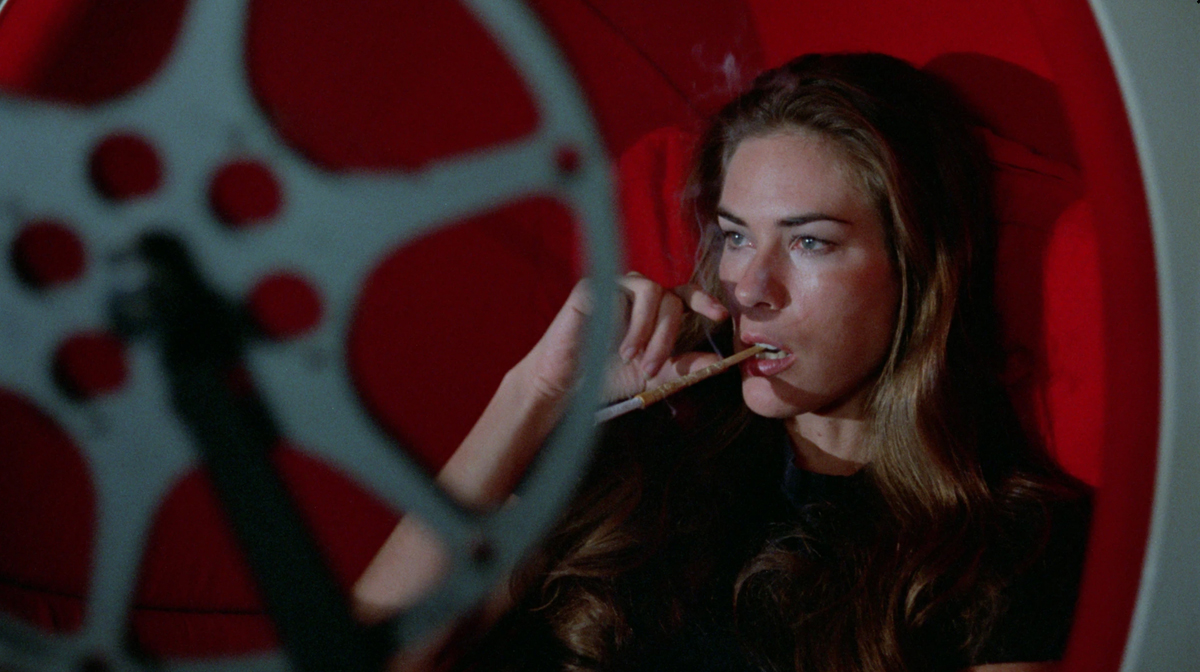
Mary Woronov as Camilla Stone in Sugar Cookies. Courtesy American Genre Film Archive.
“Mary Woronov Conquers the Universe,” Anthology Film Archives, 32 Second Avenue, New York City, December 10–21, 2025
• • •
By the time Anthology’s Mary Woronov retrospective kicks off, the incomparable actress will have just turned eighty-two. She is among the last surviving Warhol Superstars, one of the few to go on to a successful (or at least enduring) post-Factory screen career, and surely the only of Andy’s cabal to have appeared in episodes of Charlie’s Angels; Murder, She Wrote; and My So-Called Life. During Woronov’s Factory years (roughly 1965 to ’67), the Pop potentate often called her “Mary Might,” surely a nod to the six-foot-tall actress’s indomitability. But perhaps that “might” also indicated what her physical comportment—a welter of clashing and complementing semiotic signals—suggested was possible. Even in a milieu of raging exhibitionists who tweaked and torqued all codes of gender and sexuality, Woronov stood out: a heterosexual futch with model looks, a straight-male impostor who often dressed like a gay guy.
Woronov was perfecting this style—she called it “gender slipping”—while an art undergraduate at Cornell; through mutual friends, she met Gerard Malanga, then Warhol’s assistant, in Ithaca in 1965. The next year, she sat for one of Andy’s “Screen Tests,” an experience she recalls “as serious for me as baptism” in her 1995 memoir, Swimming Underground: My Years in the Warhol Factory. In just under four silent minutes, the Woronovian essence is distilled: her sensuous mouth occasionally curls up into a half-smile, half-snarl, further accentuating her dramatically chiseled cheekbones; her feline eyes, when not staring down the camera, scan the room, as if looking for her next kill. She and Malanga, writhing onstage in their signature “whip dance,” became a key component of the Exploding Plastic Inevitable, the Warhol-orchestrated multimedia extravaganzas whose centerpiece was the Velvet Underground, blaring away at deafening volume.
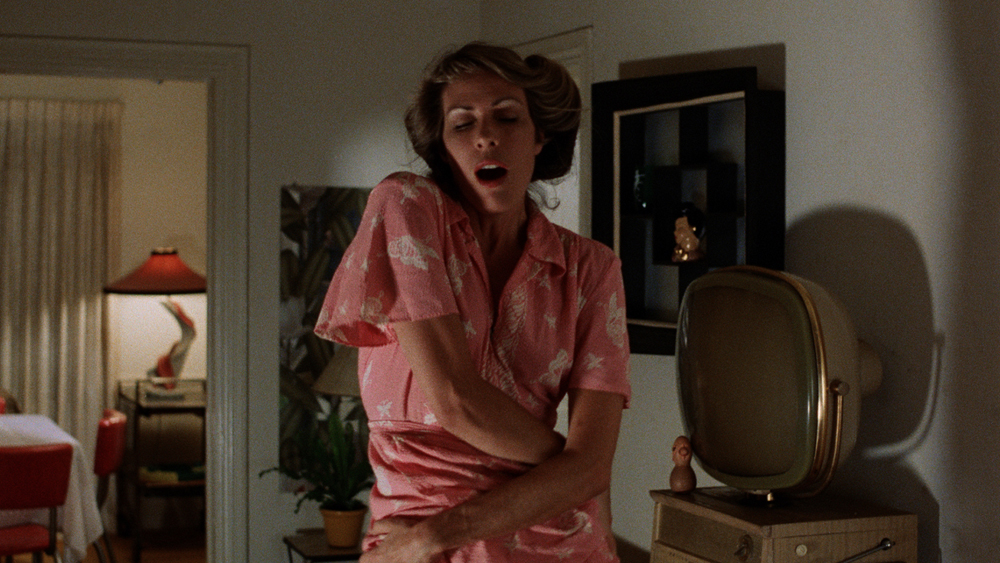
Mary Woronov as Mary Bland in Eating Raoul. Courtesy Janus Films.
Many of these sensory-scrambling happenings took place at an East Village hall called the Dom, the Polish word for “home” (the building had once been a Polish social club). “Dom” would also be an apt term for Woronov in nearly all of her Warhol films, in which those who appear onscreen with her invariably become her submissives. As a ferocious lady cop, she slaps the cuffs on Mario Montez, playing kleptomaniac screen legend Hedy Lamarr, in Hedy (1966). In The Chelsea Girls (also ’66), Andy’s double-screen magnum opus, Woronov—dubbed “Hanoi Hannah,” in reference to the real-life North Vietnamese on-air personality whose radio dispatches were morale-crushing weapons against American troops (“Defect, GI. . . . You know you cannot win this war”)—excels at her own form of guerrilla psyops. In a voice twenty fathoms deep, she commands, insults, and terrorizes three Factory ingenues.
What accounts for Mary’s bewitching might in these Warhol productions? As Woronov herself explains in Swimming Underground, she alchemized romantic rejection into perversely soul-salving role-playing, a process worth quoting at length:
That I lusted after the rock ’n’ rollers that hung out on our fringes, in the bars, and in the arms of other women was my darkest secret. . . . The painful part was that these guys did not like me in the least. My way of dealing with this problem was simple. If I couldn’t have them the next best thing would be to be them, as if being was a form of possession. (This was amphetamine logic at its clearest.) I started imitating guys in the same extreme fashion that the queens used to imitate women; I held doors open for women, talked about tits and ass with men, and told everyone I owned a gun. Needless to say, guys hated me but the queens applauded. That’s the thing I loved about drag queens, life was a constant movie; no matter how ridiculously things didn’t match they would sacrifice everything for the pose, and I was definitely into the pose.
She kept up the pose for a little while longer, abandoning the Factory altogether after Warhol was shot in 1968. (About that aforementioned “amphetamine logic”: Swimming Underground unsparingly recounts the days-long drug binges Woronov participated in with the “Mole People,” the most ardent speed freaks in Andy’s circle, led by the Maria Callas–worshipping, motormouthed Ondine.)
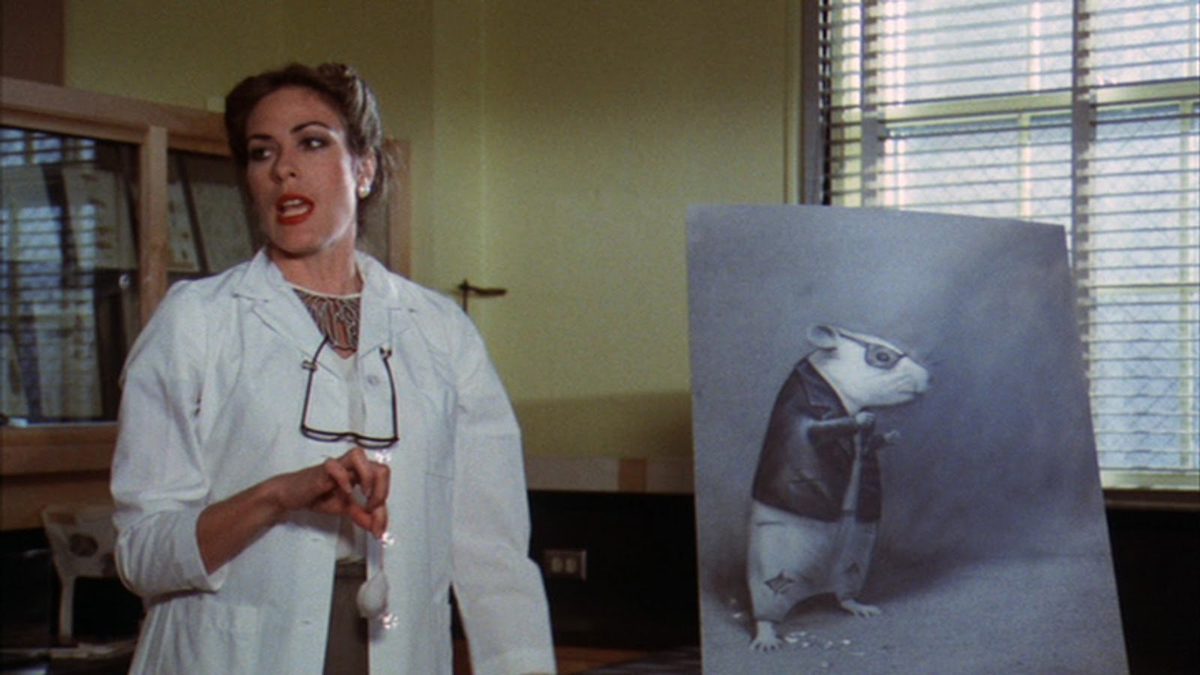
Mary Woronov as Miss Togar in Rock ’n’ Roll High School. Courtesy American Genre Film Archive.
Post-Warhol, Woronov devoted more time to acting for the stage, whether off-off-Broadway (in works directed by John Vaccaro and other luminaries affiliated with the Play-House of the Ridiculous) or on (in David Rabe’s Boom Boom Room in 1973). During the three years (1970–’73) that she was married to exploitation auteur Theodore Gershuny, she made the same number of films with him, a triptych culminating in Sugar Cookies (1973). In this lesbo-porno riff on Vertigo, Woronov plays suave sapphist Camilla Stone, whose lover, Alta (Lynn Lowry), an aspiring starlet in adult entertainment, has been murdered by Max (George Shannon), a producer of skin flicks. Seeking revenge, Camilla hatches a labyrinthine plot that involves naif Julie (Lowry again), an Alta doppelgänger. Empty calories, Sugar Cookies is nonetheless chock-full of flair, as evident in Camilla and Julie’s shopping spree at a YSL boutique scored to the Jaynetts’ infectious R & B ditty “Sally Go ’Round the Roses.”
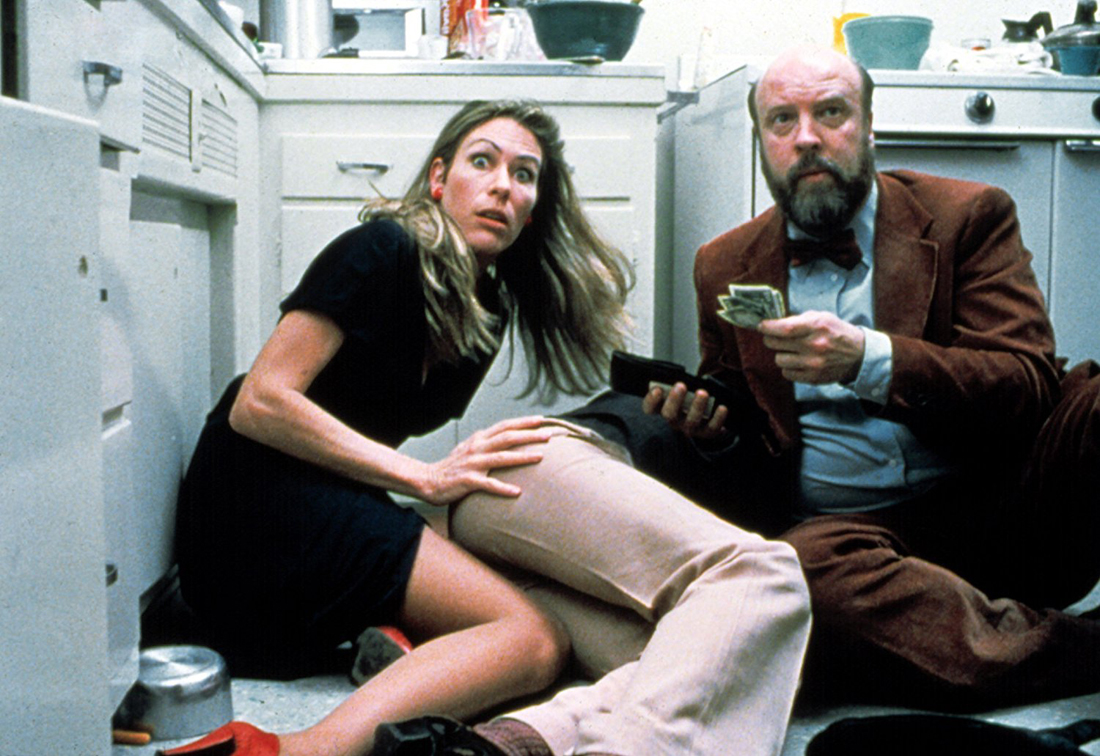
Mary Woronov as Mary Bland and Paul Bartel as Paul Bland in Eating Raoul. Courtesy Janus Films.
Woronov’s films in the ’70s and ’80s are defined by her work with a collaborator just as crucial to cementing her cult-cinema iconicity as Warhol: the actor, writer, and director Paul Bartel. As Calamity Jane in the Bartel-helmed dystopian satire Death Race 2000 (1975), Woronov impresses as one of five bloodlusty drivers in a gruesome cross-country spectacle that awards points for killing pedestrians. Bartel and Woronov portray two different types of authority figures in Allan Arkush’s Rock ’n’ Roll High School (1979): he as Mr. McGree, the Beethoven-loving music teacher who soon becomes as big a fan of the Ramones as his charges; she as new principal Miss Togar, a gray-suited martinet determined to extirpate any “shameless display of adolescent abandon.” In Bartel’s dark comedy Eating Raoul (1982), he plays a slightly swish oenophile in a sexless, though highly companionate marriage to Woronov’s hospital nutritionist. The prim LA couple bankrolls their dream project—opening a rustic restaurant—by luring, then murdering, cash-laden swingers. Seven years later, Bartel and Woronov would appear in another outrageous SoCal farce he directed, Scenes from the Class Struggle in Beverly Hills; among the idle rich in this Buñuel-by-way-of-Aaron Spelling send-up, Woronov’s Lisabeth Hepburn-Saravian, riding off with the houseboy, seems to have the best chance at happiness.
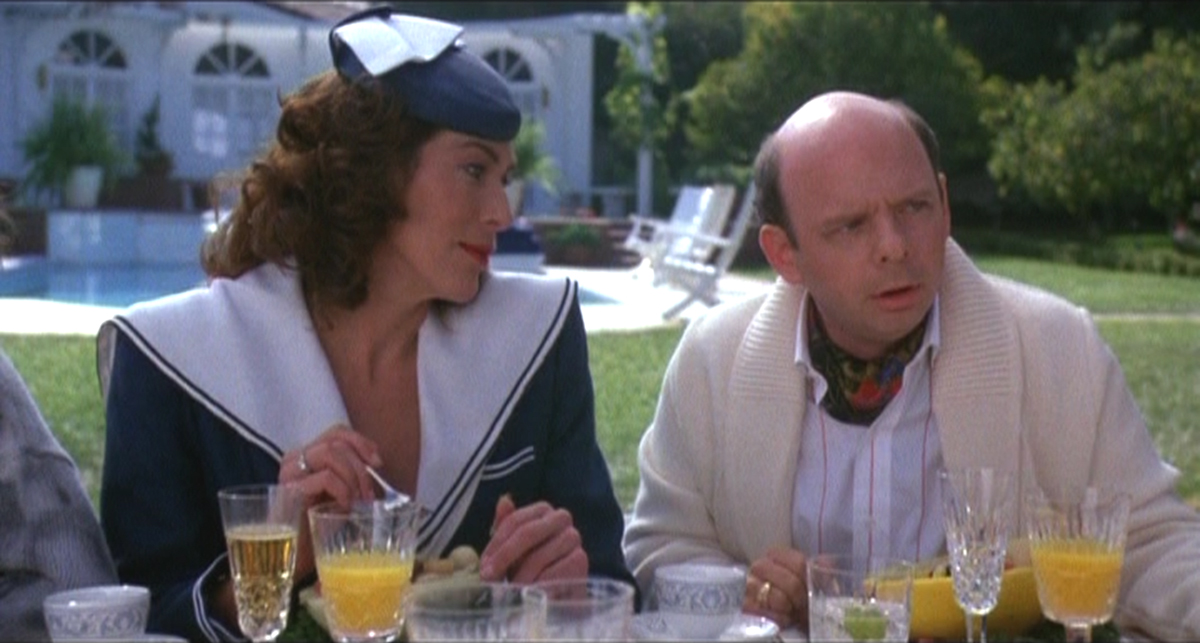
Mary Woronov as Lisabeth Hepburn-Saravian and Wallace Shawn as Howard Saravian in Scenes from the Class Struggle in Beverly Hills. Courtesy Anthology Film Archives.
In contrast to the ribald Bartel pictures, Woronov enchants in the headier spoof Made in Hollywood (1990) from the video-artist brothers Norman and Bruce Yonemoto. Dreamily stylized, this exploration of moviedom myths features Woronov and Wooster Group eminence Ron Vawter as a married writer couple of some downtown renown packing up their SoHo loft to try their luck in Tinseltown. Once installed there, he chafes at the industry’s enfeebled adherence to formula. She tartly dismisses his high-mindedness: “We’re surrounded by copies. We all eat, sleep, and breathe copies,” a line spoken by a true original.
Melissa Anderson is the film editor of 4Columns and the author of a monograph on David Lynch’s Inland Empire from Fireflies Press. A collection of her film criticism, The Hunger, has just been published by Film Desk Books.