


 Aruna D’Souza
In the newly reopened museum, a balancing act between extravagant architecture and the institution’s historical origins.
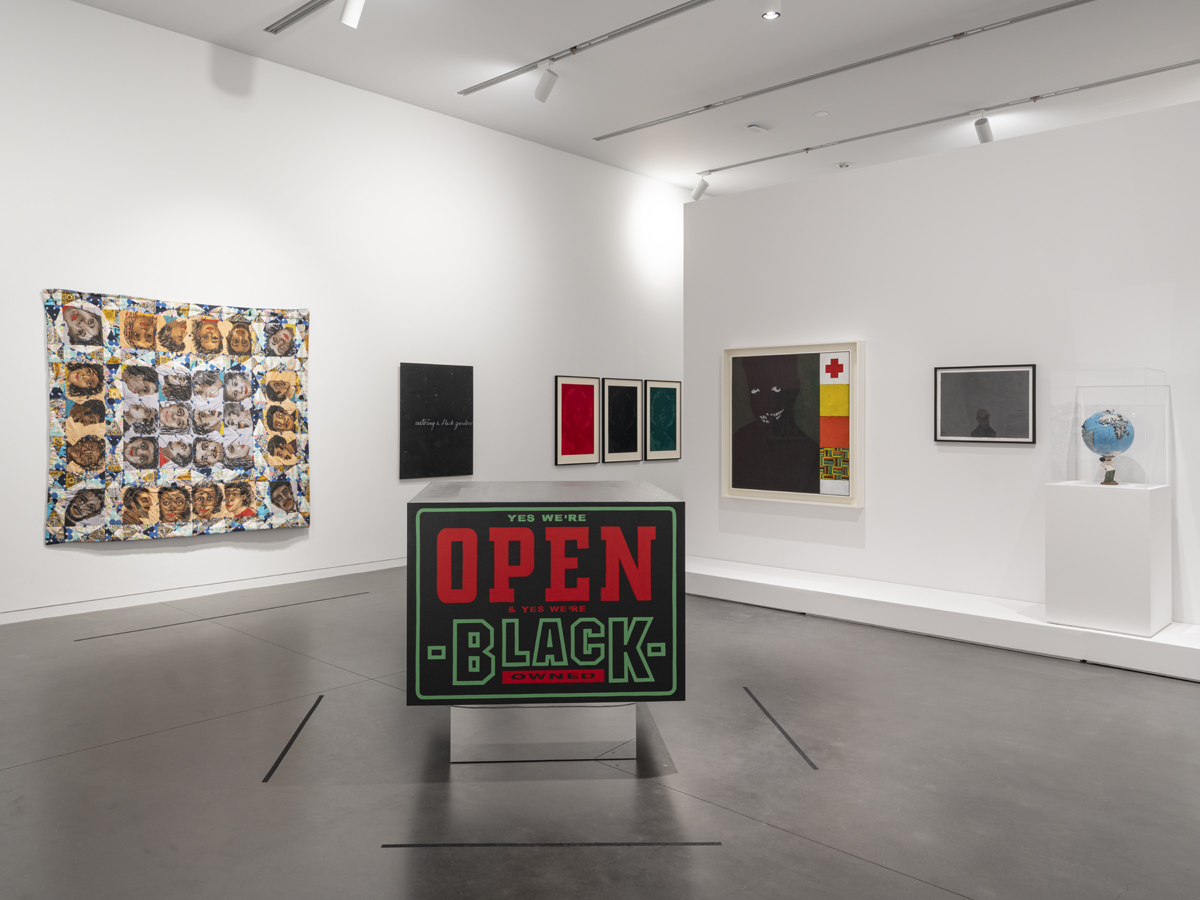
From Now: A Collection in Context, installation view. Courtesy Studio Museum in Harlem. Photo: Kris Graves. Pictured, center foreground: Lauren Halsey, yes we’re open and yes we’re black owned, 2021.
The Studio Museum in Harlem,
144 West One Hundred Twenty-Fifth Street, New York City
• • •
The Studio Museum in Harlem reopened last month after a seven-year-long expansion, and I’m not sure I’ve ever seen so much sheer joy about an art institution in my life. Daily previews and parties for artists, community leaders, and art-world glitterati took place in the weeks before the official debut on November 15, followed by more celebrations with the general public since. Director Thelma Golden, who shepherded the museum’s first purpose-built home into being, has reportedly been in the lobby most days greeting visitors—and not just the fancy ones. On multiple occasions, I’ve been approached by guards—many of whom said they grew up in the nabe—who chatted with genuine excitement about how people are using the space to see art, grab a bite (the cheapest museum eats in town, by the way), or just hang out. This grassroots vibe feels true to tradition: since its founding in 1968, the Studio Museum, with its storied Artist-in-Residence program and innovative educational and community outreach, has focused on nourishing its neighborhood alongside collecting and showing the work of Black artists.
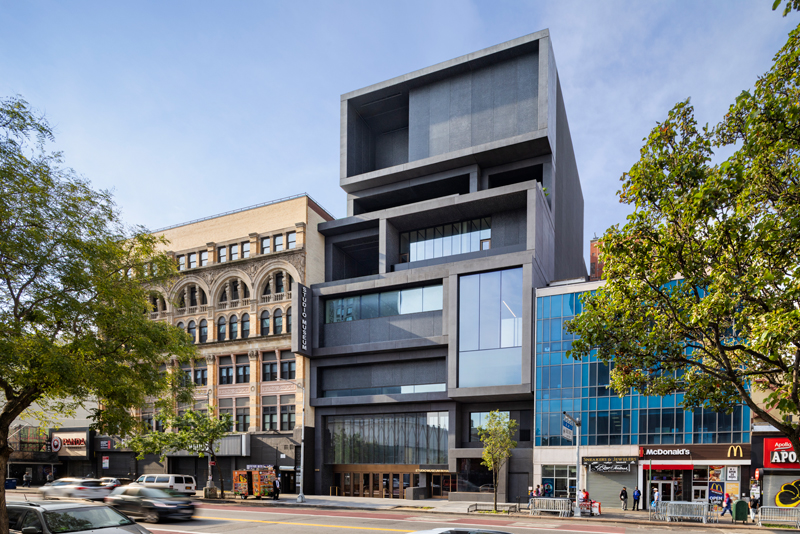
Exterior view of the Studio Museum in Harlem’s new building. Courtesy Studio Museum in Harlem. Photo: Albert Vecerka / Esto. © Albert Vecerka / Esto.
That the institution seems intent on maintaining its commitment to Harlem, even as it claims its place as a quote-unquote world-class museum, is a feat. The building was designed by Adjaye Associates. (David Adjaye—the firm’s principal—was accused by three women of sexual harassment and sexual assault in 2023. The Studio Museum has said Adjaye himself has not been involved with the project since that time, but a press release about the reopening celebrates him unapologetically.) A series of features meant to connect to the neighborhood include a façade composed of variously sized masonry-framed windows evoking the motley streetscapes around it, and a “reverse stoop”—a set of descending steps accessible before the ticketed entry—that will function, in part, as a gathering spot. There is a welcome porousness, too, in the way the expanded artist-in-residence studios and educational workshop are currently open to visitors, a signal there is nothing off-limits to them. This is their building as much as anyone else’s.
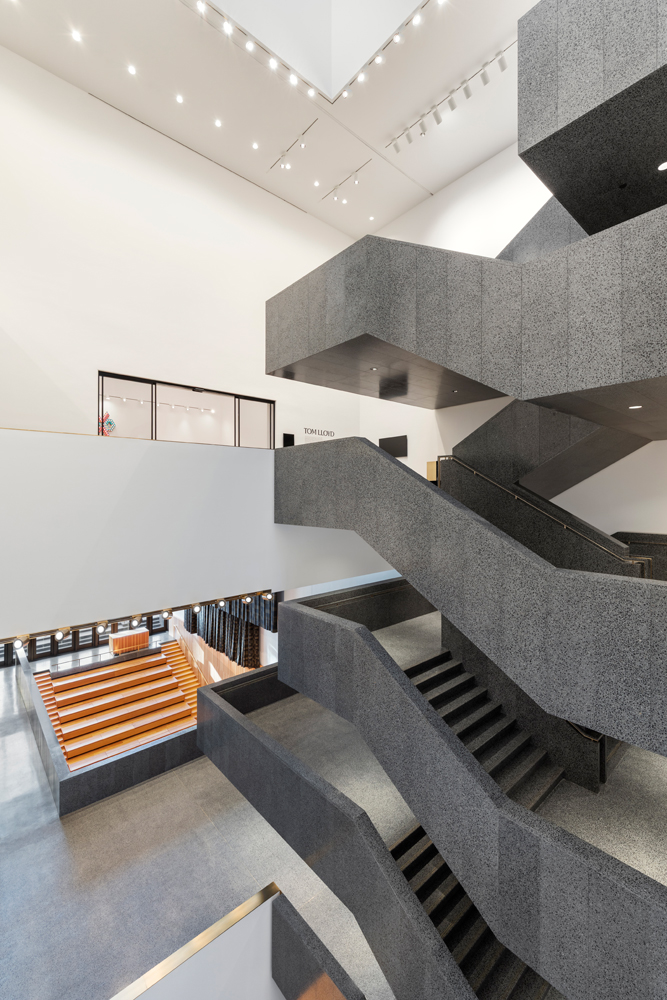
Interior view of the Studio Museum in Harlem’s new building featuring the Grand Stair. Courtesy Studio Museum in Harlem. Photo: Albert Vecerka / Esto. © Albert Vecerka / Esto.
These architectural moves are made within an idiom that is unmistakably Big Important Museum, however. There’s a massive terrazzo-clad staircase that takes up a good chunk of the space’s eighty-two thousand square feet; satin-finished brass detailing, polished concrete, and gleaming wood; and a seriousness of scale and purpose. I’m ambivalent about this luxe corporate vocabulary in general, even if it’s spoken with a Studio Museum accent. Part of me misses the scrappiness of the museum’s earlier iteration—not just for nostalgia’s sake, but because I fear that architecture is deterministic, and that a more corporate envelope means a more corporate approach in general. (I felt the same way after the New Museum’s move to the Bowery, and I wasn’t wrong.) At the same time, why shouldn’t Harlem—an area that continues to be under-resourced, despite creeping gentrification—have an edifice as grand as any other in this city?
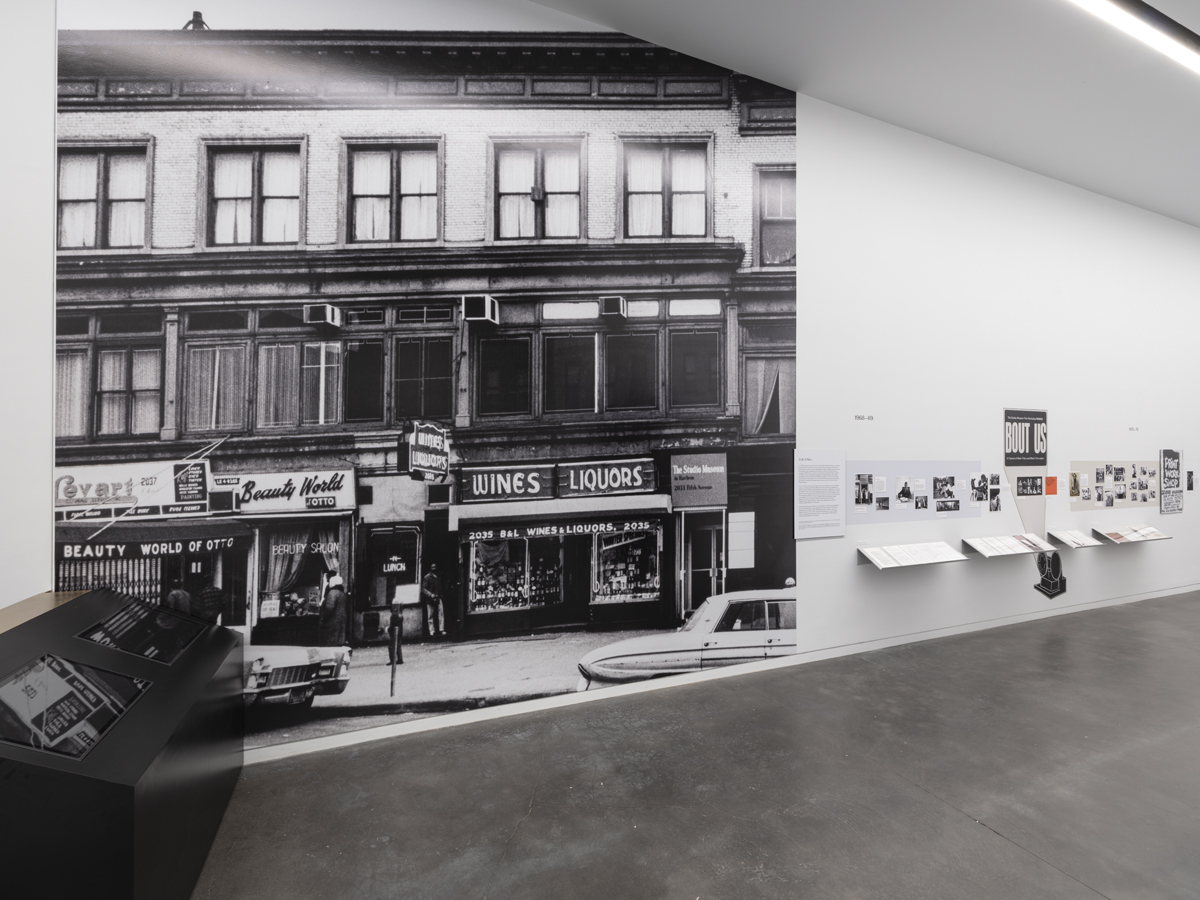
To Be A Place, installation view. Courtesy Studio Museum in Harlem. Photo: Kris Graves.
And why shouldn’t the Studio Museum—which has, in the fifty-seven years since its founding, nurtured and collected artists who now, finally, thanks to its efforts, are recognized by historically white museums like MoMA and the Whitney as canonical—have a facility that states its importance in the architectural lingua franca of the contemporary art world? Especially given that it was founded, at least in part, out of various forms of protest and resistance to the segregationist ethos of those particular institutions in the 1960s, as scholars including Susan Cahan and Bridget Cooks have demonstrated.
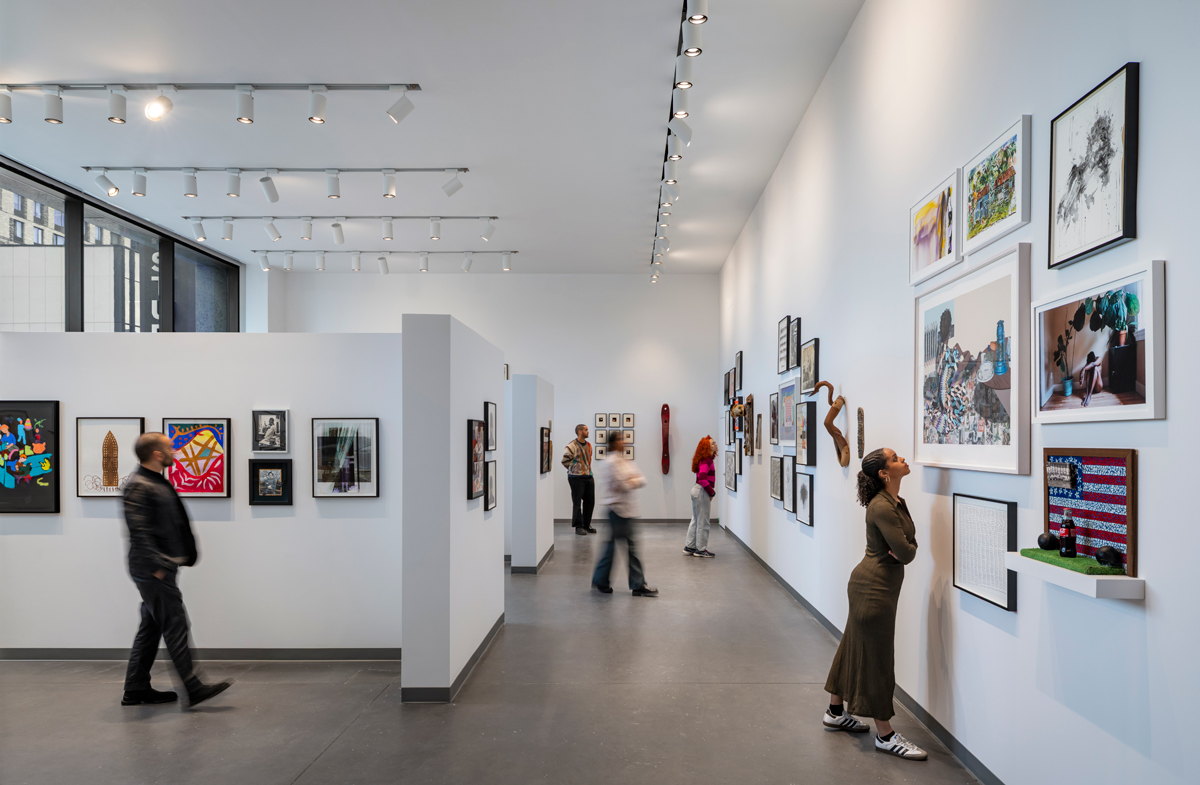
From the Studio: Fifty-Eight Years of Artists in Residence, installation view. Courtesy Studio Museum in Harlem. Photo: Albert Vecerka / Esto. © Albert Vecerka / Esto.
The building has opened with a suite of shows highlighting the depth and prescience of its collection and institutional approach. These include From the Studio, a display of small works (mostly on paper) by nearly all of the 150 alumni of the Artist-in-Residence program, many of whom are household names today (David Hammons, Kerry James Marshall, Simone Leigh, Julie Mehretu, Wangechi Mutu, and so many others); it is installed in the three new artist studios on the museum’s fourth floor. To Be a Place on the sixth floor is a fascinating and truly engaging display of photographs and documentation of the history of the institution.

From Now: A Collection in Context, installation view. Courtesy Studio Museum in Harlem. Photo: Kris Graves. Pictured: Lorraine O’Grady, Art Is . . ., 1983/2009.
In the main galleries on the second and fourth floors, as well as in other, interstitial spaces, is an installation of the museum’s holdings, which will rotate throughout the year. From Now: A Collection in Context is organized according to a series of pithy but useful rubrics. Among these are “The City,” dominated, fittingly, by Lorraine O’Grady’s Art Is . . . (1983/2009), photographs documenting a performance at the Afro-American Day Parade in Harlem. “In/visibility” touches on the pleasures and dangers of being seen, as demonstrated by Lorna Simpson’s conceptual triptych Necklines (1989), a juxtaposition of cropped images of a woman’s neck with plaques below containing terms both benign (“necklace”) and brutal (“necklacing”), and Lauren Halsey’s yes we’re open and yes we’re black owned (2021), a sculpture that replicates storefront design to speak to economic racism and gentrification.
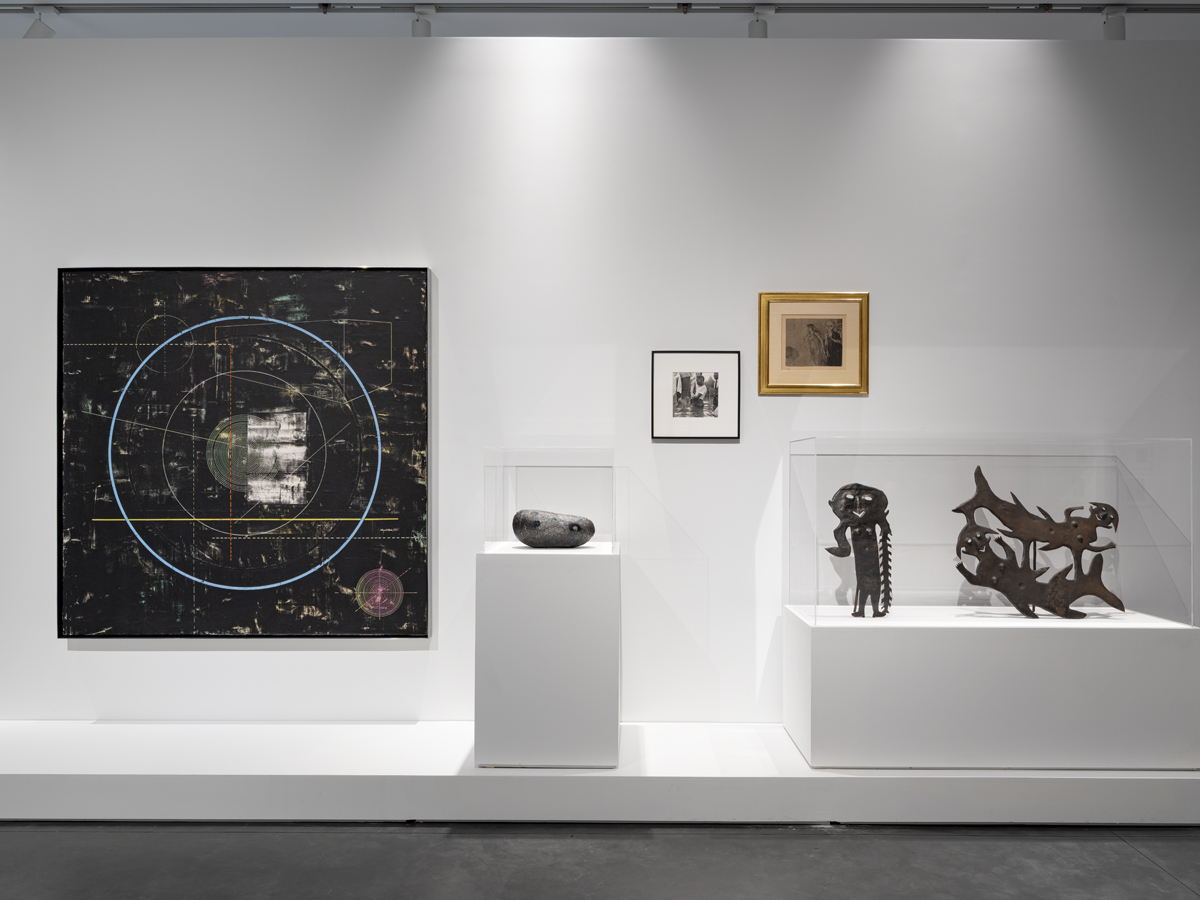
From Now: A Collection in Context, installation view. Courtesy Studio Museum in Harlem. Photo: Kris Graves. Pictured, far left: Jack Whitten, Dead Reckoning I, 1980.
Isaac Julien’s Incognito (2003), a startlingly realistic effigy of the actor and director Melvin Van Peebles, and Elizabeth Catlett’s wood-hewn Mother and Child (1993) rub elbows in “The Body.” “Color” includes Emma Amos, Frank Bowling, Norman Lewis, and Alma Thomas, unsurprisingly, but also the decidedly not-Black and decidedly not-colorful Louise Nevelson, who gifted her ebony-painted wood Homage to Martin Luther King, Jr. to the museum upon the work’s completion in 1985. In “Spirituality,” the choice to feature Jack Whitten’s Dead Reckoning I (1980)—a fully abstract painting that, in its geometry, seems to point to the mysteries of the universe—is pure genius.
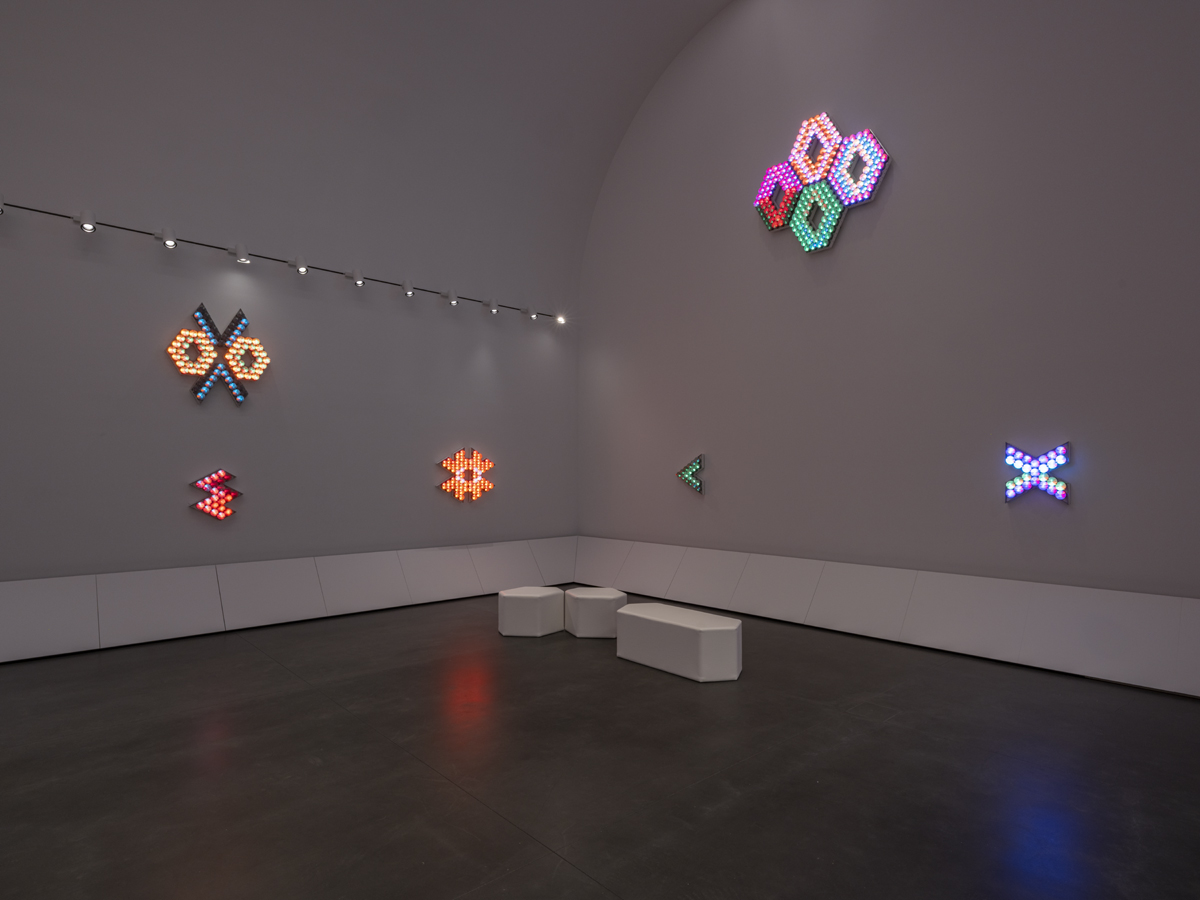
Tom Lloyd, installation view. Courtesy Studio Museum in Harlem. Photo: Kris Graves.
A Tom Lloyd retrospective on the third floor is a gratifying throwback to the Studio Museum’s origins—the artist and founding member of the Arts Workers’ Coalition was the subject of its first-ever exhibition, Electronic Refractions II, in 1968. In the vaulted gallery, the geometric arrays of colored lightbulbs, precisely timed to illuminate according to certain patterns and rhythms, couldn’t feel more contemporary. But this throwback is a telling moment of revisionism, too: the exhibition glosses over the conflicts that subtended the Studio Museum’s founding. Its decision back in the day to present Lloyd’s light sculptures was strategic: they couldn’t have been further from the brashly political, socially engaged work advocated for by the Black Arts Movement, and were much more in line with what you might have seen at MoMA or the Whitney. This caused some controversy among Harlem residents—including artists and community activists—who were already suspicious of the new institution, in part because they understood many of its initial founders and funders to be downtown drop-ins (read: rich and white). At the opening, according to the artist Ed Spriggs (as recounted in Cahan’s Mounting Frustration: The Art Museum in the Age of Black Power), a museumgoer smashed at least one of the pieces, shouting as he did, “This shit ain’t no Black art. This ain’t no Black museum.”
Today, wall texts in the gallery explain that some of the pieces have had to undergo extensive conservation, and that in some cases they only approximate the originals—but no mention is made of the circumstances in which some may have been damaged. (The incident is cited in the catalog.) This history may be an inconvenience to the celebration of Black culture that the Studio Museum wants to promote in its public display, but it seems a shame to leave out the frictions that have always inhered to the idea of what constitutes Black culture in the first place.
Aruna D’Souza is a writer and critic based in New York. She contributes to the New York Times, 4Columns, and Hyperallergic. Her new book, Imperfect Solidarities, was published by Floating Opera Press in 2024.