


 Harmony Holiday
In the duo’s new hip-hop album, I Guess U Had to Be There, a lyricism that finds its solidarity with the ’60s.
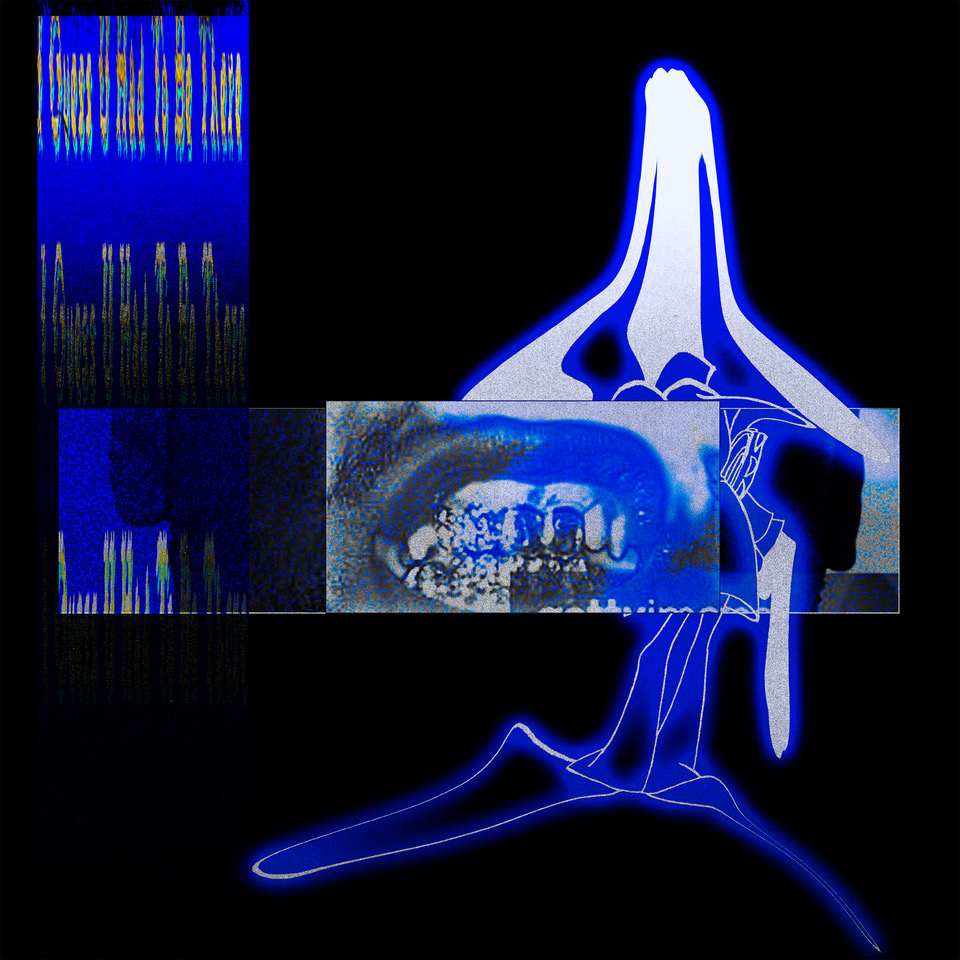
I Guess U Had to Be There, by Elucid & Sebb Bash,
Backwoodz Studioz
• • •
Get the head / the body follows / get the head nigga / get this nigga’s head / the body follows . . . win the head / you are the head.
In a landscape where they’re assassinating or kidnapping heads of state routinely, almost flippantly, it quickens the heart to hear an Amiri Baraka sample reverse-engineering decapitation in the middle of the first rap album I’ve listened to this year, an excerpt that consists of the poet chanting about form and consciousness in that familiar, feel-good 1960s militant drawl. It gave me the distinct sense that 2026 would be a great year for music and a treacherous one for geopolitics, that the cliché symbiosis between horror and good art is too rooted in the human experience to be deterred even by technocracy that wants everyone to feel like we’re living on our own personal algorithmic timeline with no susceptibility to interventions from other sentient life-forms. How I miss the days when such poetic contraptions as this Baraka recitation felt like weapons and not like tropes or head trips. Producer Sebb Bash’s placement of the sample as an incision between Elucid’s casual revelations, a stitch for half-open wounds, conjures those days. We’re almost new again, no detectable scars on the optimism machine—the body follows. It’s fitting that the album is called I Guess U Had to Be There—I’ve always felt that way about my favorite decade of the twentieth century, so favored that for me it exceeds its bounds and spans from 1960 to 1973, valiant years for the altering of consciousness through music, years whose acoustics (protest chant, bop, free jazz, funk, soul) encouraged rigor and embodiment. I wasn’t there except through music and literature, but I champion the era nonetheless, with all the resigned smugness of those who were. New York–native rapper Elucid’s lyricism occupies that decade’s territory, reminiscent and intense about its solidarities without being corny or shrill.
“First Light” opens the album with limp claps butting against muted sirens until the atmosphere is galloping and chivalrous, a race against erasure of self that seeks both anonymity and aggrandizement, proclaims as much, inscribing and retracting a born identity—I’m on farmer time, in call-and-response with an unnamed, unaddressed female voice, sentimental against Elucid’s surreal litany of self—don’t let me lose you, she pleads calmly, from some phantom corner in his mind, sampled to be a ghost reentering flesh as the central I barrels or staggers past, introducing and reintroducing himself as tentative hero, and finally, I’m Lonnie Holley / highly favored / somebody pray for me. Lonnie Holley is a friend of mine, a folk hero, one of my favorite people; music that wears him as scarecrow or talisman can only be a sacred assemblage of shattered gimmicks hanging in an impossible forest in the Alabama styx, where I spoke to Lonnie and his son Ezekial this weekend as they excavated fragments of Lonnie’s vandalized and abandoned art. This music knows some of what I know about light being more relentless and enduring than shadow, sometimes using shadow to cloak itself, about raising the living and the dead together as a unified ecosystem and not calling attention to that skill as ecology, which would attract extractionists. Lonnie and Baraka were also friends, reunited on this album. It’s refreshing when the woozier, more balladesque second track starts with leave me the fuck alone, and finds some insults, complaints, and familiar rap bravado as ennui, flat tire on a stolen Citi Bike in the hottest week on earth. Octavia’s blues. It’s comforting when an emcee doesn’t coast through an album on virtue signals and songs of will, when he goes low, digs beneath the imaginary into the mundane that conjures it. And the production, functioning more like great accompaniment in jazz here, knows how to brace and invite the shifts in mood. We don’t like you / didn’t care to pretend to . . . make revolution irresistible, the had-enough of shucking and pandering attitude continues on the next track.
“Equiano,” likely after the abolitionist writer Olaudah Equiano, features Shabaka Hutchings on flute and a layering of refrains that mimics his chordal progressions and settles into boast, there may be others but there’s none like—this. This is as relaxed and day-on-the-stoop-in-summer as the album gets, paradoxically while repeating the line I don’t want ’em in a cage I just want them off my stoop. Hearing voices, becoming an aggregate of those voices, haunted, but in a laid-back, low-stakes way, not possessed or puppeteered by the spirit of the dead poets gathered throughout but in unspoken deference to them, Elucid conducts his chorus of visions so unpretentiously it’s disarming. There’s very little exposition beyond the first light, dawn comes and the day it brings refuses to explain itself, is too busy living and being lived, until I Guess U Had to Be There assumes the personality of a book of poems packaged as an album, and listening feels a lot like reading in that you catch enjambed lines and turns more often than raps with aggressive centers and ideologies or lore to prove or use as provocation. The voice, baritone and unwavering, is its own evidence, proof enough of what the speaker believes and experiences, a tell. He’s exasperated but optimistic and capacious; he’s a rapper with access to scripture—I been buked / she been scorned, he reminds, moves on to washing his greens well and wearing green well. Spiritually, Elucid and Sebb are continuing the work as devotional play of MF DOOM and Madlib, but without the iconography. There’s no mask, no valorization of villainy, just regular men with penchants for high-minded lyricism in the everyday.
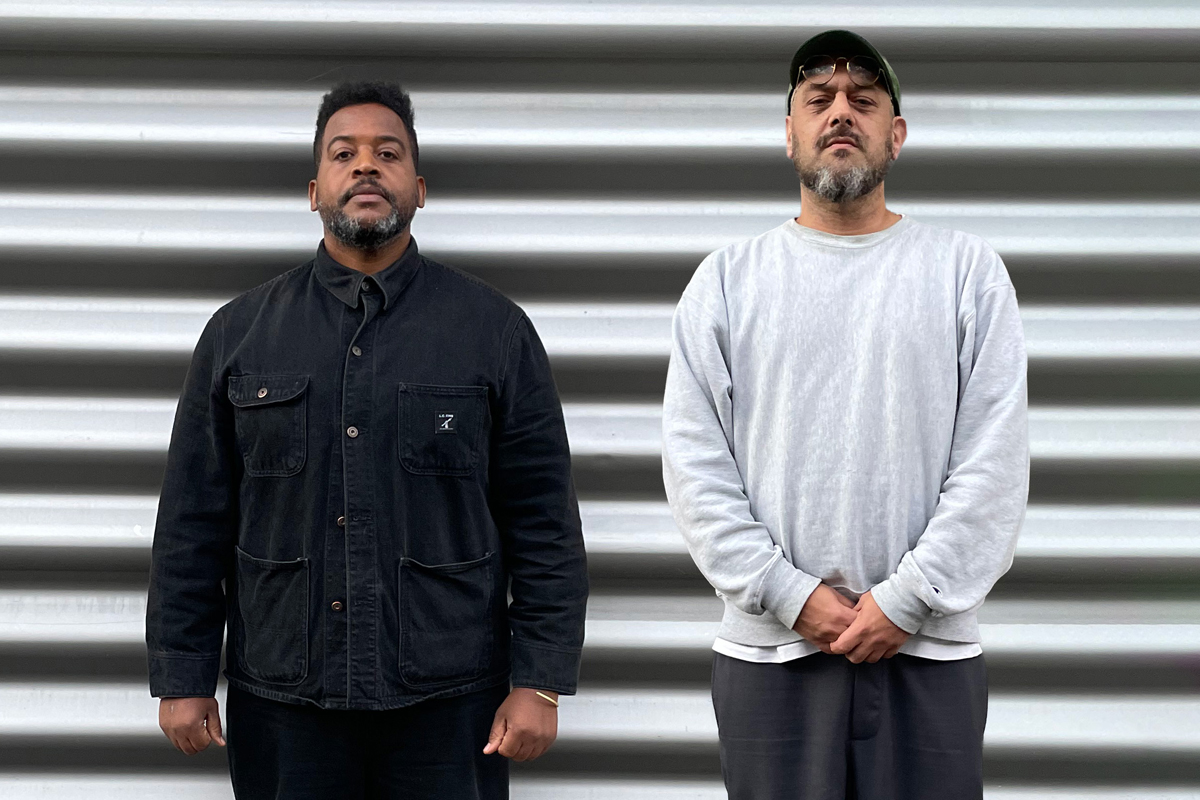
Elucid and Sebb Bash. Courtesy Backwoodz Studioz.
While writing this, I asked Madlib if he’d heard of Elucid; he said no, followed by a routine treatise on why he only listens to beats and instrumentals in his downtime and theorizing about the future of AI in production. Survivors of that play-turned-theater are jaded, jilted, legends not just in their own minds and not necessarily resting on their laurels but struggling to not look so far back so often that they become pillars of salt. Baraka used to lecture about “the tradition,” on and off the record, and the importance of situating yourself in it, and pushing its boundaries, and carrying its torches without letting them burn you. Some accommodate the tradition so well it smothers them and becomes anathema; they dream of escaping or betraying it, like it did them (by slipping from its real progressive potential to the rhetoric of representation and back in a loop), as revenge. I know for a while I had that dream, and I too stopped being able to hear rap without thinking about Diddy or Epstein or apolitical egomaniacs talking over war and genocide to discuss bitches, petty rivalries, and drugs they pretend to sell like CIA plants. When the genre became saturated with propaganda and singles desperate to be club bangers by way of becoming TikTok sounds or “content,” I stopped searching for its best poets, too. Elucid’s new work is the first I’ve heard in months that’s made me daydream about the prospects of a renaissance so subtle it won’t succumb to the same cycle of hype and hazard, maybe dismantling the aspects of tradition that function more like ultimatums than guidance. Some of that is just because the duo on this album is having fun, becoming who they are, without trying to hack into the fame-sick machine and cast itself as main character. It earns its role in the story this way.
Harmony Holiday is the author of several collections of poetry and numerous essays on music and culture. Her collection Maafa came out in April 2022, and the extended UK edition was released April 2025. Her book Life of the Party will be out this fall. Her exhibition Spectacular Brooding opens at REDCAT in Los Angeles this April.