


 Paul Chan
Help, I need somebody . . . Through the tenth season of the unscripted TV show, questions of intimacy, drama, personal growth, and Plato.
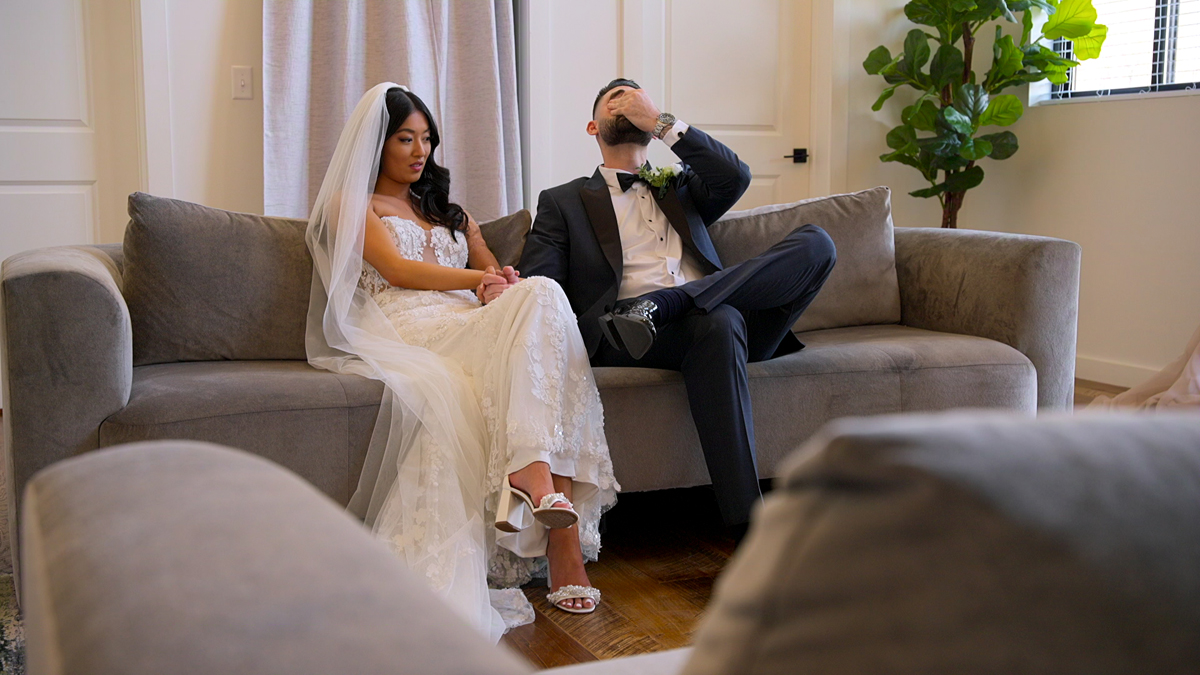
Emma Betsinger and Mike Gibney in season 10 of Love Is Blind. Courtesy Netflix.
Love Is Blind, season 10, now streaming on Netflix
• • •
The popularity of Netflix’s hit cislationship show Love Is Blind seems indisputable. There are eleven iterations set in different countries, like Brazil and France. Love Is Blind: Habibi, based in the United Arab Emirates, draws viewers from all over the Middle East and elsewhere. In 2025, according to Deadline, the flagship American version was the “top unscripted streaming show of all time.” Its tenth season began streaming this year, three days before Valentine’s.
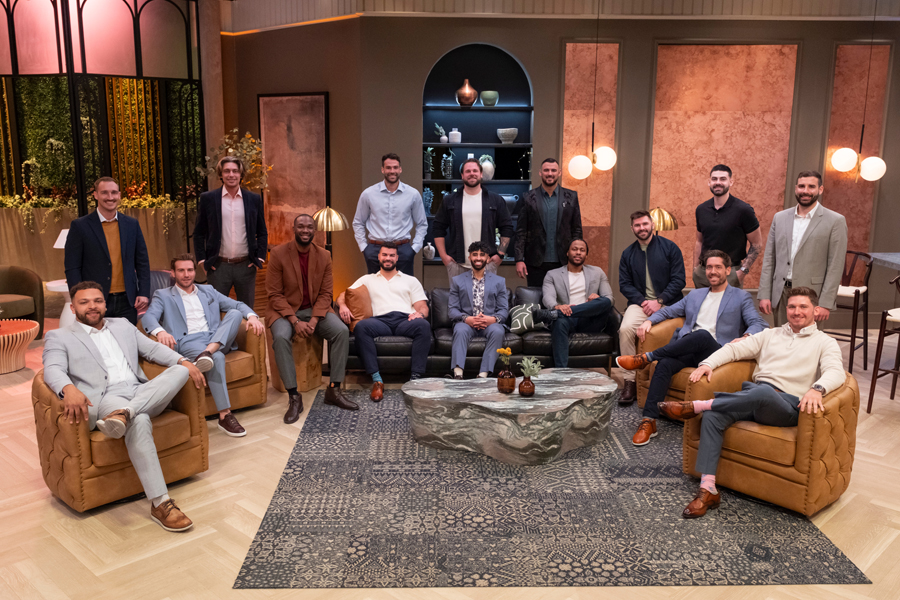
Cast of season 10 of Love Is Blind. Courtesy Netflix. Photo: Adam Rose.
Thirty-two “participants” from Ohio (sixteen men and sixteen women) kicked off this new season. For ten days, participants enter “pods,” or single-occupancy rooms furnished as if Marriott ran the Mar-a-Lago, to go on “dates” (up to sixteen a day!) where they can talk to or hear—but not see—the person in an adjoining pod. The goal is to develop connections strong enough before time runs out that the man proposes to the woman, sight unseen. Only after she accepts do they get to lay eyes on each other.
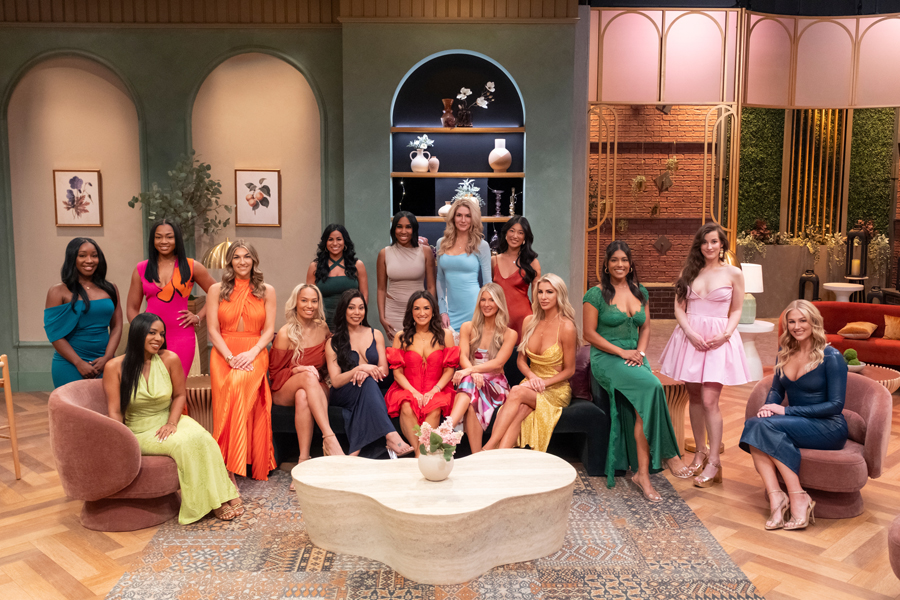
Cast of season 10 of Love Is Blind. Courtesy Netflix. Photo: Adam Rose.
The New Yorker critic Emily Nussbaum calls Love Is Blind part of the “guilty-pleasure industrial complex.” It is that. But the show also promises to deliver a classier kind of content than the trashy hot mess usually found on reality TV. It does this in part by offering viewers a glimpse into an existence where “superficial” qualities like physical looks, social or economic status, or online clout bear no weight on what it means to love or be loved. In a sense, Love Is Blind doesn’t take place in this world, but a more substantive, ideal reality beyond it. Like Plato’s republic for the lovelorn.
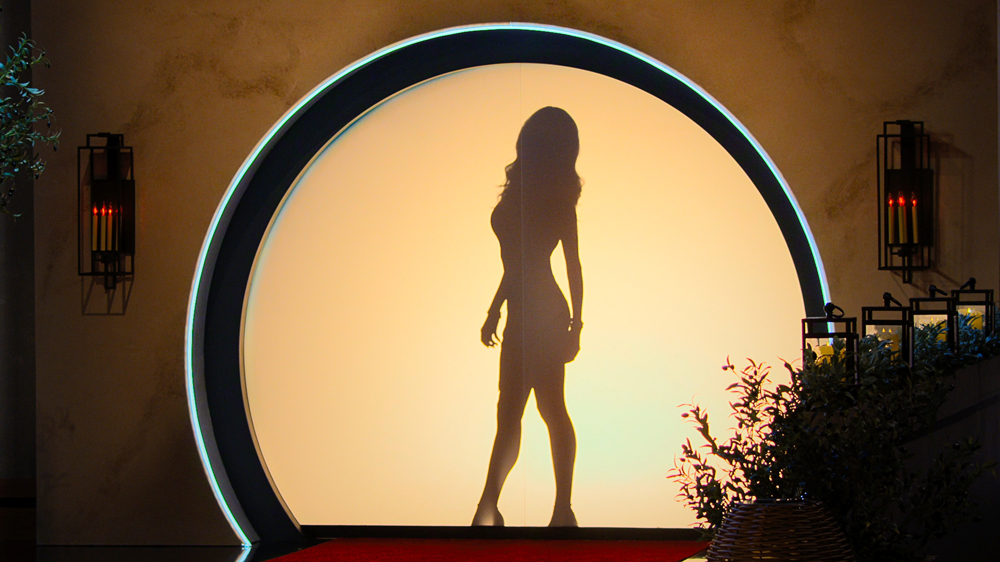
Season 10 of Love Is Blind. Courtesy Netflix.
Seven couples got engaged this season. We follow them on a short vacation (six went to Cabo, and one couple went to Malibu). But it’s really a stress test to see how their love holds up “post-pod.” Then they are set up to live together in an apartment, where we watch them bicker over laundry and trust issues. It’s like eavesdropping on the two people at the table next to you at the Olive Garden as they struggle to show up for one another. The final episodes are devoted to the weddings. The couples stand facing each other at the altar, in front of their family and friends. Will they say “I do”? Is love truly blind? Most say no and walk away. People gasp. Kids cry. It’s very dramatic. A handful say yes. Which is just as dramatic.
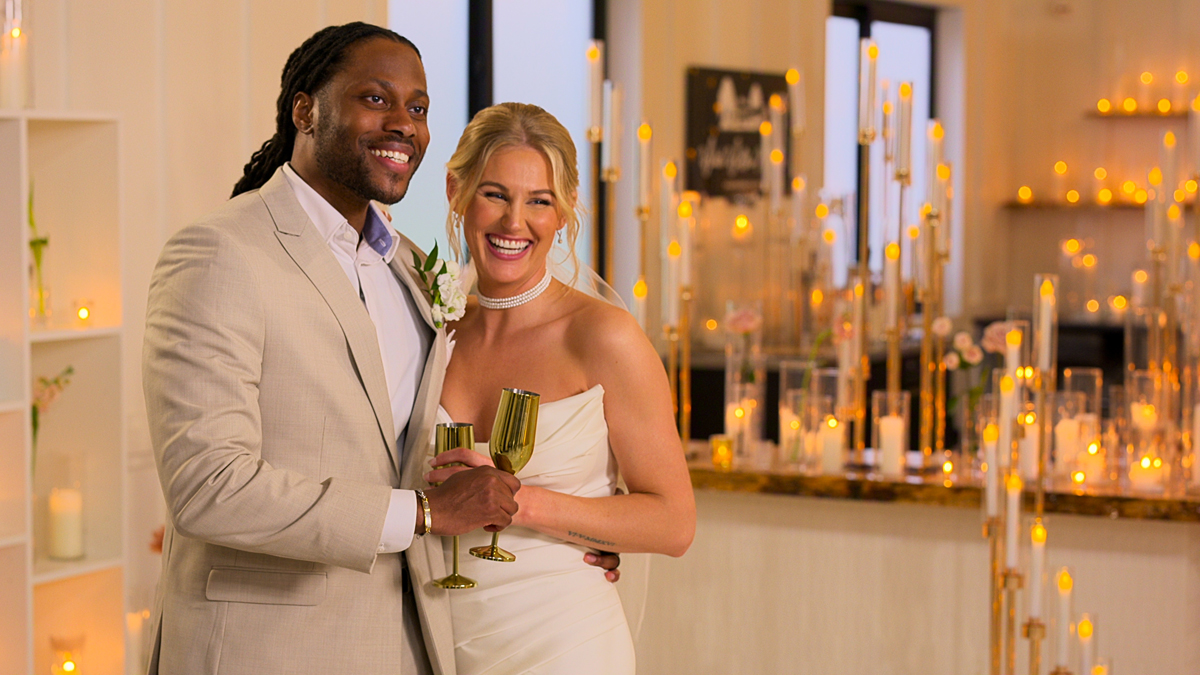
Dr. Vic St. John and Christine Hamilton in season 10 of Love Is Blind. Courtesy Netflix.
Two couples got married this time, and one is still together as of this writing: Victor (or Vic) and Christine. They were stars from the start, beholding each other with such equanimity and grace throughout the show. Vic is Black, teaches public policy at Ohio State, and originally from Brooklyn, while Christine is white and a speech-language pathologist from rural Ohio. Early in the pods, Vic told Christine he appreciated how “God-fearing” she is, which is telling. Piety is a highly prized quality because it tends to signal other traits that people looking to marry find attractive. Just how religiously inclined notions of love are on the show is often unacknowledged.
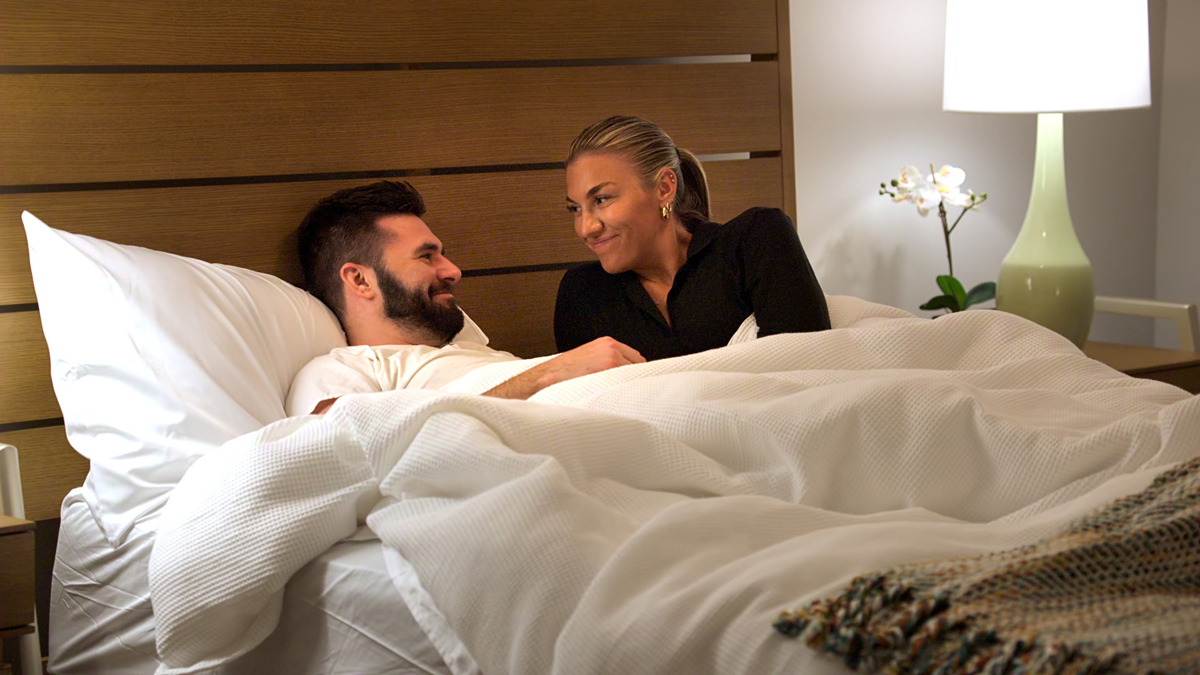
Connor Spies and Brianna McNees in season 10 of Love Is Blind. Courtesy Netflix.
Love Is Blind refers to itself as an “experiment,” as if the show were a kind of scientific study in closeness and intimacy. But what kind of experiment tampers with its subjects to achieve the desired results? The show has been embroiled in a series of lawsuits brought by former participants, which was expertly detailed by Nussbaum in her 2024 expose in the New Yorker. Accusations range from inhumane working conditions and false imprisonment to sexual assault. There is a striking similarity between Love Is Blind and the 1971 Stanford prison experiment, another piece of theater that was staged like a scientific study. Both became global sensations by manipulating and harassing participants to trigger emotional reactions for dramatic effect, which were then offered as “timeless truths” about human nature.
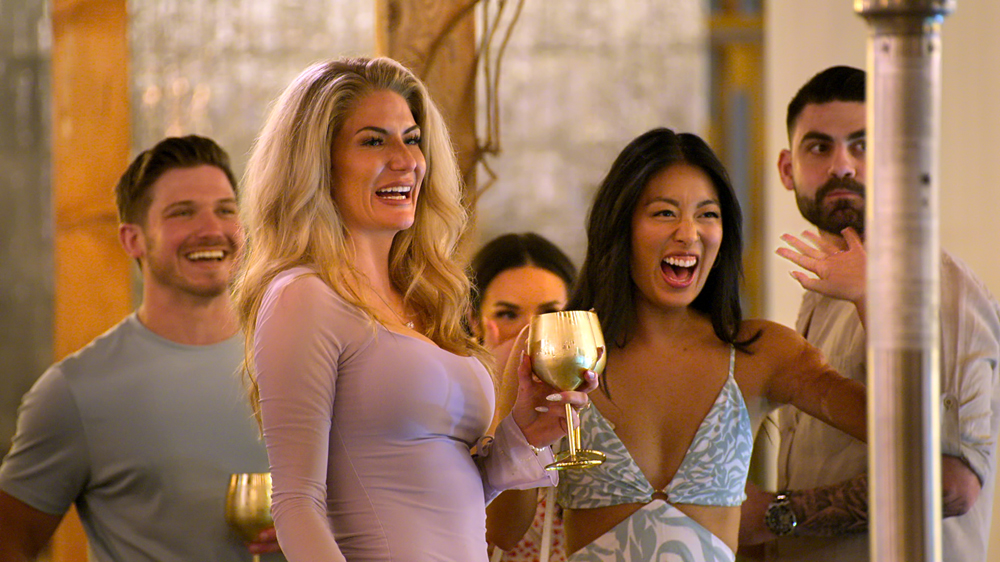
Amber Morrison (center left) in season 10 of Love Is Blind. Courtesy Netflix.
What masquerades for reality on Love Is Blind is, of course, the “real talk.” The show banks on the idea that chemistry depends on open and honest communication. Like Amber, the tall blonde single mom who, after sharing many of her dating mistakes, wisecracked, “men will stick their dick in a chicken sandwich.” Plenty of participants dish out real talk. But few really listen, or can hear what is truly being said. Like Brittany and Devonta this season. Brittany, who already owned a wedding dress before Devonta proposed, clearly wanted to get married more than marry someone. No matter how many times Devonta brought up post-pod how she was basically not “his type,” she continued to believe he was her “person,” even after he broke up with her—one day before the wedding. Maybe the show should be called Love Is Deaf.
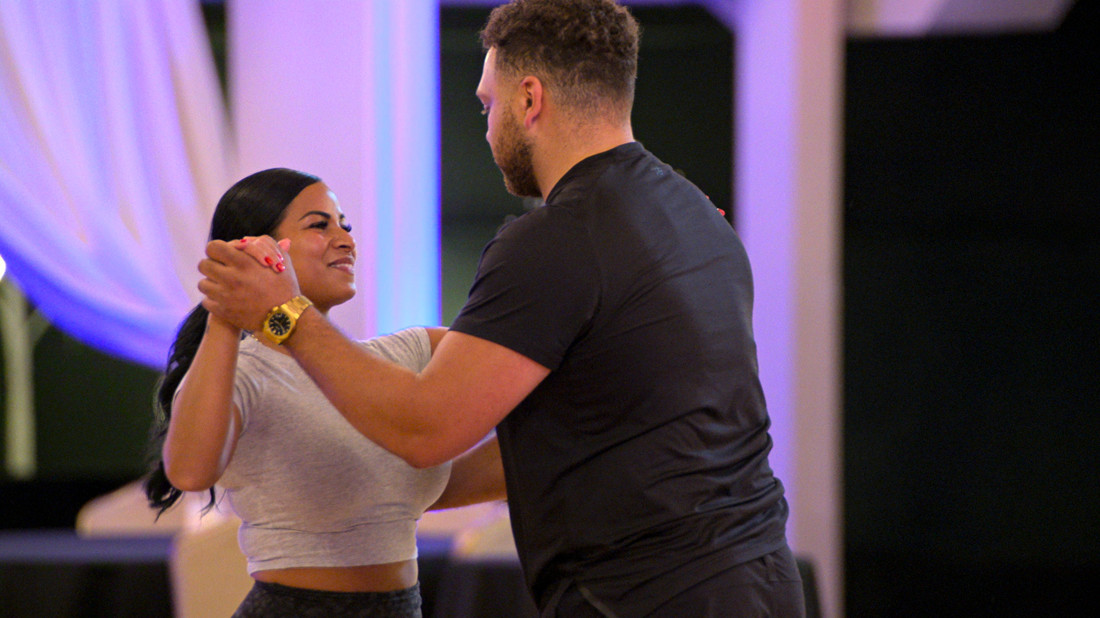
Brittany Wicker and Devonta Anderson in season 10 of Love Is Blind. Courtesy Netflix.
Another kind of real talk happens in the pods, which I call “mirroring.” In order to develop strong emotional connections in the shortest time possible, participants resort to picking up similarities in life stories, interests, or aspirations as tokens of compatibility, if not outright signs of love. This has an interesting effect, where what sounds like real talk is actually participants reflecting back what each other says in a bid to spark interest. For Bri and Connor, it was, oddly, the state of Michigan, while for Alex and Ashley it was their mutual love of their own inflated sense of self-worth. Aristotle put it best: like is attracted to like. The mirroring seems to me rooted in endogamy, or the practice and promotion of marriage between those from similar social, cultural, economic, or ethnic backgrounds. Love here acts like a binding agent, bringing and keeping people together as long as they are alike enough by some standard or norm. And it’s this kind of love the show ends up prizing most.
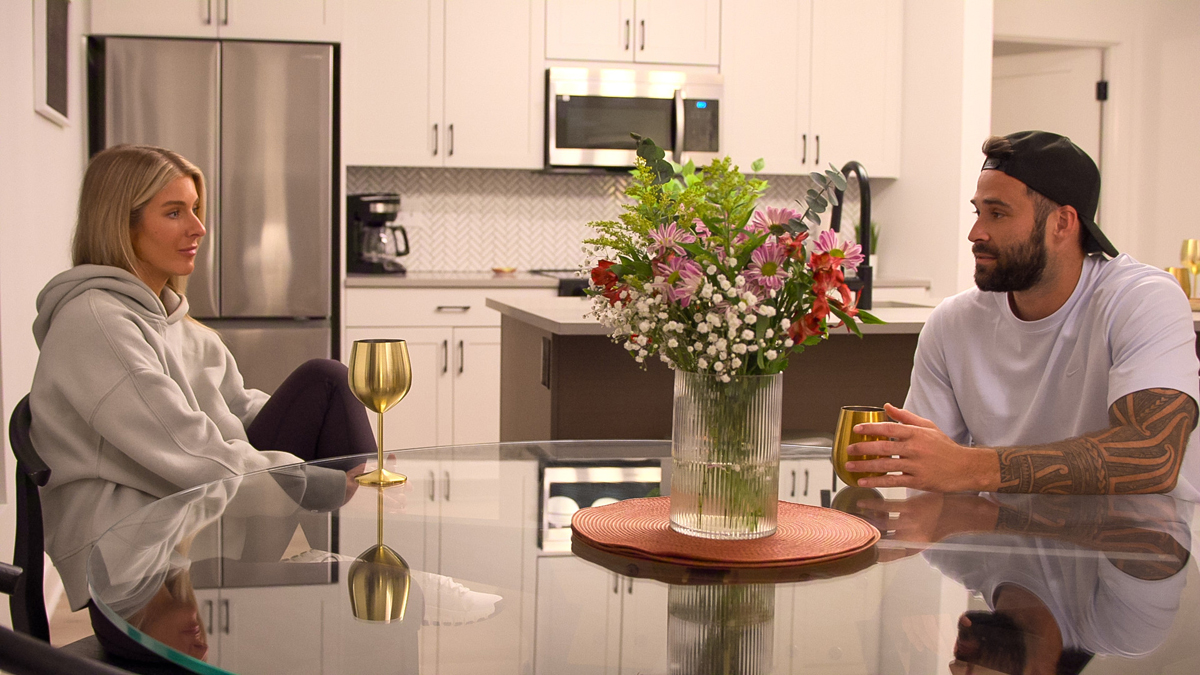
Ashley Carpenter and Alex Henderson in season 10 of Love Is Blind. Courtesy Netflix.
But is this love, actually? I was always under the impression that love is boundless. That true love makes a mockery of the distinctions that separate people. That love, if it is indeed love, abolishes the boundaries that police the self. That loving endures not through the grace of a sanctioning state or institution, but through an ordinary devotion to living out the idea that ecstasy and compassion are really one and the same thing.
Love like this changes a person. I get the sense people on the show know this on some level, or at least give lip service to it. As in seasons past, many of the participants say they are ready to love someone in the same breath as wanting to grow emotionally, even spiritually. Do the dramas and dumpster fires on the show count as growth? Or are they what producers (or algorithms) want, to keep viewers watching? Or perhaps it’s the participants, who perform for us, and each other, in order to grow their social media following, find endorsement deals, and whatever else passes for success in the guilty-pleasure industrial complex.
How do you know what you perceive is genuine and not faked or created for effect? I suppose, like love, it takes patience and a deeper quality of attention. Having watched more seasons of Love Is Blind than I care to admit, it occurs to me that the realest thing about the show is seeing the magnitude of unmet needs in people’s lives. In a way, looking for love is like asking for a profounder kind of help. Custodians of society have failed to meet our needs at every level imaginable. The chaos and uncertainty engulfing us in America is the surest testament to that. I wonder if watching people struggling to talk openly about needing more trust, or care, or fulfillment, without shame or embarrassment, is why the show is so popular. Everyone can relate.
Paul Chan is an artist who lives in New York. His latest exhibition, Automa Mon Amour, is currently up at Greene Naftali Gallery in New York until April 25.