


 Pamela Sneed
In the artist’s exhibition, an unsettling visual travelogue through Black history and the American South.
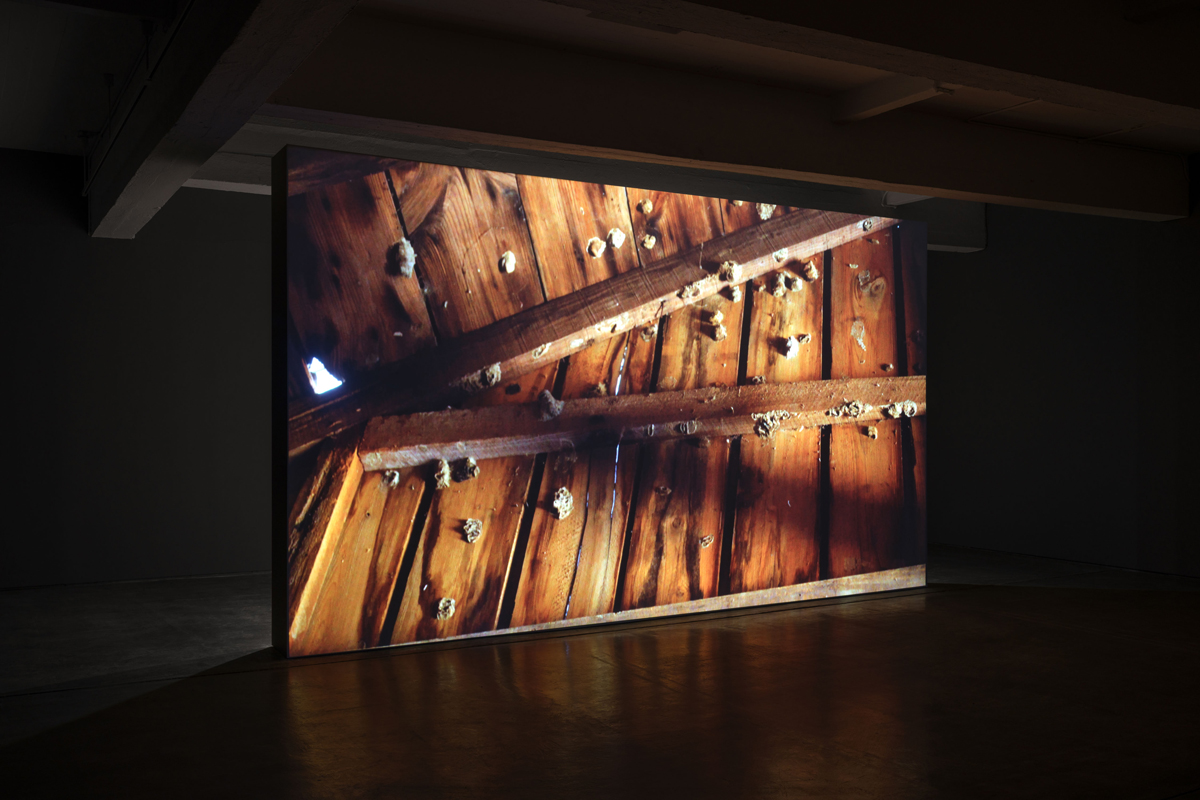
Ralph Lemon: From Out of Space, installation view. Courtesy Paula Cooper Gallery. Photo: Steven Probert Studio. © Ralph Lemon. Pictured: From Out of Space, 2018–21.
Ralph Lemon: From Out of Space, Paula Cooper Gallery, 521 West Twenty-First Street, New York City, through April 11, 2026
• • •
The works in From Out of Space, Ralph Lemon’s current show at Paula Cooper Gallery, initially emerged from a period in the late 1990s and early 2000s, when Lemon traveled extensively throughout the southern United States. As the press release notes, he engaged directly with the history and afterlives of the civil rights movement. Sixteen years later, Lemon returned to this part of the Mississippi Delta and met with Patrick Weems, director of the Emmett Till Interpretive Center in Sumner, Mississippi. The return resulted in a new series of digital black-and-white photographs, displayed for the first time in this exhibition, along with the silent video at the center that bears the exhibit’s name.
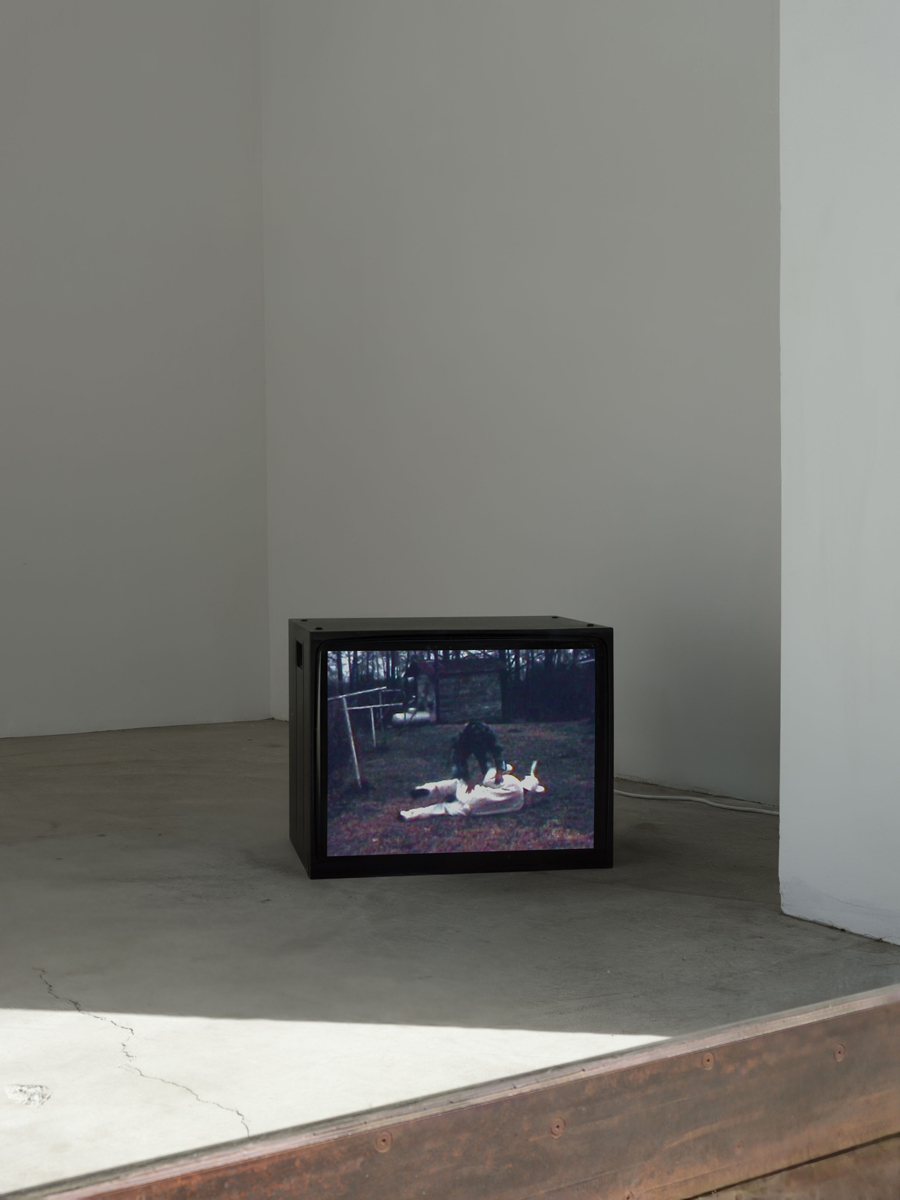
Ralph Lemon: From Out of Space, installation view. Courtesy Paula Cooper Gallery. Photo: Steven Probert Studio. © Ralph Lemon. Pictured: Wounded Rabbit, 2009.
Also on view, in a ground-floor window of the gallery’s vitrine space, presented either as prelude or postscript, is Wounded Rabbit (2009), a video that plays on a loop. In it, Ralph Lemon is dressed in a bunny costume, engaged in some gunplay with an assailant. The piece is devoid of humor. Those familiar with African American lore and Lemon’s historical themes will immediately make the association of Brer Rabbit, the trickster of the Uncle Remus stories. Then, upstairs, just by the entrance, is a line of small, five-by-seven, black-and-white gelatin-silver photographs of landmarks and sites associated with Black history and the American South, the ones taken during that turn-of-millennium trip. Among them are images of Medgar Evers’s home; a statuette of a monkey on a glass table, captioned “Untitled (Elvis Presley’s Living Room, Memphis, Tennessee)”; and a moody untitled picture of the Edmund Pettus Bridge in Selma, Alabama.
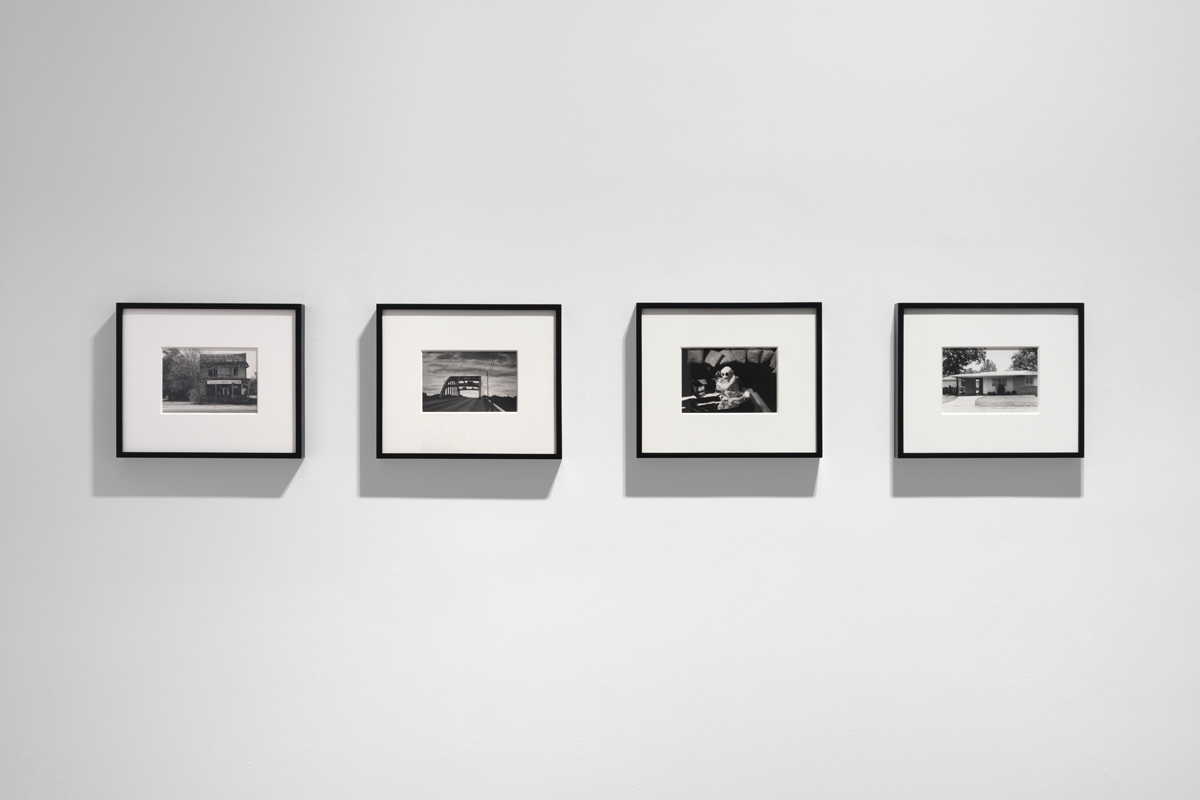
Ralph Lemon: From Out of Space, installation view. Courtesy Paula Cooper Gallery. Photo: Steven Probert Studio. © Ralph Lemon. Pictured, left to right: Untitled (Bryant’s Grocery and Meat Market, Money, Mississippi), 2002; Untitled (Edmund Pettus Bridge, Selma, Alabama), 2001; Untitled (Elvis Presley’s Living Room, Memphis, Tennessee), 2001; Untitled (Medgar Evers’ House, Jackson, Mississippi), 2001.
The bridge is a pivotal site in the American civil rights movement. It is infamous for Bloody Sunday, when state troopers attacked peaceful marchers fighting for voting rights led by figures like the late Congressman John Lewis. It is ironic that the bridge is named after Edmund Pettus, a Confederate general and a leader of the Ku Klux Klan, but it is a symbol of marches that secured the Voting Rights Act, a victory for racial equality. On the floor, in a corner, there is a monitor showing a seven-minute video titled Edmund Pettus Bridge Walk (2001), in which the artist inserts himself into the scene and creates what is called a counter-memorial. Dressed in a period suit, Lemon walks and repeatedly stumbles and drops a stack of thrift-store records. He then gathers them up and resumes his procession. It is a memorial that opposes, perhaps, a linear narrative; it is a choreography that mimics history. Like the marchers themselves, he stumbles, falls, gathers up, and continues. “Living-room dances” and counter-memorial performances at documented lynching sites are staples of Lemon’s work that intervene in, re-present, disrupt, and alter traditional ways of remembering.
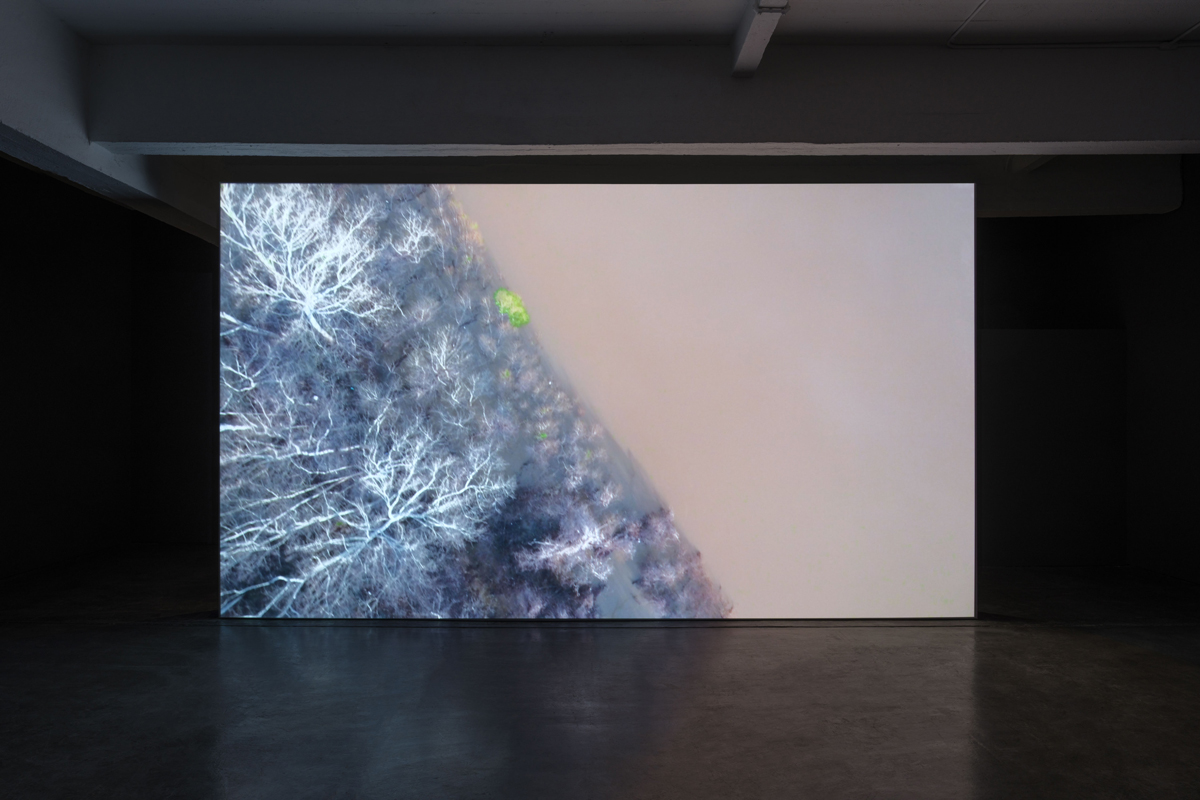
Ralph Lemon: From Out of Space, installation view. Courtesy Paula Cooper Gallery. Photo: Steven Probert Studio. © Ralph Lemon. Pictured: From Out of Space, 2018–21.
The exhibition’s sparse and minimal staging makes sense; it would have to be this way, as the photos and videos themselves are so weighted, multilayered, multifaceted, and overpopulated with memories. There is intended and allowed space for the colossal waves of feeling, thought, and reflection. Those smaller-scaled images play against From Out of Space (2018–21), a large and massive video of drone and aerial footage of the shop, the barn, and river where Emmett Till, a fourteen-year-old African American boy, was brutally murdered in 1955 by white men after being falsely accused of whistling at a white woman outside a general store. His disfigured body was dumped into the Tallahatchie, where he was later found. This event galvanized the civil rights movement. The minimal scale of the photographs offset and underscore the monumental events and violence that took place.
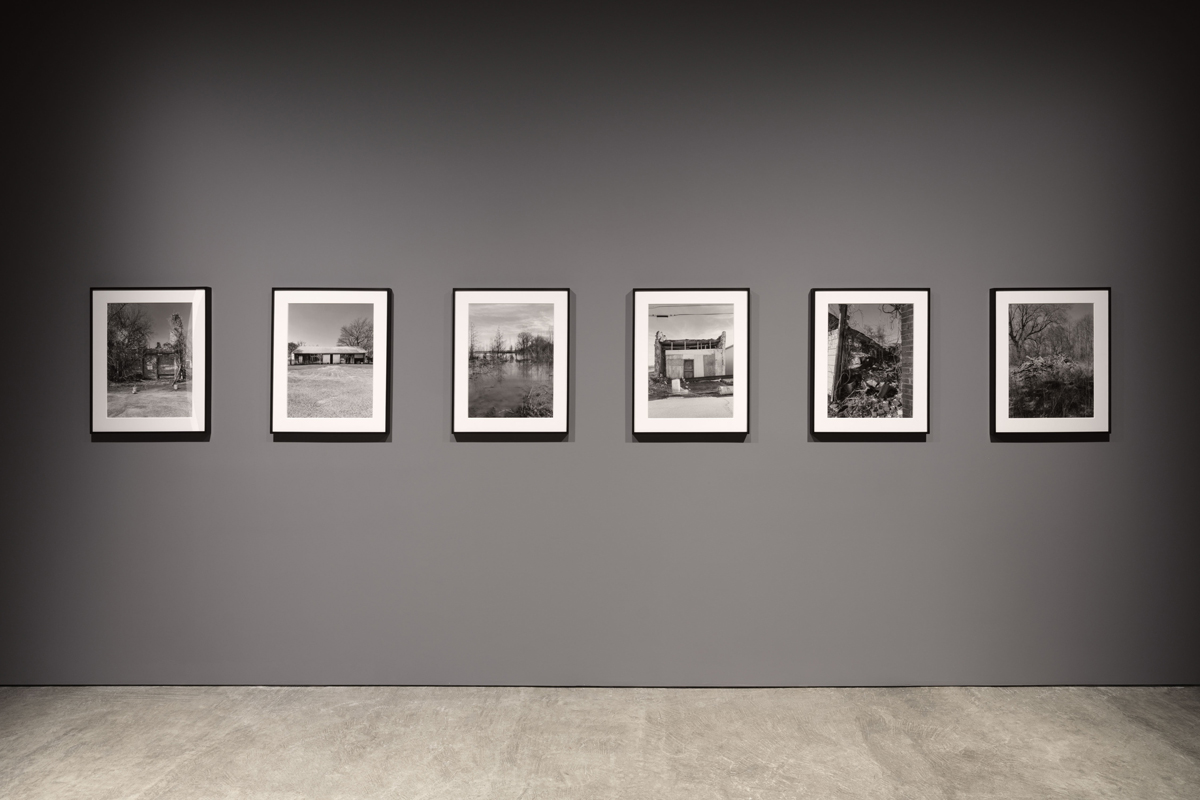
Ralph Lemon: From Out of Space, installation view. Courtesy Paula Cooper Gallery. Photo: Steven Probert Studio. © Ralph Lemon.
Before the aforementioned video, one encounters a second set of black-and-white photographs, from 2018. They are larger in scale and zoom in on the architecture and landscape associated with the Emmett Till lynching. Looking at the photos, the images morph into faces, twisted mouths, dark and empty sockets, stains, muddied waters, tree limbs open bare and exposed. The result is something ethereal, functioning like an interior portrait of the American psyche.
Lemon’s work here presents like a visual travelogue. Outwardly, it is about history, race, racism, Jim Crow, erasure, decay, remembrance, and witnessing. It is also about the artist’s identity, and about grief, yearning, loss, connection, and the multitude of journeys that define one’s life. My mind turns to literature: I think of Richard Wright, his seminal 1954 travelogue that documents his trip to the Gold Coast (now Ghana) on the cusp of independence. It is titled Black Power: A Record of Reactions in a Land of Pathos. This work of nonfiction depicts Wright with Kwame Nkrumah at the founding of Black Star Square. It ends on a portrait of Cape Coast Castle, the former slave warehouse. In addition to being a writer and poet, Wright was a photographer. Because of Lemon’s affinity for Black history, love of language and image, I cite Wright as a probable and noteworthy influence. I recall, too, Beloved, by Toni Morrison, a fictionalized account of the very real Margaret Garner, a runaway who killed her child rather than see her returned to slavery. In Beloved, the character Sethe is haunted quite literally by the child she murdered. It is symbolic of an America haunted by the ghosts of slavery. Like his predecessors, Lemon continues to explore the theme of racial scars, haunting, and terror. The cultural anthropology of scholars and writers like Saidiya Hartman and Paul Gilroy come to mind.
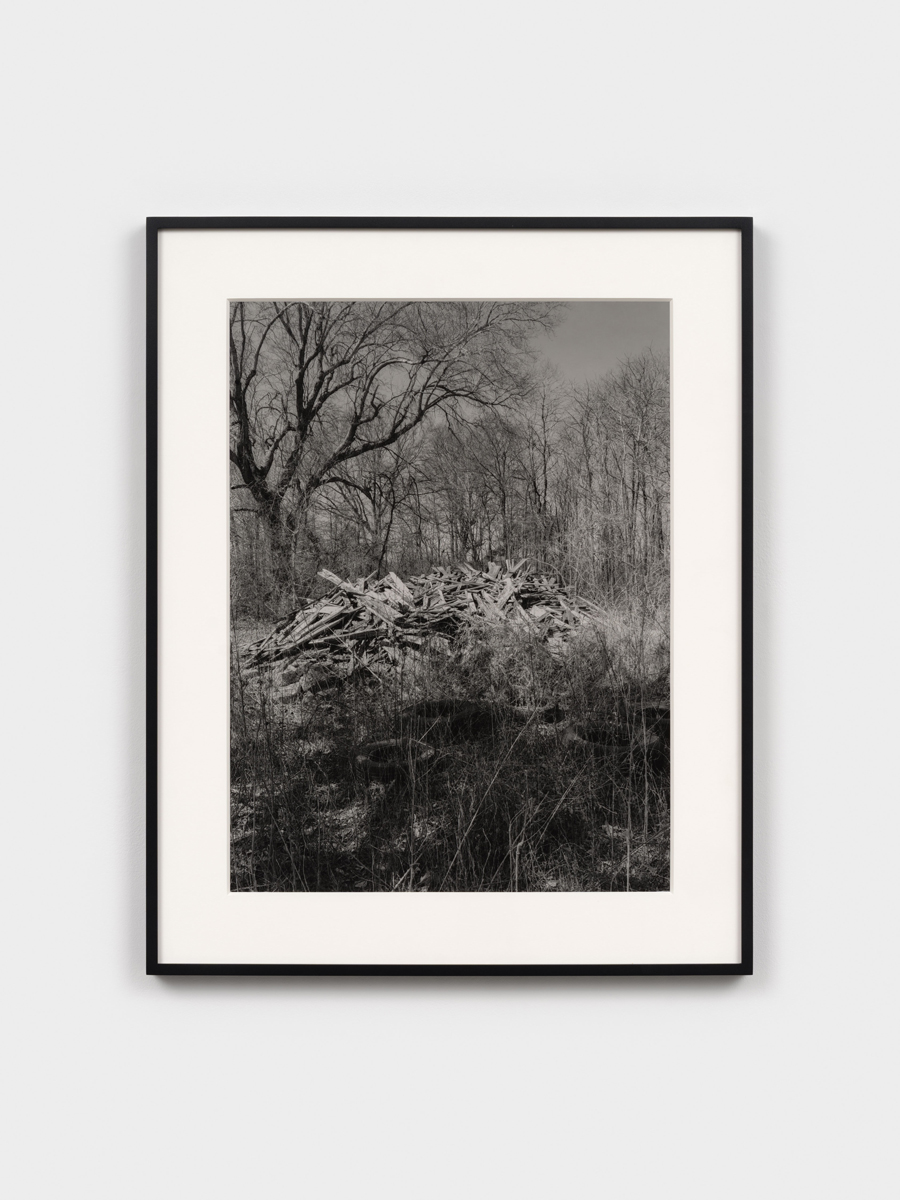
Ralph Lemon, Untitled (Remains of Mose Wright’s Church, Money, Mississippi), 2018. Courtesy Paula Cooper Gallery. Photo: Steven Probert Studio. © Ralph Lemon.
Visually, Lemon’s work has traces of and ties to the large-scale photographs of Dawoud Bey, in particular Bey’s black-and-white photographs from Night Coming Tenderly, which document the former Underground Railroad in Ohio at night. I am vaguely reminded, too, of Nona Faustine’s practice, where she photographs herself at former slave sites. In her landscapes, as in Ralph Lemon’s, there is the constant presence of trees, which act as bodies and silent witnesses.
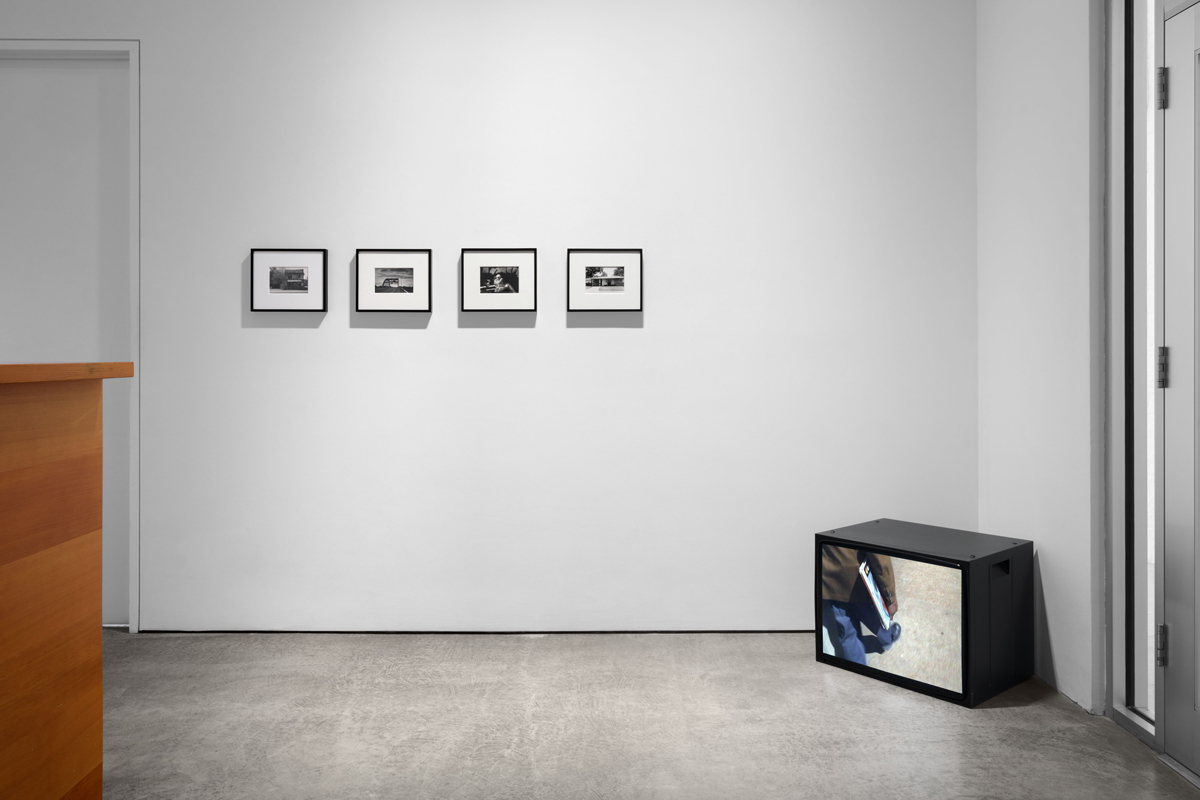
Ralph Lemon: From Out of Space, installation view. Courtesy Paula Cooper Gallery. Photo: Steven Probert Studio. © Ralph Lemon. Pictured, bottom right: Edmund Pettus Bridge Walk, 2001.
Important, elegiac, poetic: these adjectives don’t aptly describe Lemon’s work. There is little language to describe the expanse of his practice, ranging from poetry, to performance, to journalism, choreography, dance, and song. In this particular exhibit and display, I am struck by the way music is woven and threaded through the exhibition; for instance, when he holds that armful of vintage records walking across the Pettus Bridge. And I am struck by the timelessness; though comprised of an artist documenting and revisiting the past, there is a feeling of experiencing in real time, right now, the decay and decomposing of America under the MAGA regime.
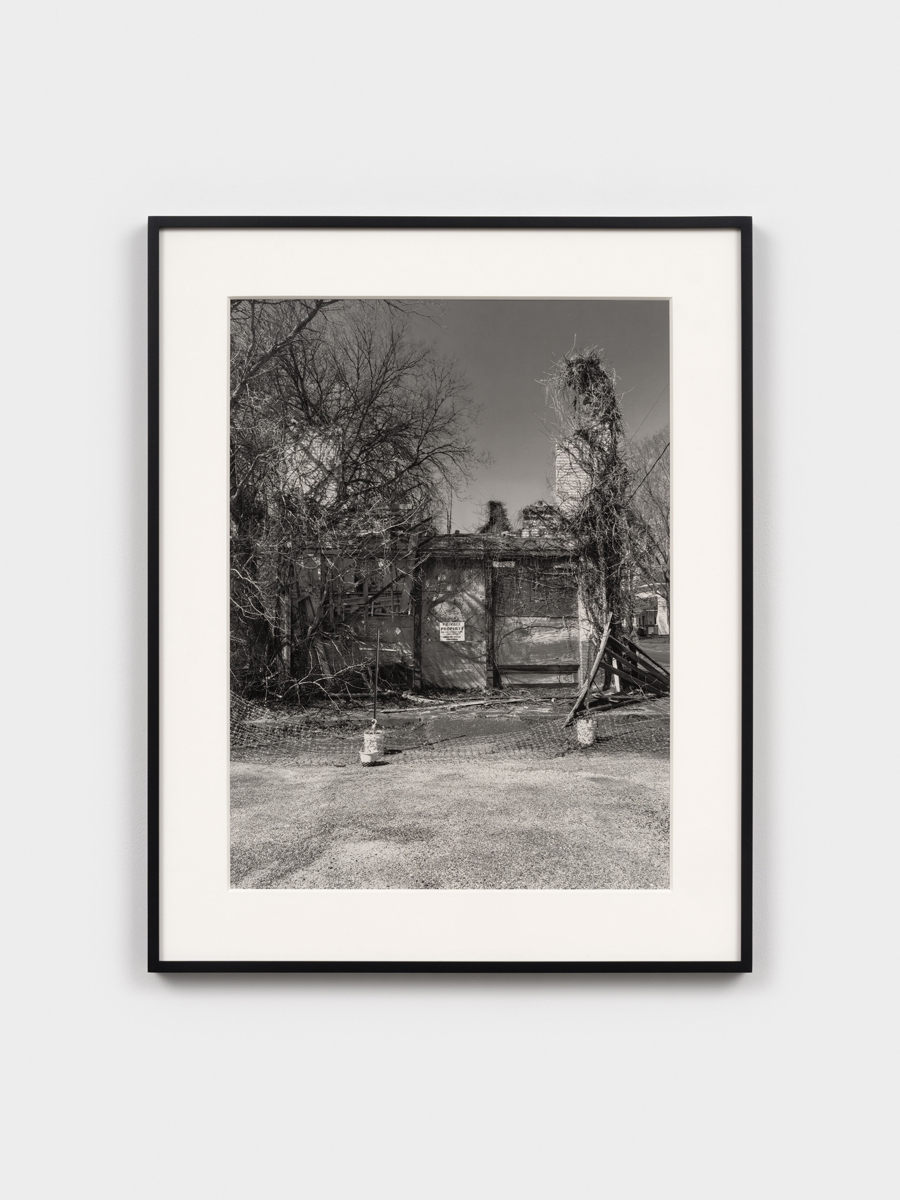
Ralph Lemon, Untitled (Bryant’s Grocery and Meat Market, Money, Mississippi), 2018. Courtesy Paula Cooper Gallery. Photo: Steven Probert Studio. © Ralph Lemon.
If I were to critique, I would say some representation of or allusion to the Black femme body is missing, as I am well aware of the violence against Black women’s bodies. That may not be the artist’s work here. However, as a superfan, I envision Ralph Lemon in my mind’s eye as some sort of mad scientist, the world as his laboratory; he tests formulas, theories, mathematics, evidence. I also imagine him as possessing wizardry, like Sun Ra, time-traveling, offering visions and intergalactic musings, a conductor presiding over a multidisciplinary choir. I imagine this show’s title, From Out of Space, has something to do with the intergalactic, the celestial, and with freedom. I discover, in actuality, it’s nothing of the sort. Talking briefly with the gallery’s director, I learn it derives from when Mamie Till first saw the bloated disfigurement of her murdered son’s face. She described it as from out of space—and that is the exhibit’s most devastating note.
Pamela Sneed is a poet, performer, visual artist, and educator. She is the author of Funeral Diva (City Lights, 2020). She teaches across disciplines in Columbia University’s visual arts MFA program, and was a guest faculty member in the Whitney ISP.