


 Alex Kitnick
MoMA turns the transatlantic Dadaist, prankster, fabricator and reproducer of objects into a proper artist.
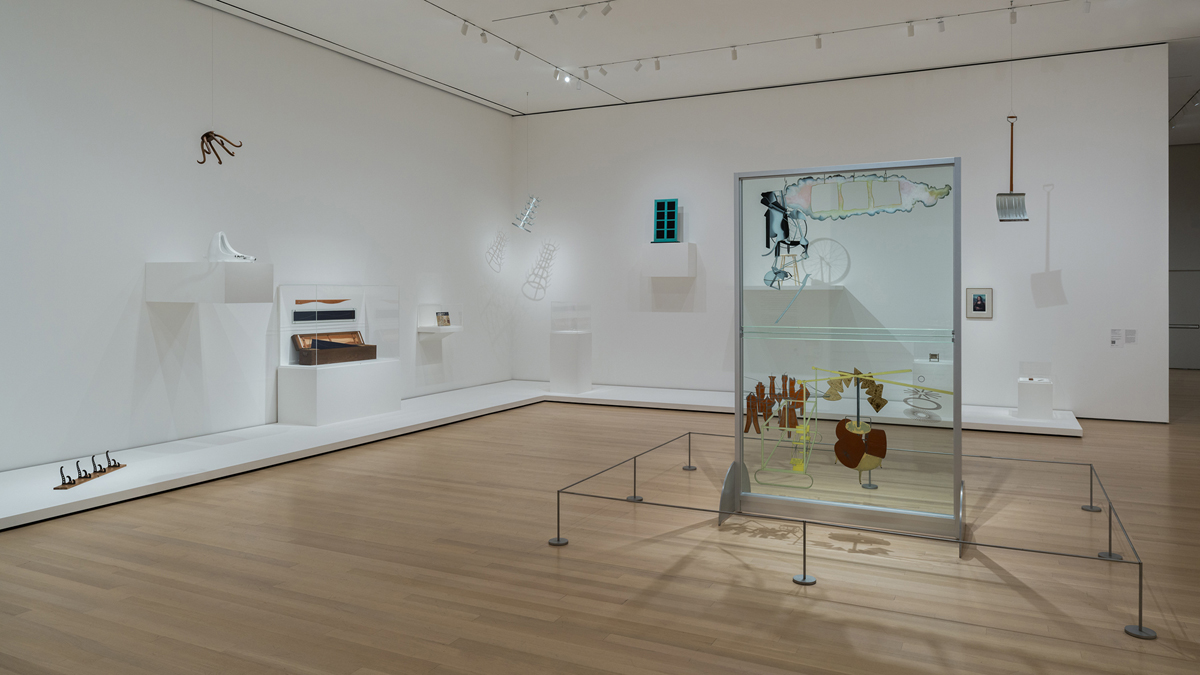
Marcel Duchamp, installation view. Courtesy Museum of Modern Art. Photo: Jonathan Dorado.
Marcel Duchamp, curated by Ann Temkin, Michelle Kuo, and Matthew Affron, with Alexandra “Lo” Drexelius, Helena Klevorn, Danielle Cooke, and Julia Vázquez, Museum of Modern Art, 11 West Fifty-Third Street, New York City, through August 22, 2026
• • •
There’s a pen-and-ink drawing in the first gallery of Marcel Duchamp, a very dapper show of over three hundred artworks: a study for a 1910 poster announcing the Societé de Peinture Moderne. It’s a sketch of an exhibition, a picture of an installation, the modern painting represented quickly and perfunctorily, just some loosely drawn works of art blocked out on the wall—don’t pay them too much attention. Words are lettered on top and bottom, but the most important thing seems to be the man standing in the foreground, in profile, smartly turned out in tailcoat and slacks. Sporting a stripy top hat, his right hand raised to his eye, maybe holding a monocle, his left tucked into his jacket pocket. Jaunty. He has little face to describe except a quick moustache. The artworks behind him look like costume, too, setting him off, providing props, background, scene, milieu. He’s a member of society, tailored just right, right where he belongs.
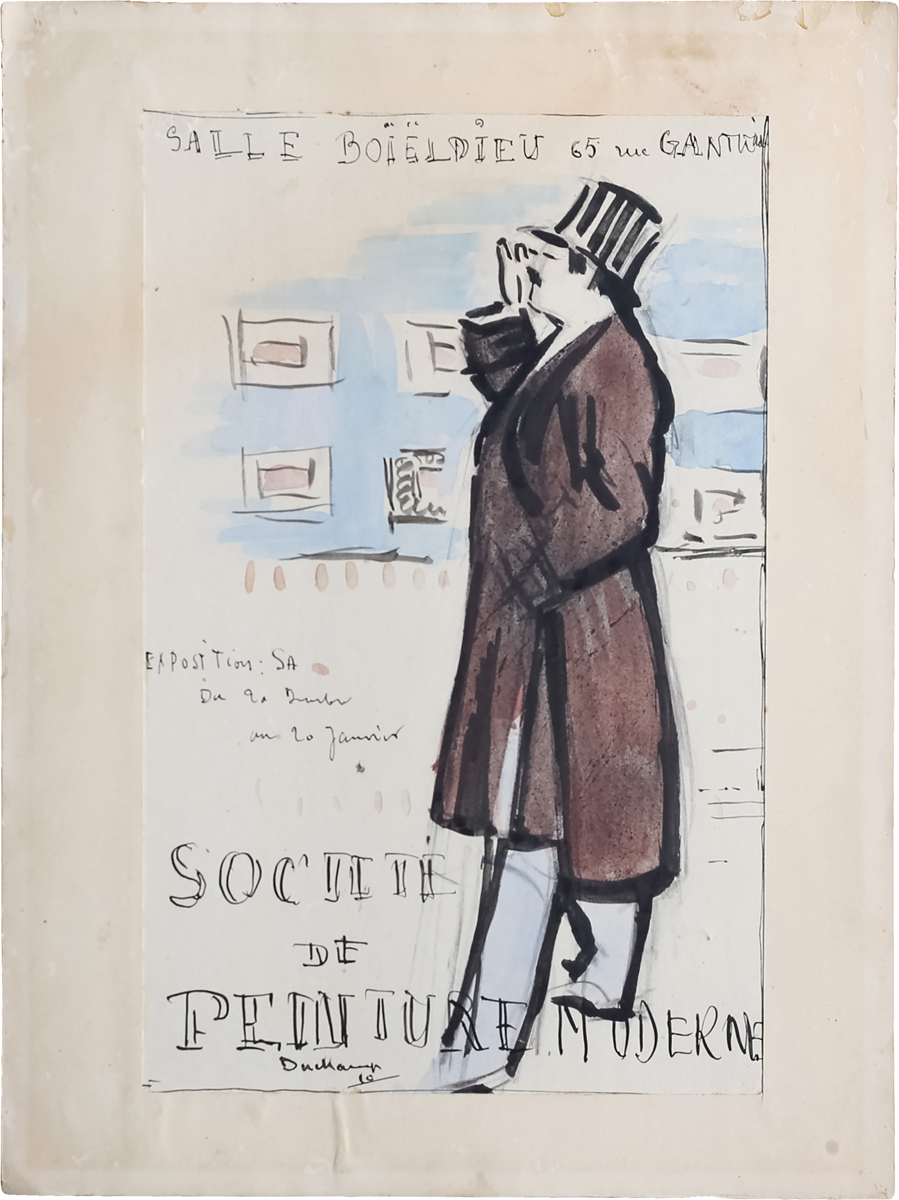
Marcel Duchamp, Poster design for Société de Peinture Moderne, 1909–10. Courtesy Museum of Modern Art. © Association Marcel Duchamp / ADAGP / Artists Rights Society (ARS).
Duchamp took viewers really seriously. Much later, in 1957, in his lecture “The Creative Act,” which he delivered in Houston, he would insist that the viewer completes the work of art, that the work is nothing without this gazing thinking interpreting person, this member of the society of art.
Given: staging a Duchamp retrospective is a supremely difficult task. How can one display the symbiotic relationship between art and viewer, let alone the contexts and chatter that constitute them? The curators—Ann Temkin and Michelle Kuo of MoMA and Matthew Affron of the Philadelphia Museum of Art—have laid out Duchamp’s production in rigorously chronological order, turning this transatlantic Dadaist, prankster, rumor, salon-ophile, fabricator and reproducer of objects and stories into a proper artist. Marcel Duchamp.
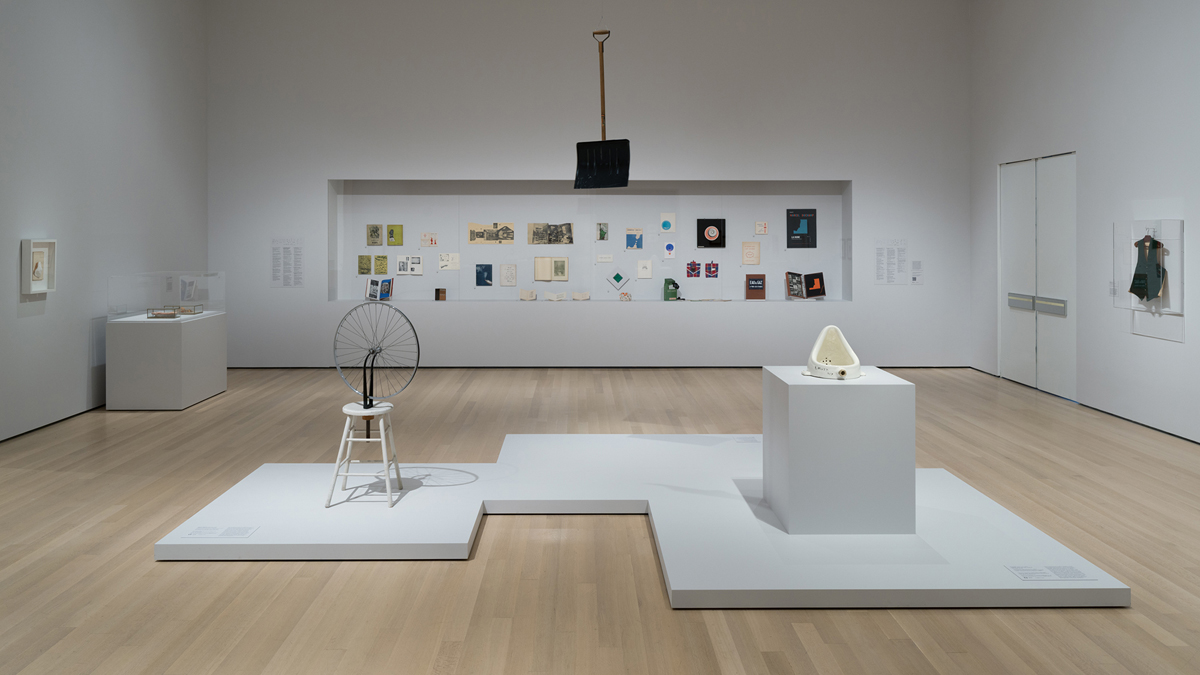
Marcel Duchamp, installation view. Courtesy Museum of Modern Art. Photo: Jonathan Dorado.
Duchamp is the big bang of twentieth-century art, the paradigm shift that tilted everything toward language, concept, supplement, context, exile, migration, borrowing, sampling. For years he was the figure to wrestle with if you wanted to wrangle art’s big questions, launching a thousand dissertations and even more practices. People spoke of the Duchamp effect. Duchamp versus Picasso. Duchamp was different because he leaned into art’s insufficiency, its inability to stand alone—curious instead about the contingencies surrounding and comprising it and how this or that might change an artwork’s meaning. (What if we put that there? Or made it again? What if the viewer could see the work that went into the work? And how does art stack up against other things in the world?)
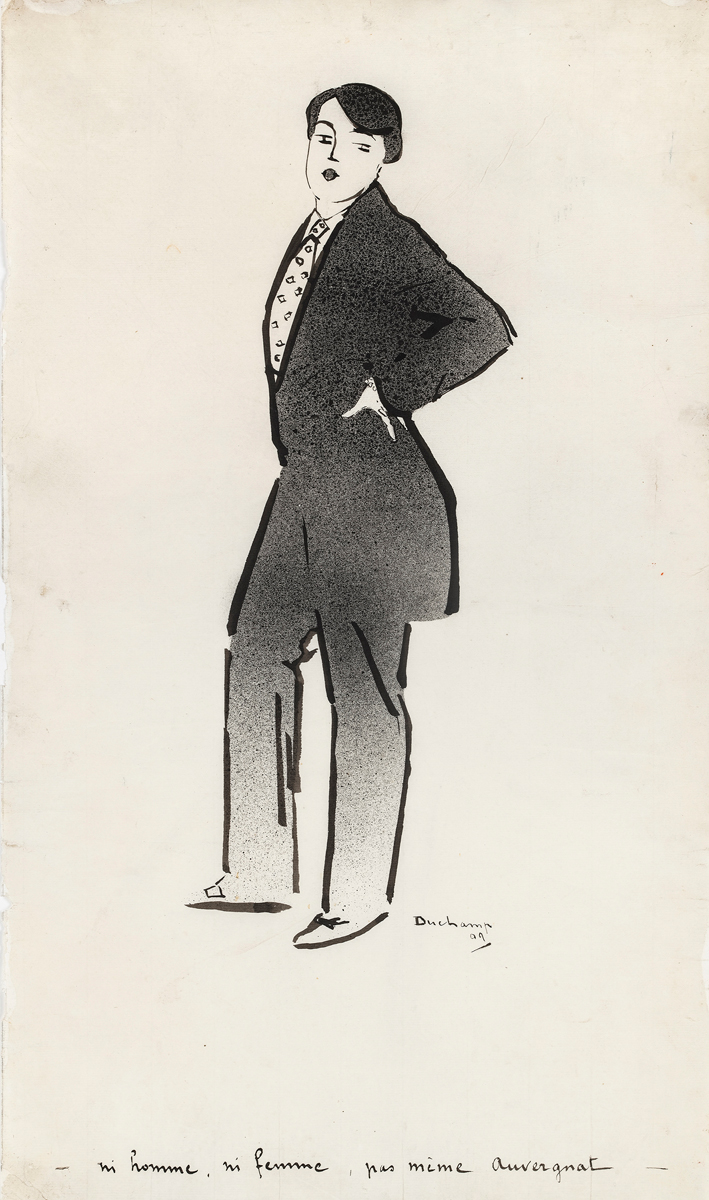
Marcel Duchamp, Ni homme, ni femme, pas même Auvergnat (Neither man nor woman, not even an Auvergnat), 1909. Courtesy Museum of Modern Art. © Association Marcel Duchamp / ADAGP / Artists Rights Society (ARS).
The thesis of this exhibition is that Duchamp was concerned with the museum, which is true. He was curious to know what guaranteed art’s status—and he seems to have decided that the artist, the institution, and the viewer all played a role. Walking through the show, I was well aware that I was in a museum—walls painted gray, lights low—but I found myself thinking about fashion instead. At first, I thought I was just being contrary, but it was there, again and again, in the pictures and things. An early drawing depicts a stylish Marlene Dietrich–esque figure—hands on hips, posterior pushed out—captioned Ni homme ni femme. (Fashion bends gender.) A vest Duchamp upcycled from Lord & Taylor for his wife Teeny spells out her name one letter per button. (Put yourself together.) Fashion is always in the middle—a cool buffer between art and viewer. It’s the medium we use to make ourselves up and, for Duchamp, something to measure art against—a good way to survey shifting modes of production.
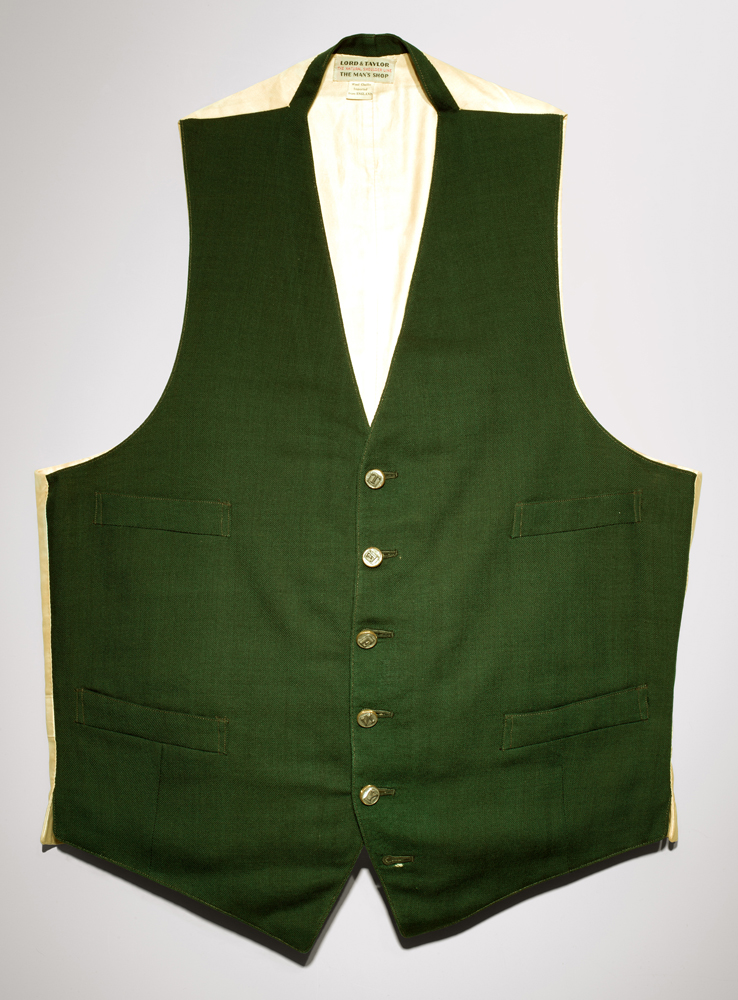
Marcel Duchamp, Waistcoat, 1957. Wool waistcoat with modified buttons. Courtesy Museum of Modern Art. © Association Marcel Duchamp / ADAGP / Artists Rights Society (ARS).
Look at Jaquette, a couplet of drawings from 1956 depicting a tailcoat seen from front and back, originally made for the covers of a book (I’m not doing this intentionally, but I see I’m gravitating to Duchamp at the start and end of his career). The coat hangs in the air of the white paper, a transparency placed on top. Ghostly yet embodied, it floats without the help of hanger, peg, or person. The strange thing about the commodity, Marx wrote, is that it’s “an ordinary, sensual thing” and a “sensually supersensual thing” at the same time. He compared it to an ordinary table, with four wooden legs on the floor, that suddenly begins to dance. One imagines Duchamp’s coat—is it his jacket?—waltzing with Marx’s table, taking on lives of their own. The work of art is like this, too—it both leads and follows.
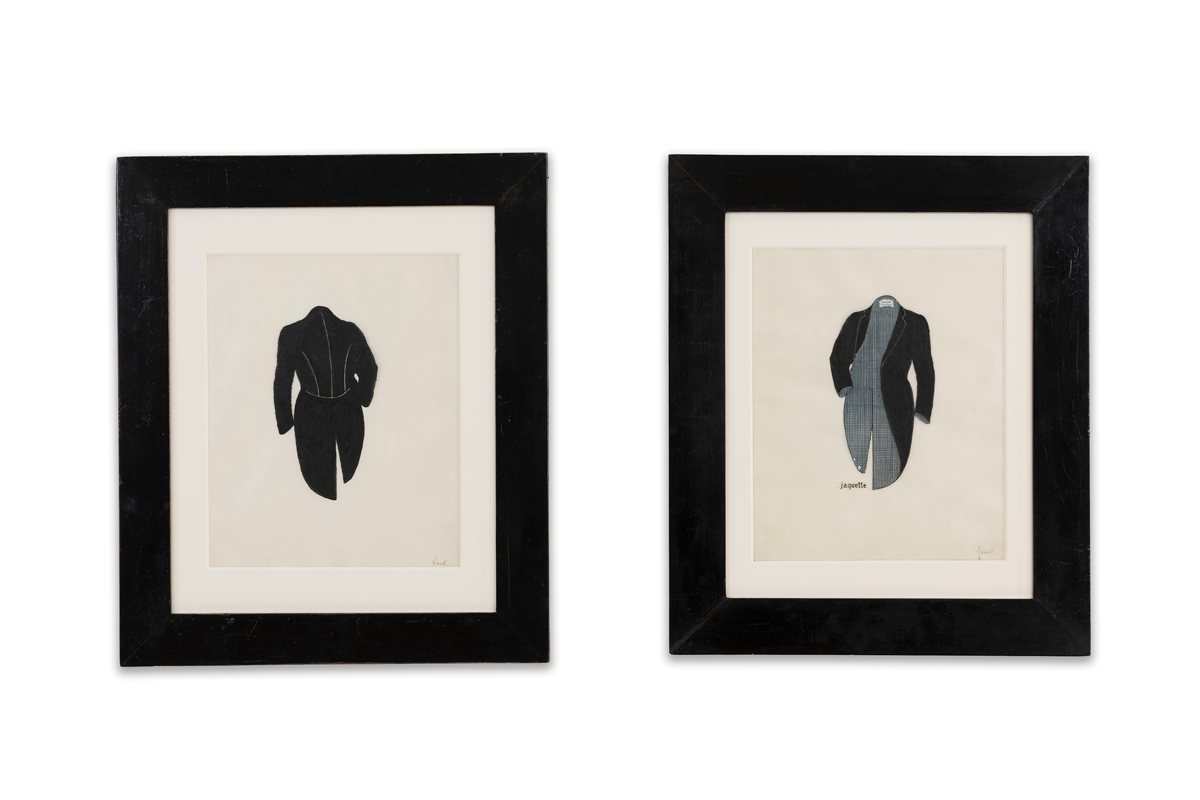
Marcel Duchamp, Jacket (Jaquette), 1956. Ink on two pieces of tracing paper. Courtesy Museum of Modern Art. © Association Marcel Duchamp / ADAGP / Artists Rights Society (ARS).
The body of the coat is beautiful, but the drawing’s special detail is the tiny tag affixed at the collar. Marcel Duchamp is the name of the designer and, all of a sudden, a slew of ideas about the role and status of the artist tumble out: an artist is a label, a brand, a conglomerate. The signature commodified. Duchamp competes with Dior and Dries. (The title on Chocolate Grinder, not painted by hand, but embossed on a small strip of leather affixed to the painting’s surface, looks different after seeing Jaquette.)
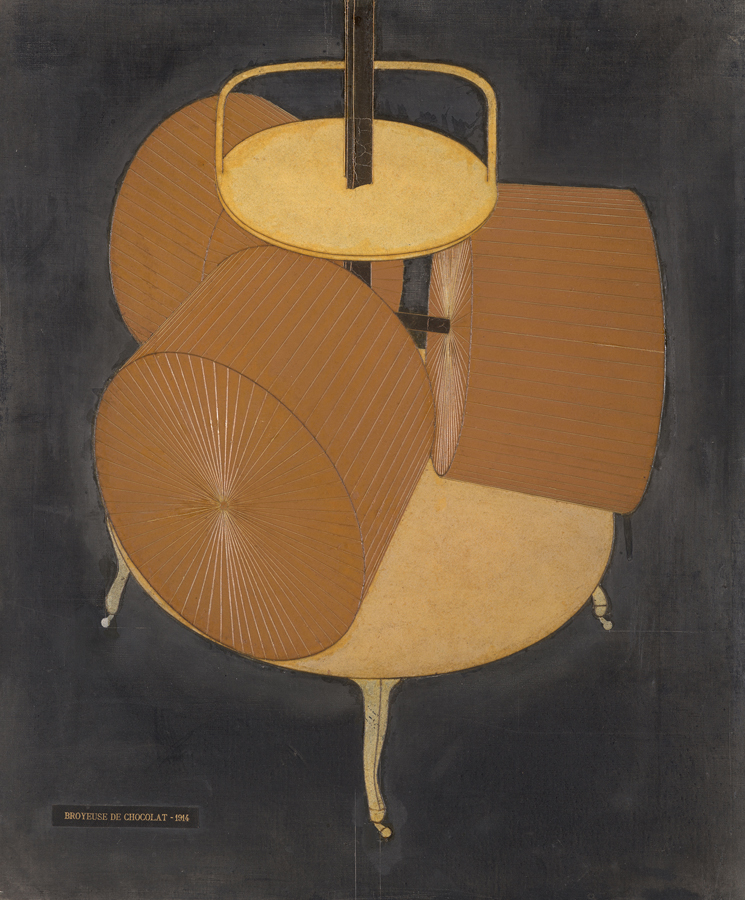
Marcel Duchamp, Chocolate Grinder (No. 2), 1914. Oil, pencil, and thread on canvas. Courtesy Museum of Modern Art. © Association Marcel Duchamp / ADAGP / Artists Rights Society (ARS).
Duchamp as a luxury baron? Duchamp’s the idea guy—always be dematerializing—a witty iconoclast! He pointed out that the artwork is a luxury good by putting something lowly in its place. The readymade could be any old thing, Duchamp said, it just couldn’t be too remarkable. It only had to be selected, renamed, recontextualized. Start with a bottle dryer or shovel. A urinal turned on its side. Photograph it and put in an artist newspaper. Put the commodity on a pedestal, screw it to the ground, let it fly through the air.
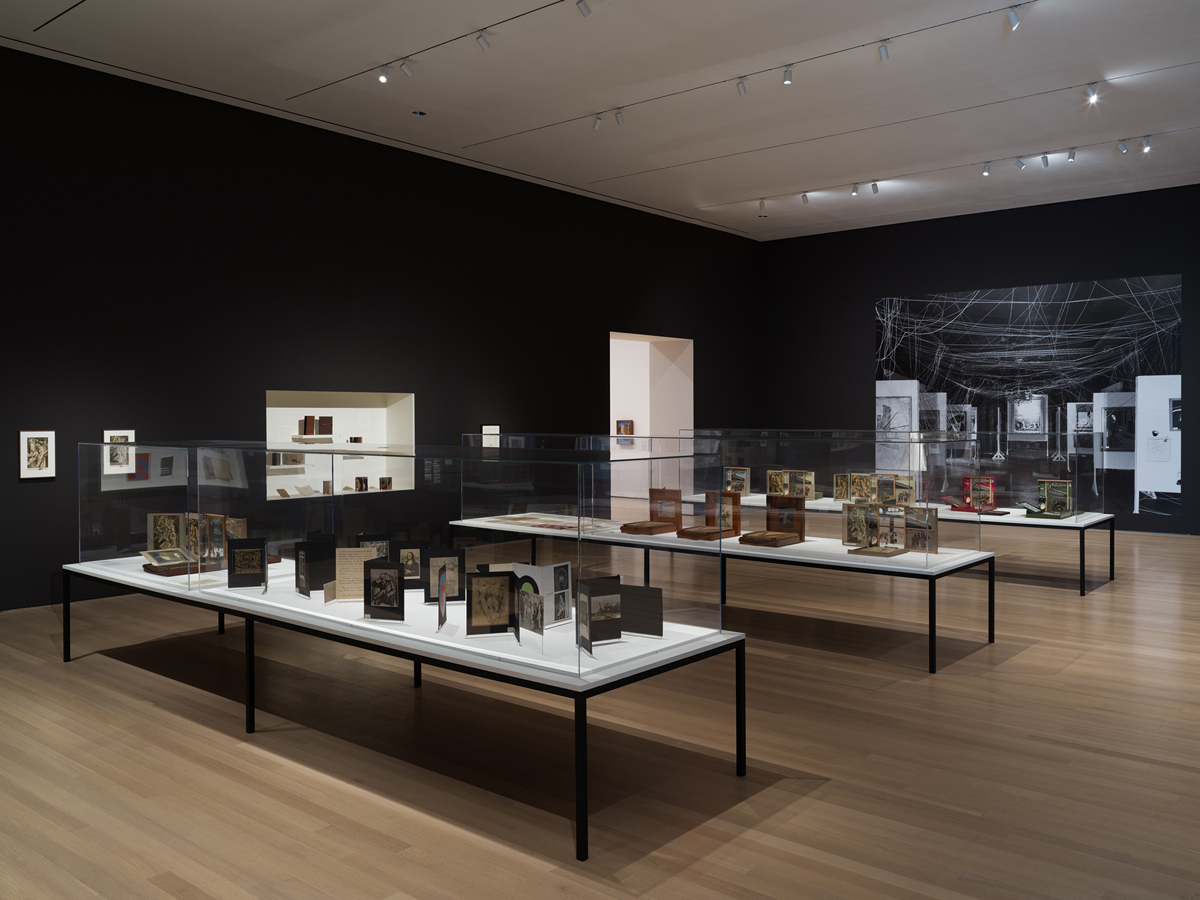
Marcel Duchamp, installation view. Courtesy Museum of Modern Art. Photo: Jonathan Dorado.
The readymade, the artist’s signal invention, sounds like ready-to-wear, a product of the military-industrial complex—clothing for the people, mass-produced lines that stand in opposition to the over-the-top uniqueness of couture. Ready-to-wear clothing comes in different sizes, standardized and widely available. Over time, Duchamp’s readymades were, too. (The exhibition digs deep into the artist’s archive of reissued lines in the form of his Boîte-en-valise—miniaturized collections of his oeuvre.) But the readymade does a funny thing to the common item: it isolates it and makes it unique. It selects a thing, picks it out, decides this one’s the one. Perhaps every shopping trip turns on a similar logic, but Duchamp’s choices nominated everyday items as candidates for art. And it’s the job of the viewer to accept them, quiz them, and ponder them, consider how they constitute us and we dignify them. Stand in front of them in jeans and sweaters and wonder about the society of which we’re a part.
Alex Kitnick teaches art history at Bard College in Annandale-on-Hudson, New York.