


 Melissa Anderson
Call her by her new name: in Milagros Mumenthaler’s film about a fashion designer’s mental disintegration, a story of the ruptures between before and after, past and present.
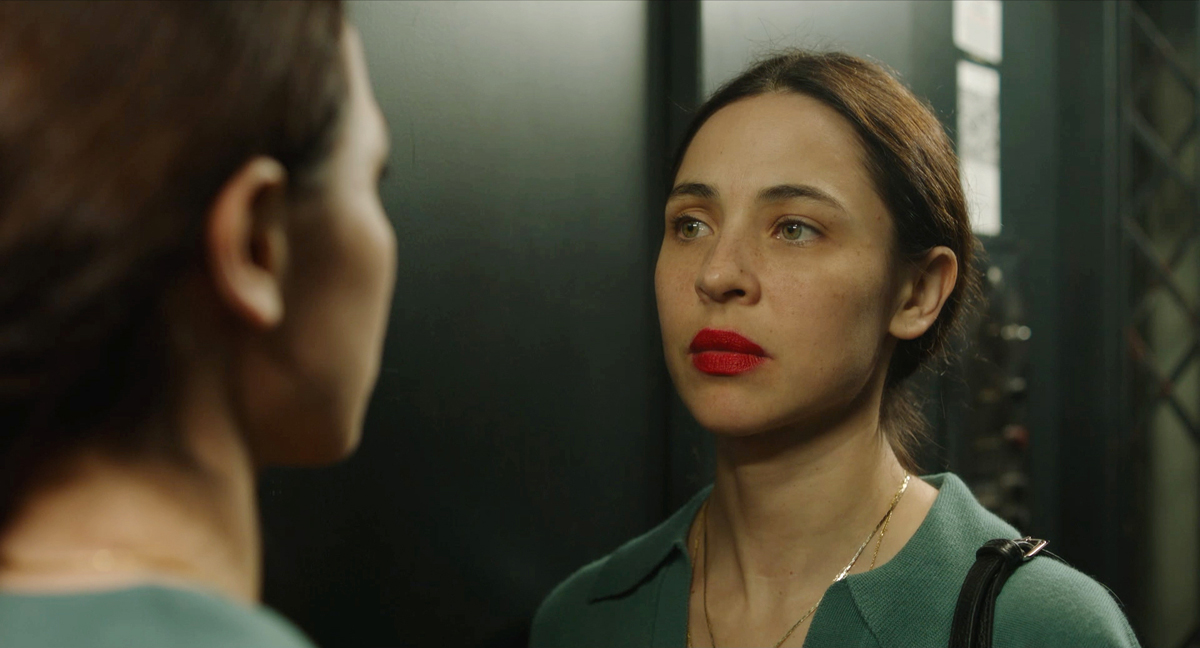
Isabel Aimé González Sola as Lina in The Currents. Courtesy Kino Lorber.
The Currents, written and directed by Milagros Mumenthaler, opens May 29, 2026 at Film at Lincoln Center, New York City
• • •
Bifurcated name, bifurcated life: Catalina Campbell (Isabel Aimé González Sola), the protagonist of Argentine filmmaker Milagros Mumenthaler’s fitfully compelling The Currents, is known to those from her humble beginnings as Cata. Now a fashion designer in her mid-thirties and living in haute-bourgeois splendor with her financier husband, Pedro (Esteban Bigliardi), whose surname she has taken, and their five-year-old daughter, Sofía (Emma Fayo Duarte), she answers to Lina—those two syllables sounding more elegant, more euphonious than the hard consonants and short vowels of her earlier diminutive.
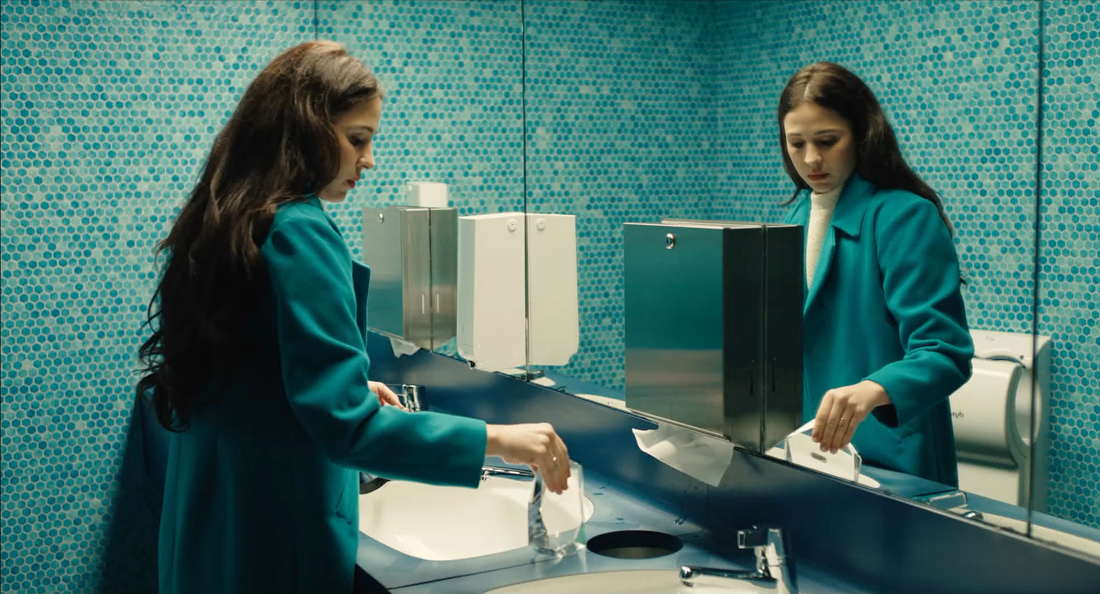
Isabel Aimé González Sola as Lina in The Currents. Courtesy Kino Lorber.
While her name neatly breaks into two parts, cleanly distinguishing past and present, other aspects of Lina’s life have ruptured with more jagged edges. As the film opens, she is in Geneva to receive an award for her couture work. All smiles at the ceremony, Lina dumps her glass trophy in the waste bin of the ladies’ lav. She roams the cobblestoned back alleys of the Swiss city; while walking across a bridge, she jumps into the eponymous lake. Back home in Buenos Aires, Lina develops severe hydrophobia, unable to even turn on a tap. She begins to dissociate, have panic attacks, hallucinate. For most of the movie, Lina remains a mystery to herself and the audience. But what in outline impresses as a pleasing puzzle can, when examined as distinct pieces, sometimes be too vague and sometimes too specific. Despite being the central character, for instance, Lina is often eclipsed by supporting ones. And a scene in the final act negates the open-ended question of the cause of her odd behavior, the etiology of her pixilation now made abundantly clear.
The Currents is Mumenthaler’s third feature (and the first I have seen). Born in 1977, she moved to Geneva with her family when she was very young to flee Argentina’s Dirty War. While the so-called Peace Capital served as a safe harbor for Mumenthaler, for the heroine of her latest movie, the city proves to be the place where she loses her psychic moorings. As Lina—recounting her trip and cuing a flashback—explains to Amalia (Jazmín Carballo), a friend from the old days, she was “far from everything. Far from myself.” She speaks of her leap into Lake Geneva not as a deliberate action but as something preordained that she was helpless to resist: “Something drew me. I fell into the water. Let myself be swept away.” Lina’s turquoise coat acts as a beacon for the rescue boat that retrieves her from a floating dock—one instance of the bracing color palette used throughout The Currents, which pops with the gold Mylar blanket given to Lina after her aquatic misadventure, the fuchsia lipstick she applies in the elevator of her Buenos Aires apartment building, the Day-Glo ensembles favored by Julia (Ernestina Gatti), Lina’s elfin employee.
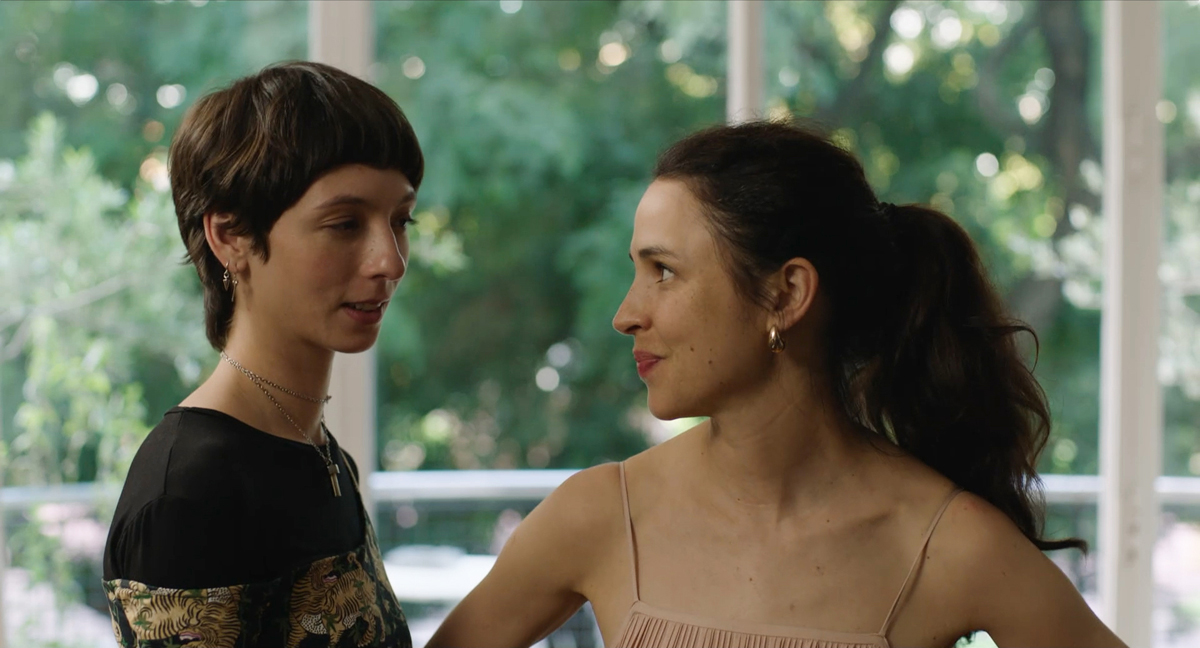
Ernestina Gatti as Julia and Isabel Aimé González Sola as Lina in The Currents. Courtesy Kino Lorber.
Lina’s meeting with Amalia typifies the most successful moments of The Currents: episodes that provocatively raise questions rather than answer them, that parcel out just enough backstory so that the viewer can imagine Lina’s past and the role it may or may not be playing in her mental malaise rather than infer an explicit cause and effect. Amalia runs a tiny, run-down storefront beauty salon in the Argentine capital, having taken over the business from her recently deceased mother. When Lina arrives at the shop, Amalia greets her coldly, her hostility possibly reflecting a sense of betrayal. Did Lina, now several class brackets above her friend, distance herself from Amalia owing to snobbishness? Amalia venomously refers to Pedro as Lina’s “super husband”—were the women once lovers?
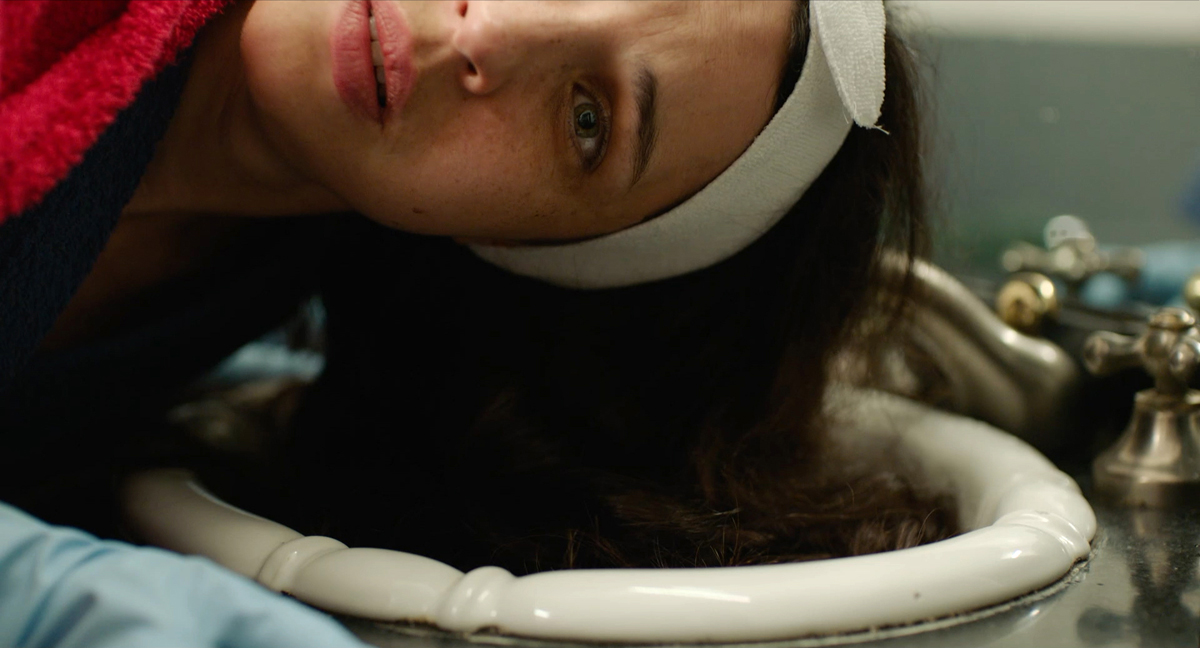
Isabel Aimé González Sola as Lina in The Currents. Courtesy Kino Lorber.
Ending a silence of an indeterminate length between the two, water-fearing Lina has come to Amalia seeking a very specific service: to have her mermaid tresses, which have been unwashed since Switzerland, finally shampooed and her body sponge-bathed—a cleansing that Lina can endure only under sedation. Even when not unconscious, though, Lina drifts through her days in a twilight state, ignoring calls, distracted at work, forgetting to pick up her daughter at school.
“I guess I’m trying not to . . . feel so ephemeral,” Lina tells her shrink after she relays to him the progress of her VR-headset-assisted exposure therapy to raindrops. While she may worry about fading away, the spectator may wish for Lina—who appears in nearly every scene of The Currents—to vanish more frequently. This is most keenly felt during a segment, which might be a fantasy of Lina’s, when she and her daughter are atop what we take to be their apartment complex but which is actually the Palacio Barolo, crowned by a lighthouse. As its concentrated beam scans Buenos Aires, Lina imagines the lives of others: Julia; Pilar (Patricia Mouzo), a friend of her mother-in-law’s; Irma (Susana Saulquin), a snowy-haired fitter. These reveries are dramatized with vivifying detail, such as the ice cream order Julia places for home delivery (a pretext to invite a neighbor up for sex) or the bus route Irma takes to arrive at her choir group.
Esteban Bigliardi as Pedro and Isabel Aimé González Sola as Lina in The Currents. Courtesy Kino Lorber.
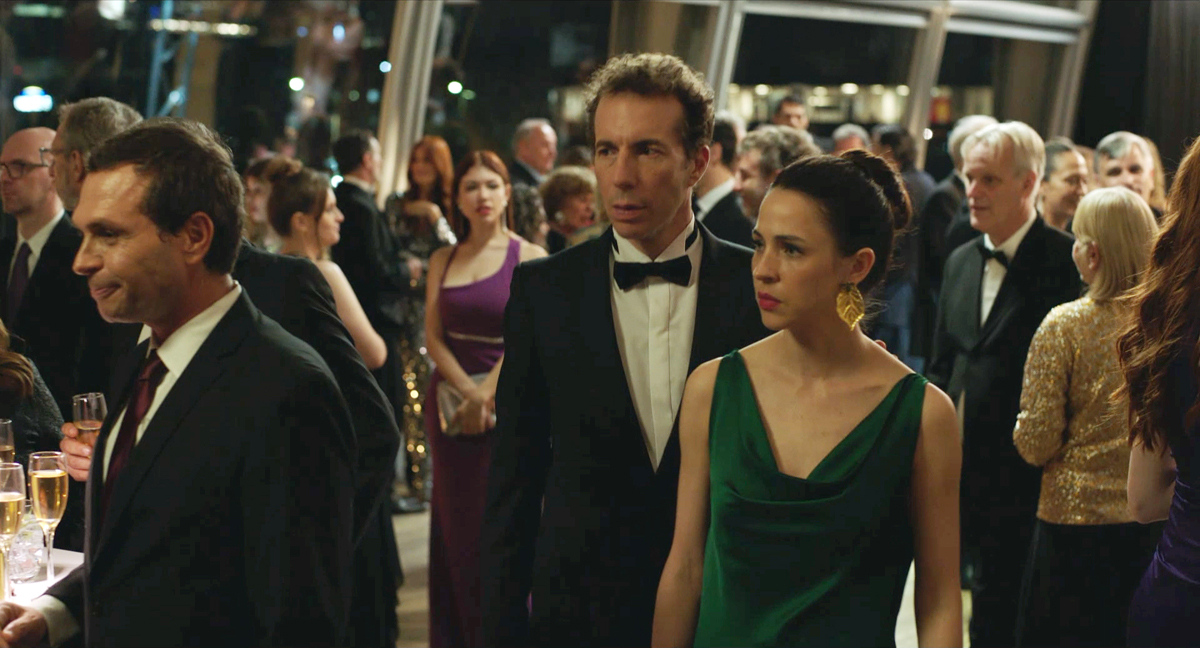
The tonic effect of these too-brief detours into the routines and rituals of minor characters calls attention to the uncomfortable fact that Lina’s psychogenic disorder can fatigue with its dullness. There is little in Mumenthaler’s film that rivets and deranges like those by two of her compatriots, Lucrecia Martel’s The Headless Woman (2008) and Laura Citarella’s Dog Lady (2015), both of which also feature female protagonists who have broken with reality. Lina’s disintegration can seem too tame, too polite; a climactic moment is built around whether she’ll be able to stay at a gala for one of Pedro’s business ventures without being overcome by anxiety.
That black-tie affair is preceded by The Currents’ weakest section, a glimpse into Lina’s past—which here is not only prologue but also postscript, footnotes, and index. The film’s strategic withholding gives way to a data dump. Strange that Mumenthaler should reduce her heroine, who has a neurotic need to stay dry, with a scene that’s all wet.
Melissa Anderson is the film editor of 4Columns and the author of a monograph on David Lynch’s Inland Empire from Fireflies Press. A collection of her film criticism, The Hunger, is now available from Film Desk Books.