


 Melissa Anderson
In Satyajit Ray’s 1970 film, four loutish young urbanites from Kolkata encounter class differences and potential romance
on holiday in the country.
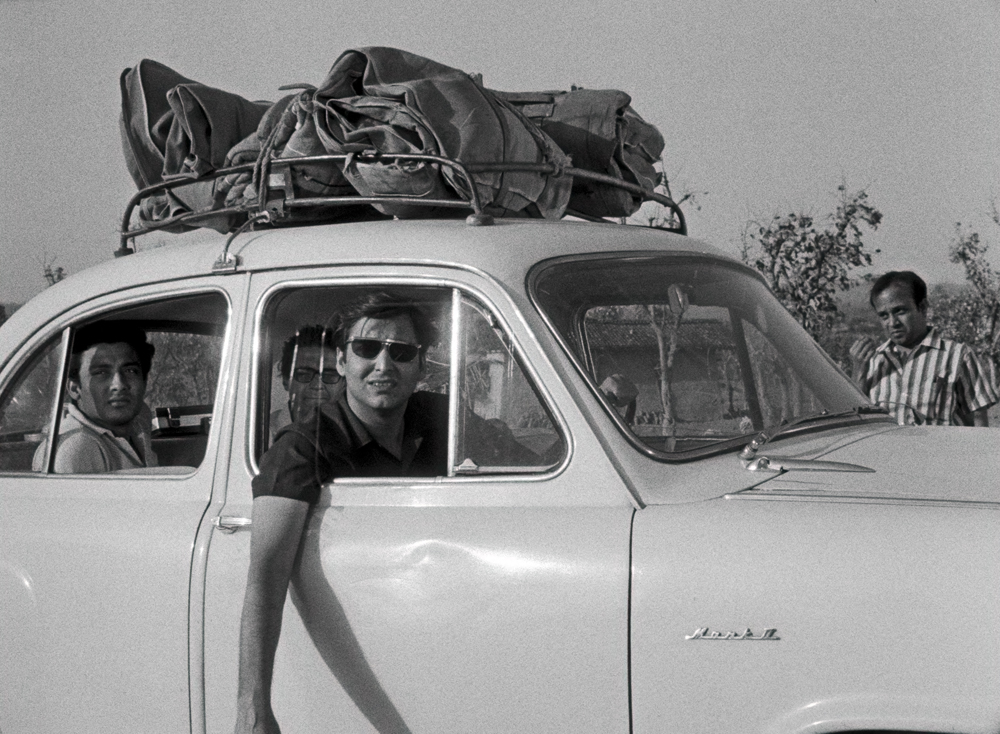
Samit Bhanja as Hari, Subhendu Chatterjee as Sanjoy, Soumitra Chatterjee as Ashim, and Rabi Ghosh as Shekhar in Days and Nights in the Forest. Courtesy Janus Films.
Days and Nights in the Forest, written and directed by Satyajit Ray, now playing at Film Forum, 209 West Houston Street, New York City, opens March 6, 2026 at Laemmle Royal, 11523 Santa Monica
Boulevard, Los Angeles
• • •
Satyajit Ray’s seriocomic delight Days and Nights in the Forest sharply demonstrates that even when getting away from it all, you can never escape your own hopelessly wretched self. An adaptation of Sunil Gangopadhyay’s 1968 novel of the same name, Ray’s 1970 film offers a piquant study of class privilege and male ineptitude as it tracks four youngish, well-off bachelors from Kolkata, who’ve been pals for several years, on a brief holiday in rural, densely wooded Palamu. The vacation was proposed by Ashim (Soumitra Chatterjee), the de facto leader of this quartet and the owner of the car that transports them from the metropolis to the country.
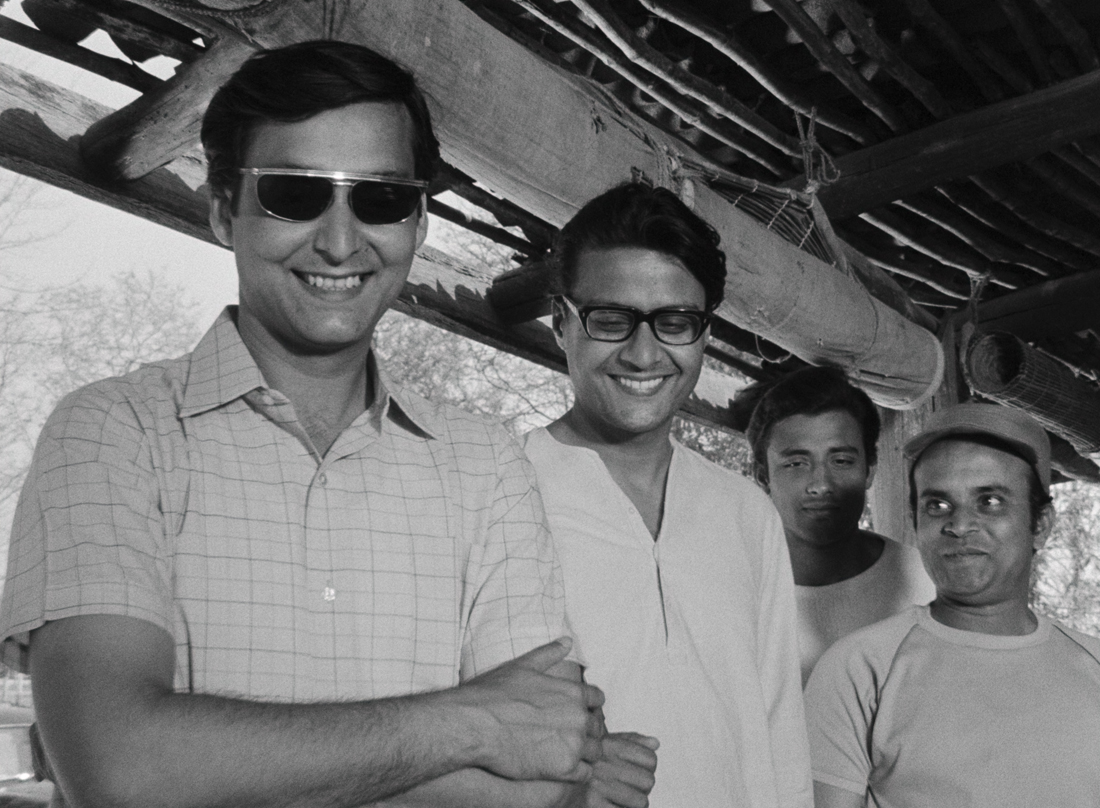
Soumitra Chatterjee as Ashim, Subhendu Chatterjee as Sanjoy, Samit Bhanja as Hari, and Rabi Ghosh as Shekhar in Days and Nights in the Forest. Courtesy Janus Films.
“People behave like kids when they leave the city,” the overweening Ashim teases his friends while they’re on the road, his remark proven again and again during the handful of days the foursome spends in the sylvan outpost. Although delivered good-naturedly, his barb particularly applies to Shekhar (Rabi Ghosh), the unemployed jester of the group, who loves to taunt Hari (Samit Bhanja), a recently dumped cricket player. (A flashback to Hari’s breakup reveals not only the athlete’s hair-trigger temper but also this superb kiss-off from his girlfriend, dismayed by the banality of one of his letters to her: “I can’t love someone who writes like that.”) Temperamentally and intellectually, Ashim is most closely aligned with bespectacled Sanjoy (Subhendu Chatterjee); both work in unspecified white-collar jobs and moonily reminisce over their long-ago literary glory, when they toiled sixteen hours a day on a quarterly journal they founded.
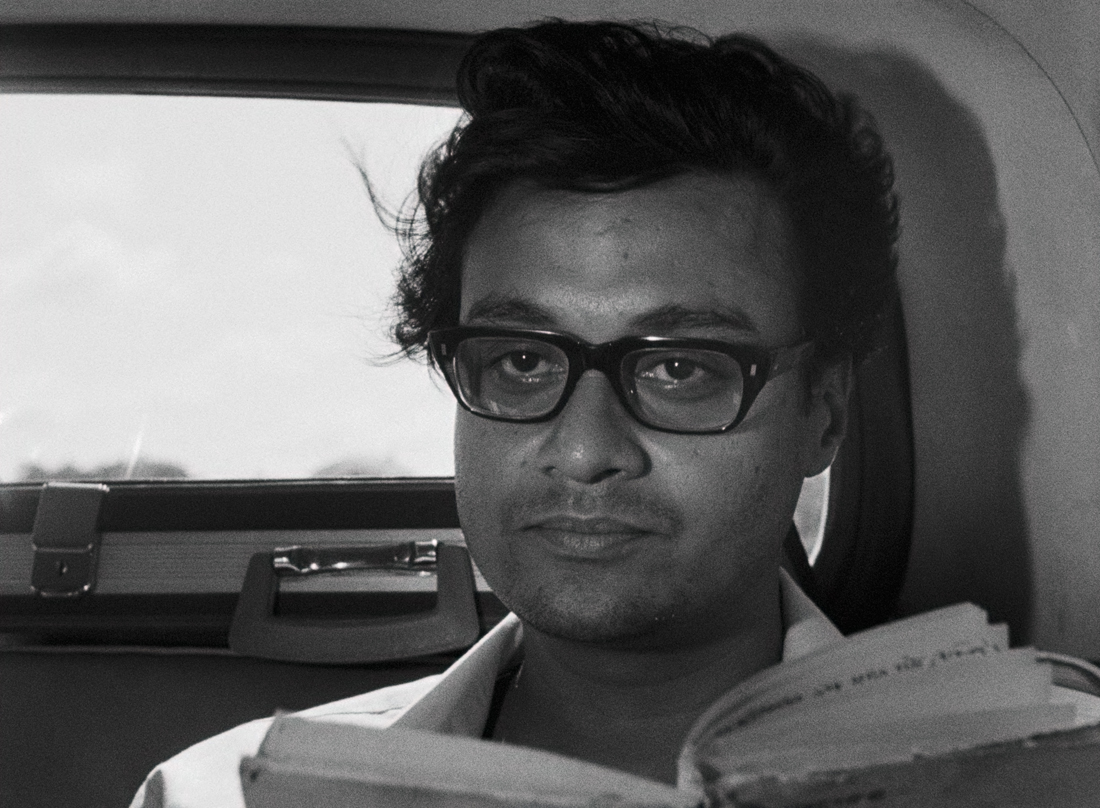
Subhendu Chatterjee as Sanjoy in Days and Nights in the Forest. Courtesy Janus Films.
These cosseted, Westernized urbanites—their Bengali heavily sprinkled with English—also behave like entitled jerks to all the working-class (and poorer) locals they meet during their getaway. They spit orders at the man they hire as a guide and dogsbody, whom Hari will falsely accuse of theft. Not having booked rooms in advance—a requirement by law—they contemptuously bribe the custodian of the bungalow where they settle, deaf to his pitiful protests that he may lose his job and wholly indifferent to his wife’s grave illness. When the pals stop at a roadside bar in Palamu, Shekhar scans the clientele and scoffs, “They look very low-class. I hope we’re safe here.”
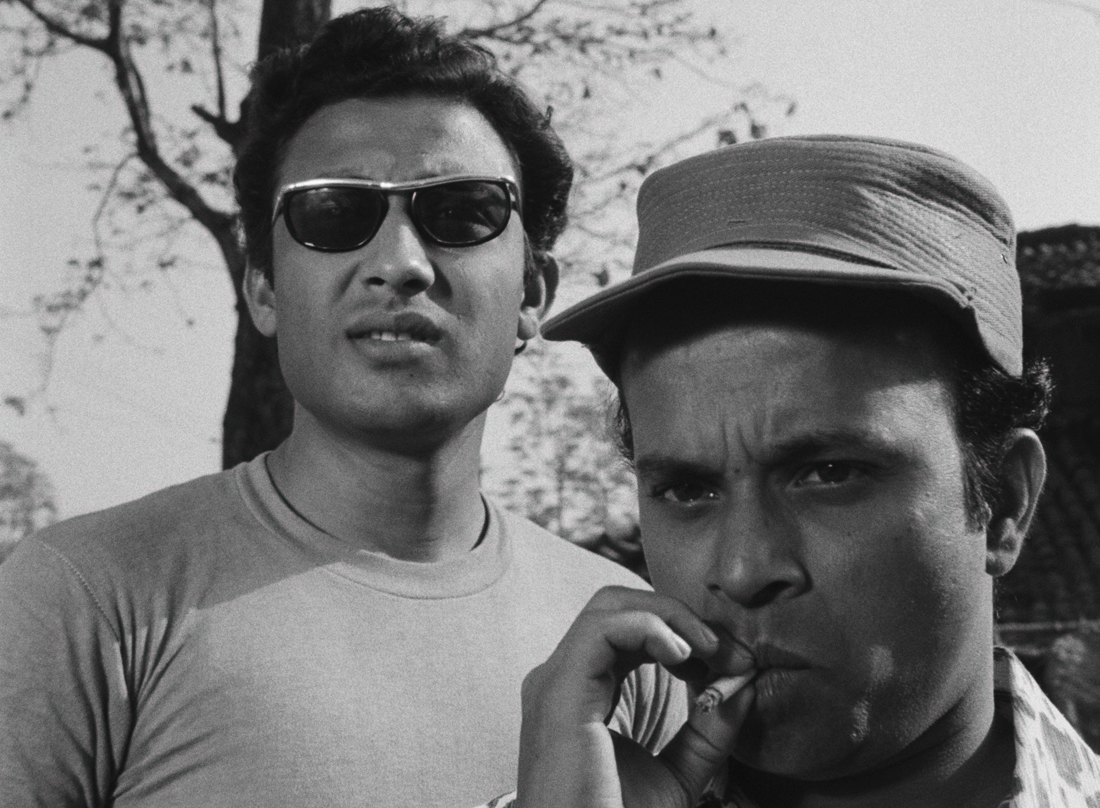
Samit Bhanja as Hari and Rabi Ghosh as Shekhar in Days and Nights in the Forest. Courtesy Janus Films.
But is Palamu safe from them? They stagger home through the woods blindingly drunk; Hari delivers a slurry aria of self-pity. These feckless sons of privilege do nothing more monumental than decide not to shave during their time away. When not behaving outrageously toward the locals (including a Santal woman he first meets at that outdoor tavern), Hari can barely be roused from sleep—his chronic dozing perhaps a sign of post-breakup depression.
That slumbering Hari, the most violent of the four, should also be presented as the most vulnerable suggests the measured sympathy that Ray, among cinema’s greatest humanists, has for these floundering men. They are brought down to size—and their foibles depicted with more nuance—when they meet the Tripathi family, fellow Kolkatans with a summer cottage in Palamu. As the quartet awkwardly loiters outside the Tripathi compound, gawping at Aparna (Sharmila Tagore) and her widowed sister-in-law, Jaya (Kaberi Bose), mother to a young son, while they play badminton, patriarch Sadashiv (Pahari Sanyal), also widowed, graciously invites them in.
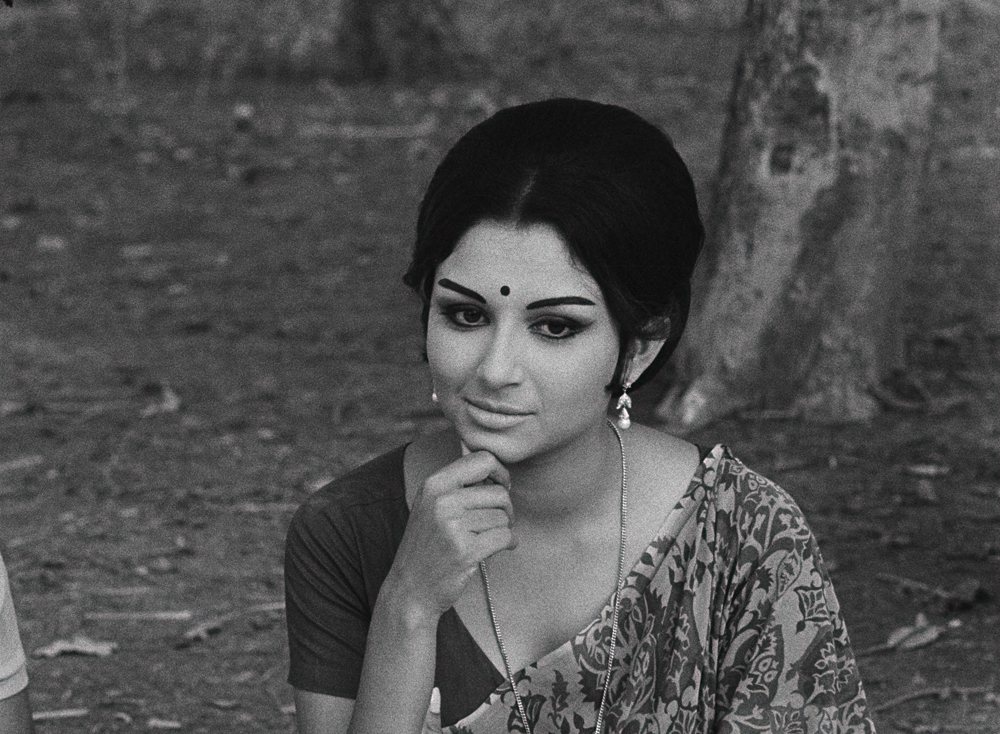
Sharmila Tagore as Aparna in Days and Nights in the Forest. Courtesy Janus Films.
With the introduction of Jaya and Aparna, Days and Nights in the Forest deepens in both profundity and pleasure, shifting from droll depictions of the guys’ loutish behavior to incisive, detail-rich segments that underscore the composure of these fascinating women as they try to make sense of these tourists. That’s especially the case with Aparna and Ashim, two supremely confident alphas, who quickly peel off from the others. She shows him around her studio; flipping through her books (Agatha Christie, The Survival of God in the Scientific Age) and records (Indian classical music, Rubber Soul, Indo-jazz fusion), he remarks, “I really can’t figure you out.” Her response—“Is that necessary?”—deflates just as keenly as her unimpressed glare after he recites a line of Shakespeare.
The exchanges between Ashim and Aparna—whether à deux or in a group setting, as seen during a superbly shot and choreographed memory game played on a picnic blanket—crackle with careening flirtation. Just a few of Ashim’s attempts at flattery and solicitude stir Aparna in any way, while her hauteur makes him only more desperate to please. (Jaya, in contrast, will discover that coffee-adoring, sexually timorous Sanjoy responds more passionately to the promise of a cup of Nescafé than to her touch.) Nearly every line Aparna delivers to the man so eager to woo her coruscates with cleverness, her rejoinders reaching their apotheosis when she tells Ashim what she first thought upon meeting him: “It would be nice to crush this gentleman’s confidence a little.”
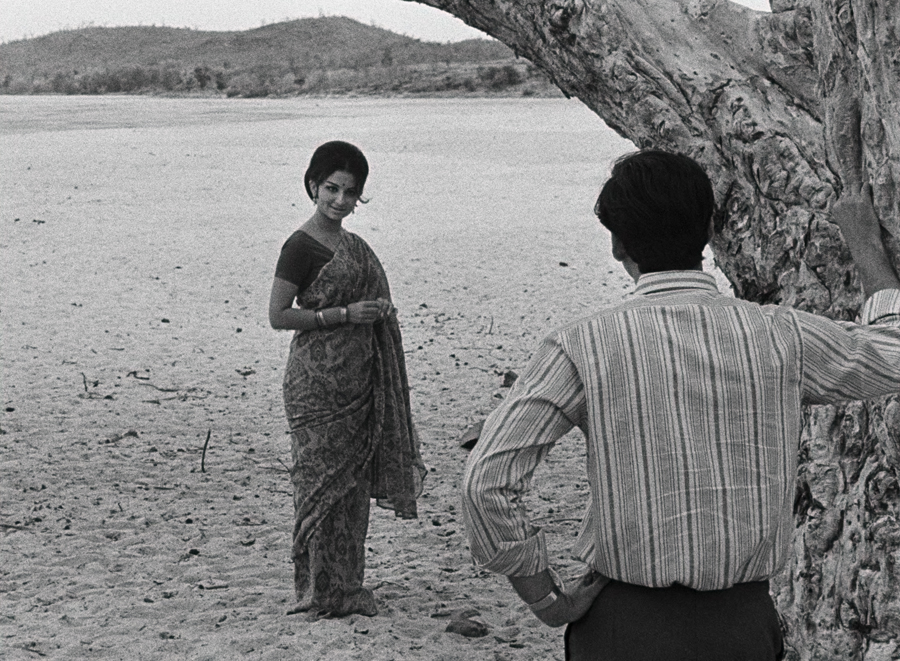
Sharmila Tagore as Aparna and Soumitra Chatterjee as Ashim in Days and Nights in the Forest. Courtesy Janus Films.
This erotically fueled thrust and parry is performed by two actors who were significant figures in Ray’s filmography. Chatterjee and Ray, in a collaboration as crucial to cinema as that between Akira Kurosawa and Toshiro Mifune, worked together fourteen times; Tagore stars in five of the director’s movies. Both actors made their screen debut playing young newlyweds in The World of Apu (1959), the concluding chapter in Ray’s sublime Apu Trilogy, which traces the joys and sorrows of the title character from his birth to ravaged adulthood. Tagore’s finesse at crushing a gentleman’s confidence had earlier been on dazzling display in Ray’s The Hero (1966), in which she plays an imperturbable editor of a woman’s magazine who conducts an impromptu interview with a movie idol she meets on a train.
While Aparna and, to a lesser extent, Jaya may serve as foils to Ashim and his crew—and while the movie concludes with the possibility that they all may meet again in Kolkata—Ray’s film, refreshingly, never suggests that these men have been transformed or ennobled by their encounters with the sisters-in-law. The four friends may have been restored by their pastoral idyll. But they still can’t see the forest for the trees.
Melissa Anderson is the film editor of 4Columns and the author of a monograph on David Lynch’s Inland Empire from Fireflies Press. A collection of her film criticism, The Hunger, is now available from Film Desk Books.