


 Geeta Dayal
A genre-defying collaborative album by the percussionist and the MC exhibits a shared politics of destabilization.
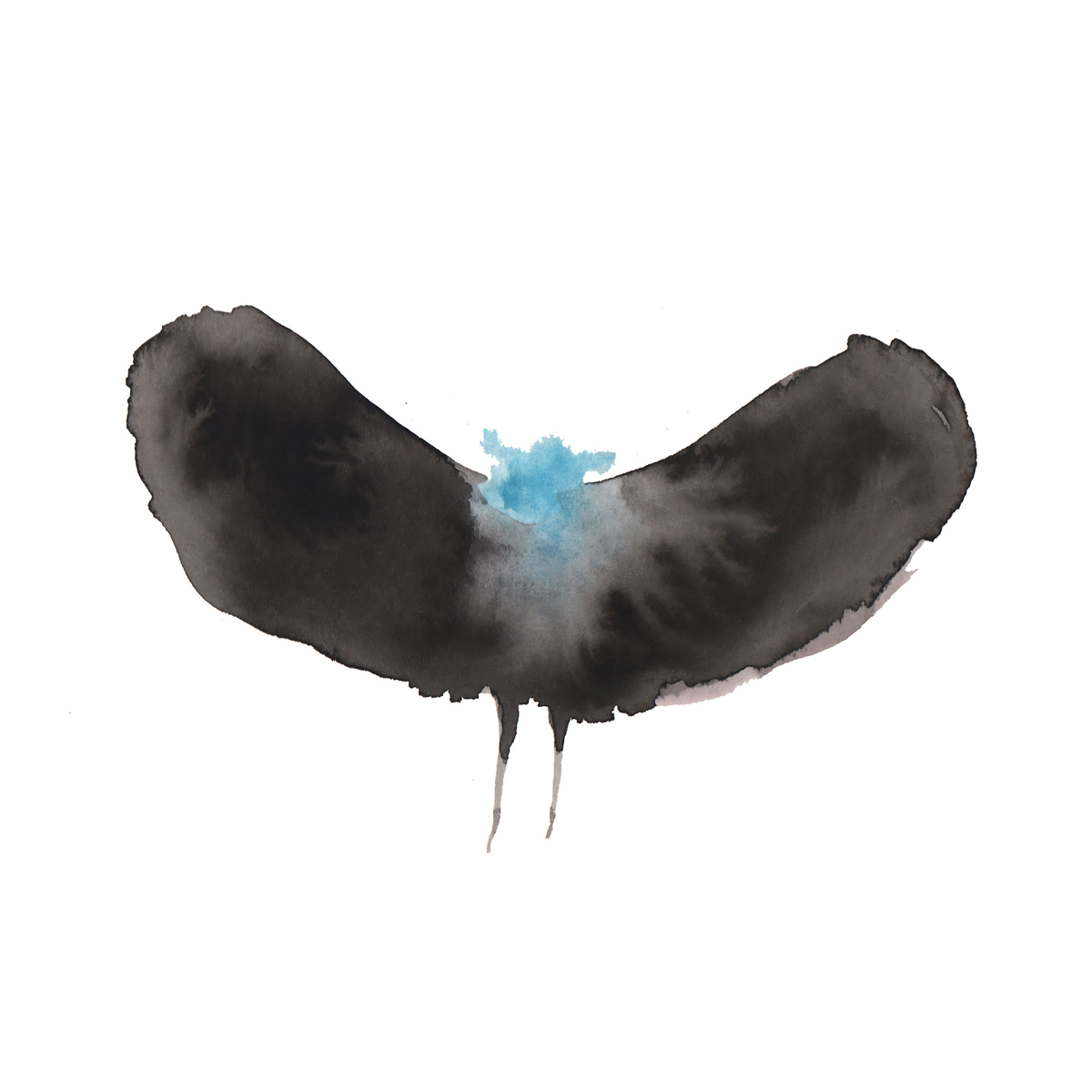
HAYWARDxDÄLEK, by Charles Hayward and Will Brooks (aka MC dälek), Relapse Records
• • •
This year has been one of the most ghastly in recent memory. Where does one begin? Authoritarianism has surged; global geopolitical crises have worsened; the gap between rich and poor has continued to widen; “Project 2025” started becoming a harsh reality. From a musical perspective, listening to pleasant pop seems out of the question in times like these. You need to scream; you need catharsis. 2025 may be almost over, but the nightmare will go on.
The new album HAYWARDxDÄLEK is a fitting testament to our current horror; it is shot through with industrial noise, crashing with chaotic rhythms, and bounding with intense wordcraft. Charles Hayward’s high-powered drumming is the connective tissue for the record, anchoring the agile wordplay and dense atmospherics of Will Brooks, the rapper and musician also known as MC dälek.
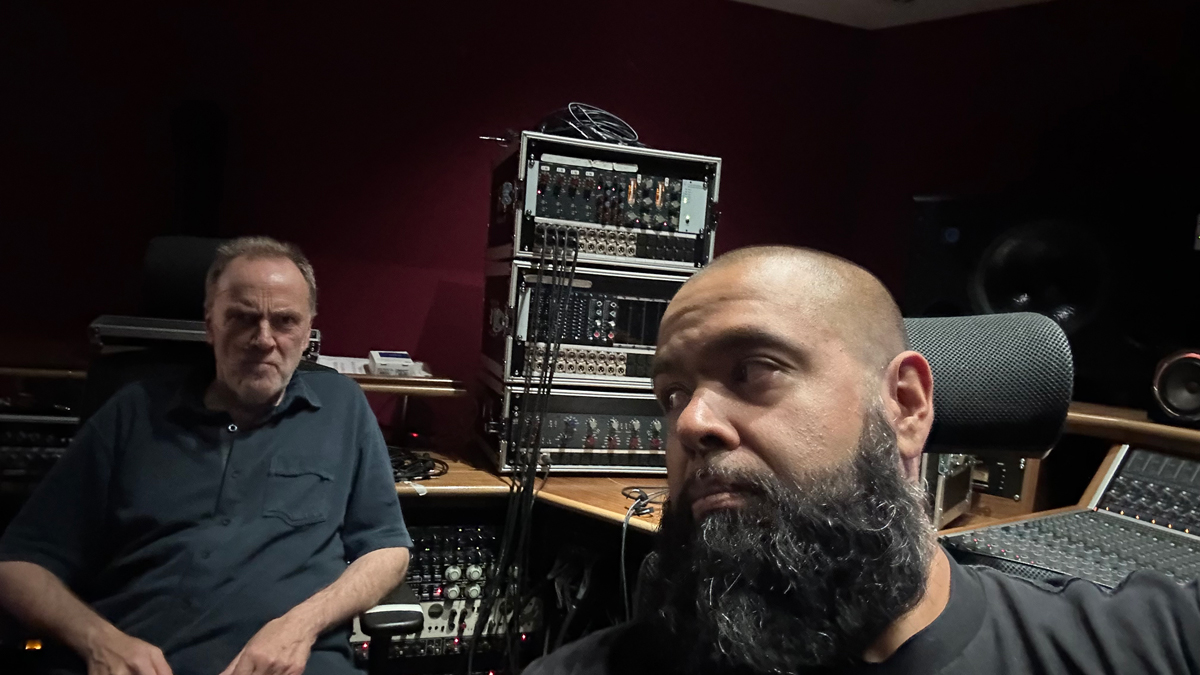
Charles Hayward and Will Brooks (MC dälek). Courtesy Phantom Limb. Photo: Will Brooks.
Hayward, the legendary septuagenarian percussionist best known for his work with the British post-punk group This Heat, has spent decades exploring the outer reaches of sound. In the band’s music, notably on their 1981 classic Deceit, repetition was never soothing. Hayward’s unique style is fiercely dynamic and expressive, balanced with exquisite tension. That fiery approach continues today, and it has only deepened and strengthened with age.
This Heat’s rhythmic complexity is part of the reason why they still draw admirers across many disparate genres. My late friend Keith McIvor, of the great DJ duo Optimo, was the one who originally put me on to This Heat many years ago, somehow mixing their music seamlessly into a DJ set that also included Detroit techno, Chicago house, goth rock, and reggae. It makes perfect sense, then, that Hayward’s drumming would also mesh well with hip-hop. Brooks, based in New Jersey, is a longtime expert at pushing genre boundaries, layering his pointed lyrics over dense drones and feedback.
Though Brooks is a fair bit younger, in his forties, his history runs parallel to Hayward’s, if through alternate terrain. From the start, his group, dälek, abandoned hip-hop’s usual structures. Their albums From Filthy Tongue of Gods and Griots (2002) and Absence (2005) were ahead of their time, with beats dissolving into abrasive industrial noise and vocals buried and distorted.
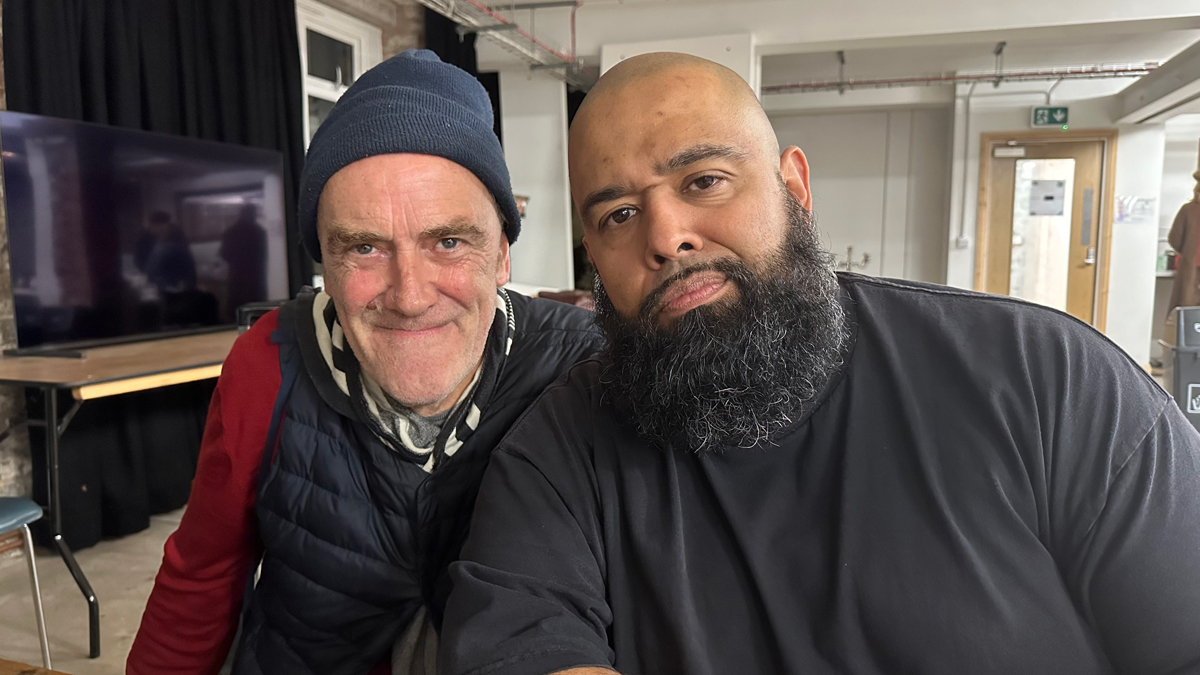
Charles Hayward and Will Brooks (MC dälek). Courtesy Phantom Limb. Photo: Will Brooks.
This new collaboration was born at Samarbeta, a UK artist residency. Though the two had known each other for years, and had long held an appreciation for each other’s work, they had never made a full album together. During a few intense days at Islington Mill in Salford in 2023, the duo created the tracks—with Hayward on drums and a synthesizer, and Brooks on vocals, iPad, and samplers—and recorded them in the span of a week. The music was then moved to Brooks’s studio in Union City, New Jersey, where more lyrics were added and the final mix was made.
The opening track, “Increments,” sets a frantic, uneasy tone as Hayward’s percussion applies pressure on Brooks’s layered uproar. The next song, “Between the Word and the Drum,” is a hypnotic incantation, with Hayward’s rhythms rolling like thunder under Brooks’s mesmerizing flow.
In other tunes, Brooks’s words cut like knives through waves of distortion. “Breathe Slow” is a rapid-fire lyrical onslaught. “Asymmetric” is similarly in your face. “2025 and they still fear a black planet / Freedom comes when we demand it,” he intones, invoking Public Enemy circa 1990 for a potent political barrage that still resonates powerfully today.
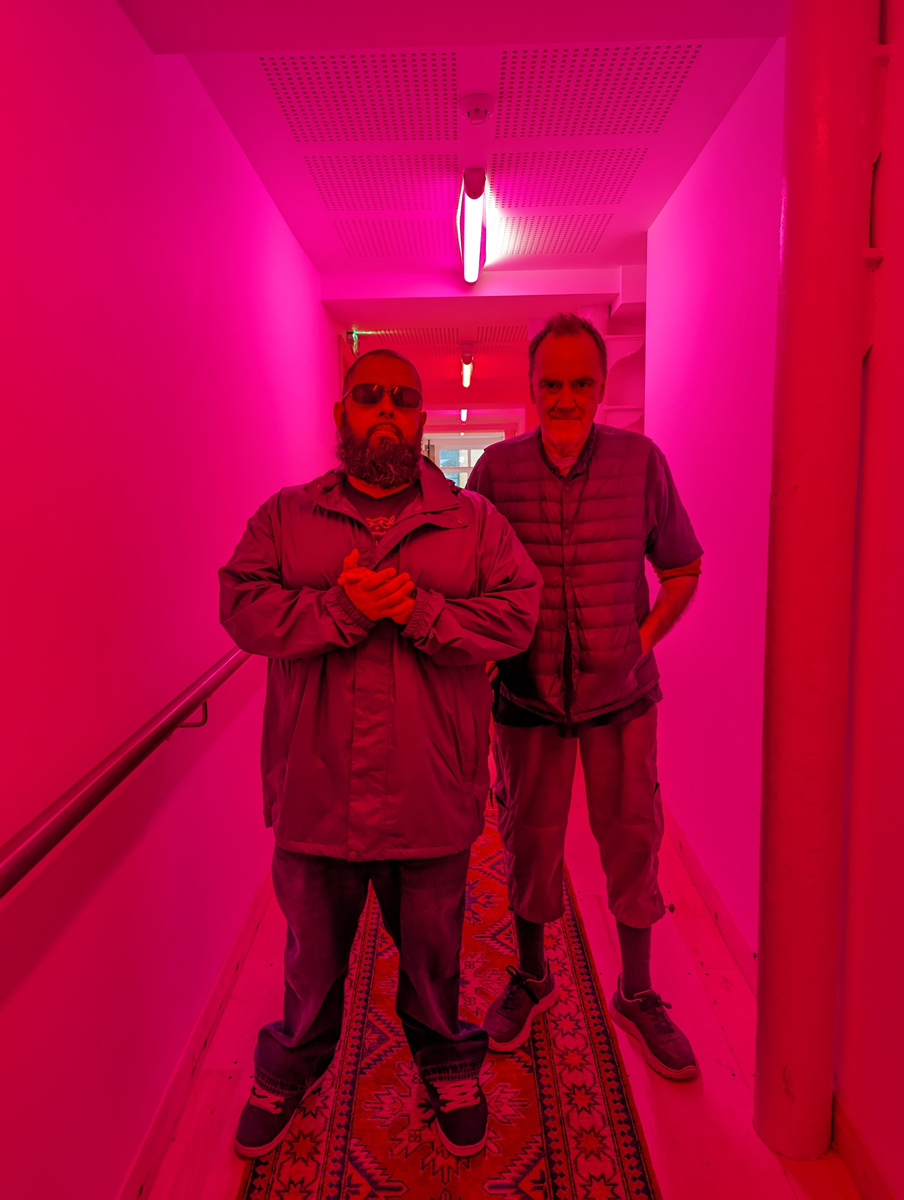
Will Brooks (MC dälek) and Charles Hayward. Courtesy Phantom Limb. Photo: Emma Thompson.
Some of the pieces lack vocals but still pack a punch. “Antiphony” showcases Hayward’s talents, with a distant clatter slowly growing into gusty bursts of turbulent drumrolls. “Salvage” conjures shamanic rituals amid noise and feedback, echoes of the post-punk that Hayward helped create in the 1970s and 1980s. I played this one on repeat, maybe fifty or so times, not only for its sonic brilliance but for its ability to completely block the din outside on the streets of Los Angeles, even at low volume. It roars like a white-noise generator, with a subtly ominous percussive undertow.
The instrumental track “Sojourn,” sprawling over nearly eleven minutes, is a rare spot of lightness on an otherwise heavy album. A soft and mournful melody develops in the distance, rising like the sun through the trees. More gossamer sounds are added in, with a touch of pitch-bending reminiscent of My Bloody Valentine and some restrained drumming from Hayward.
The most haunting song is “As Children Chant,” about Palestine. Over a grim, mostly beatless soundscape and distorted samples, Brooks spits out his words bitterly: “Can’t tell if we’ll survive to daybreak, if I’m honest.”
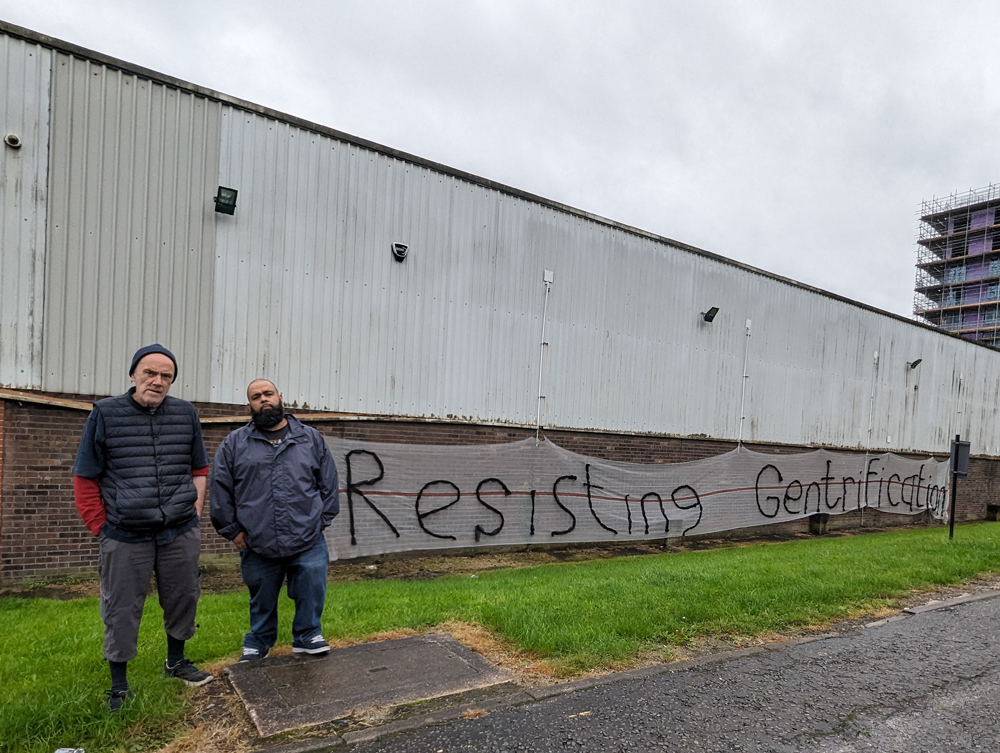
Charles Hayward and Will Brooks (MC dälek). Courtesy Phantom Limb. Photo: Emma Thompson.
There is a political dimension to this album that resonates with the ideologies of both artists. The politics doesn’t just run through their belief systems but are embodied in their sound. Like Hayward, Brooks’s approach to music has always probed the edges of genre, resisting commercial beats in favor of other ideas and textures. On HAYWARDxDÄLEK, repetition becomes something more unsettling and unstable. This idea travels through the record. Rhythms almost lock into place, then go slightly off-balance. A melody seems to emerge and then disappears from view. The record’s final moments, in the frenetic closer “Re-Evolution,” do not resolve the tensions but intensify them, continuing a state of deep, unrelenting pressure.
What makes HAYWARDxDÄLEK such a compelling work is its creativity and absolute fearlessness. It does not seek to please anyone. It does not try to offer catchy melodies or pat resolutions. At a time when so much music is designed to soothe, entertain, or provide comfortable background ambience, this album is a welcome reminder of something more fundamental about music: that it can shock us, wake us up from our slumber, and spark some kind of change. In an era of smooth corporate AI and algorithmic excess, this is a refreshingly live, rough-around-the-edges transmission from two artists who have long exulted in being on the margins.
Geeta Dayal is an arts critic and journalist specializing in twentieth-century music, culture, and technology. She has written extensively for frieze and many other publications, including the Guardian, Wired, the Wire, Bookforum, Slate, the Boston Globe, and Rolling Stone. She is the author of Another Green World (Bloomsbury, 2009), a book on Brian Eno, and is currently at work on a new book on music.